Pinterest Fashion Trends
A guide to the Apparel Search Pinterest boards as a visual fashion trend directory for shoppers, stylists and trend followers.
Pinterest Fashion Trends is the directory page for the Apparel Search Pinterest boards as a visual fashion trend directory. Monitoring what people pin, save and share is a fabulous way to keep an eye on the latest trends: watching what one's peers are wearing and sharing is essential to keeping up with the fast pace of style, and among the visual social services, Pinterest is the one built entirely around collecting images. Pinterest is a tool for collecting and organizing the things that inspire you — individual images, called Pins, saved to themed collections, called boards — and this page introduces the Apparel Search boards and explains how designers and merchandisers use boards in their work.
The board set below covers fashion, apparel, celebrity fashion, eyewear, handbags, jewelry, shoes, swimwear, hair and beauty, vintage fashion, fashion models, fashion events, fashion designers and the power of fashion. Each board has its own guide page in this section, and each guide page follows the same pattern — what the board collects, why it belongs in trend research, and the links through to the board itself and its sister boards.
Search Apparel Search
Boards as a Working Tool
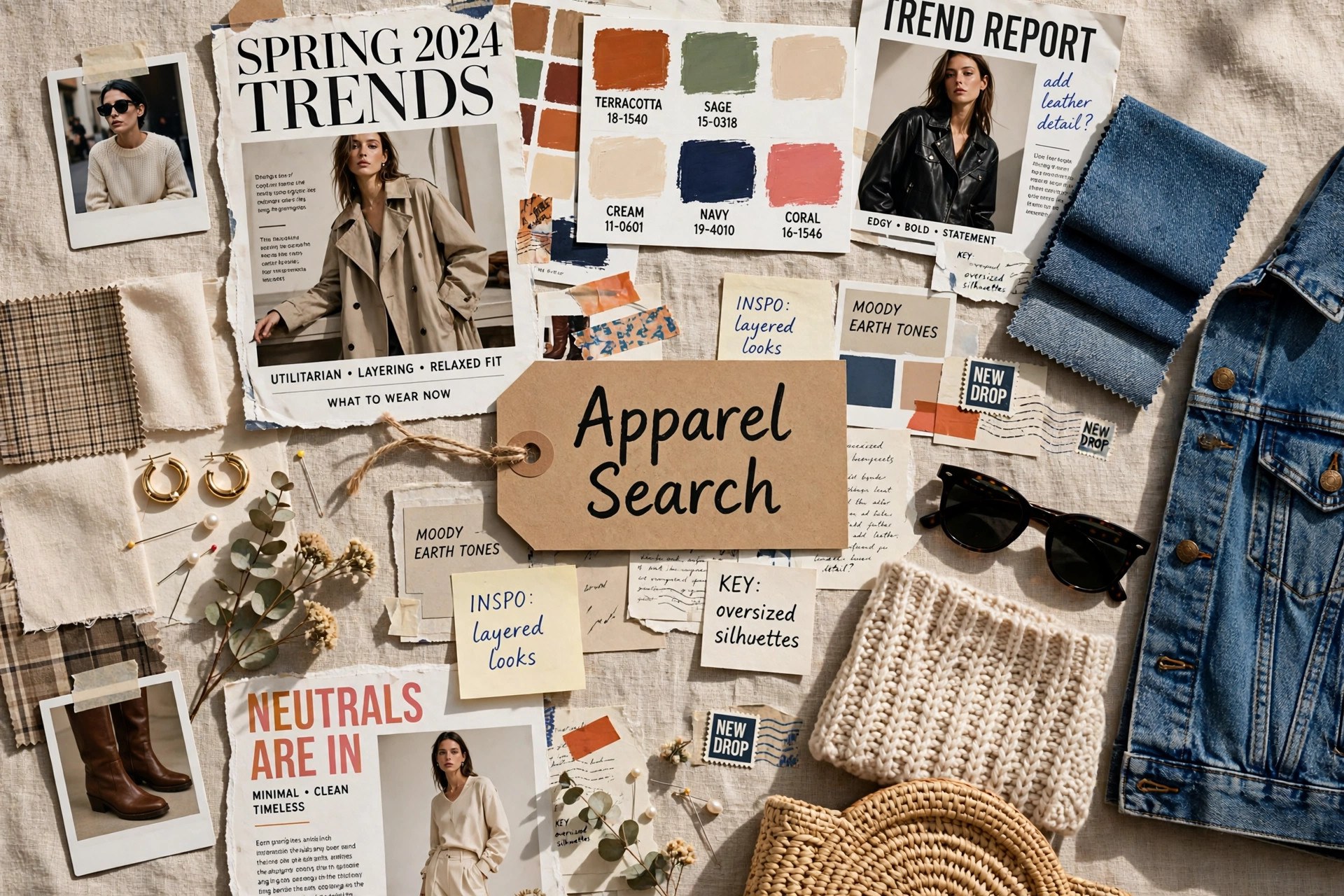
Boards are typically used by merchandisers and designers as a method to organize concepts while developing a collection: colors, fabrics, silhouettes and moods gathered into one place where a range can be argued about visually. A board for a green color story for sweaters might hold photographs of grass, tree leaves or greenhouse paint rather than a single sweater — the board is about the decision, not only the garment. That is the habit Pinterest formalized: a Pin is a little bookmark that always links back to the site it came from, so a board keeps both the image and its source.
The Apparel Search arrangement is slightly different from a designer's working boards: the categories here are the elements of fashion itself, portrayed through pins and boards collected from across the web, so that readers can monitor trends by subject. Start with the board closest to your interest, follow it on Pinterest for new pins, and use the sister boards linked from every board page when the interest widens.
Why Visual Monitoring Works
Fashion moves in pictures before it moves in words. A silhouette is pinned, saved and copied weeks before it is named in a trend report, so a monitored set of boards functions as an early-warning system — provided the monitoring is deliberate. Save and follow by subject, review what accumulates, and compare boards against each other: when the same detail appears on the shoes board, the vintage board and the celebrity board in the same month, something real is moving.
The written background lives elsewhere in this section: the forecasting guides explain how predictions are made, the color trend pages track palettes, and the dated report archive — Mudpie, Snap Fashun and the Europe photography trips — shows how the industry documented trends before social platforms existed. The boards and the archive answer the same question at different speeds, and using both is the complete method.
A practical note for new Pinterest users arriving from this page: a board is only as useful as its editing. The boards in this set are kept by subject and added to pin by pin, which is what makes them browsable as a directory rather than as a stream. Follow the boards you genuinely check, organize your own saves the same way, and the service becomes what it is best at being — a visual notebook that compounds in value the longer it is kept, for shoppers and professionals alike.
About Pinterest and Mood Boards
Social media is a fabulous way to keep an eye on the latest trends. Watching what ones peers are wearing and sharing is essential if you wish to keep up with the fast pace of style. With all of the wonderful social network services such as Instagram, Facebook, Tumblr, TikTok and Twitter, where should we begin our quest? Well, it is important not to forget about the very "visual" social sharing site Pinterest.
Pinterest is a tool for collecting and organizing the things that inspire you. Fortunately, tons of people on their network are interested in "fashion". Monitoring the pins and boards is a clever way to stay on the cutting edge.
What's a Pin? Pins are like handsome little bookmarks. Whenever you find something on the web that you want to keep, add it to Pinterest. Your newly minted Pin will be here whenever you need it, and will always link back to the site it came from.
Pins are collected on boards . Boards are where you organize your Pins.
Trend boards are typically used by merchandisers and designers as a method to organize concepts to help them develop a collection. The boards can be utilized to organize ideas regarding colors, fabrics, silhouettes, etc. Even when using them to develop an apparel presentation, it is possible for the board to include only clothing, or potentially have no clothing at all. For example, a designer can add pictures of grass, tree leaves, or green house paint, as they try to determine a shade to be utilized for a green color trend concept for sweaters. It is not critical to actually have sweater artwork on that particular trend board.
In this section, we have a slightly different way of arranging concepts. We have categories various elements that we believe to be important. These elements are portrayed online by utilizing Pinterest pins & boards to form collections from across the web. Hopefully these will help you monitor trends in fashion.
Common Questions
What are Pinterest boards?
Boards are the themed collections where Pins — individual saved images — are organized on Pinterest. Apparel Search keeps boards by fashion subject, from apparel and shoes to vintage fashion and fashion events, and each board has a guide page in this section.
How do Pinterest boards help with fashion trends?
Monitoring pins and boards is a visual way to watch what people are wearing, saving and sharing. Designers and merchandisers use boards to organize concepts — colors, fabrics and silhouettes — while developing collections.
Where is the Apparel Search Pinterest profile?
The Apparel Search profile is on Pinterest under the apparel account, and the link to it is in the References & Further Reading list below. Each board page also links directly to its own board.
More to Explore
- Apparel Search on Pinterest
- Fashion Trends
- Color Trend Forecasting
- Be Fashionably Social
- trending fashion
- Fashion Trend Board
- Celebrity Fashion Trend Board
- Power of Fashion Trend Board
- Hair & Beauty Trend Board
- Jewelry Trend Board
- Apparel Trend Board
- Shoe Trend Board
- Swimwear Trend Board
- Eyewear Trend Board
- Handbag Trend Board
- Vintage Fashion Trend Board
- Fashion Model Trend Board
- Fashion Event Trend Board
- Fashion Designer Trend Board
- Trend boards