Zippers Report — Industry Overview — Sample Pages: Sourcing Zippers from China
China Sourcing Report — Zippers: industry overview — sample pages
This page presents sample pages from the industry overview of the Zippers China Sourcing Report — the section that explains the market behind the 70 supplier profiles and 141 gallery products that follow it. An industry overview is where a sourcing report proves its value, because it connects the facts a buyer can see, such as prices and materials, to the forces a buyer cannot, such as wage pressure, licensing changes and capacity plans. The navigation directly below this introduction carries every link on this page, including the report's table of contents and the sample pages for the executive summary, supplier profile and product gallery.
Directory, Report and Magazine Links on This Page
- Clothing Industry & Textile Industry Reports
- Fashion Accessories Report
- Garment Reports
- Textile Reports
- Apparel Research
- Apparel Industry Guides
- Fashion
- Fashion News
- Clothing Industry Employment
- Zipper Factories
- What you'll get
- How you'll benefit
- Table of contents
- Executive summary
- Supplier profile
- Product gallery
- Xue Mei
Industry Overview: Zippers
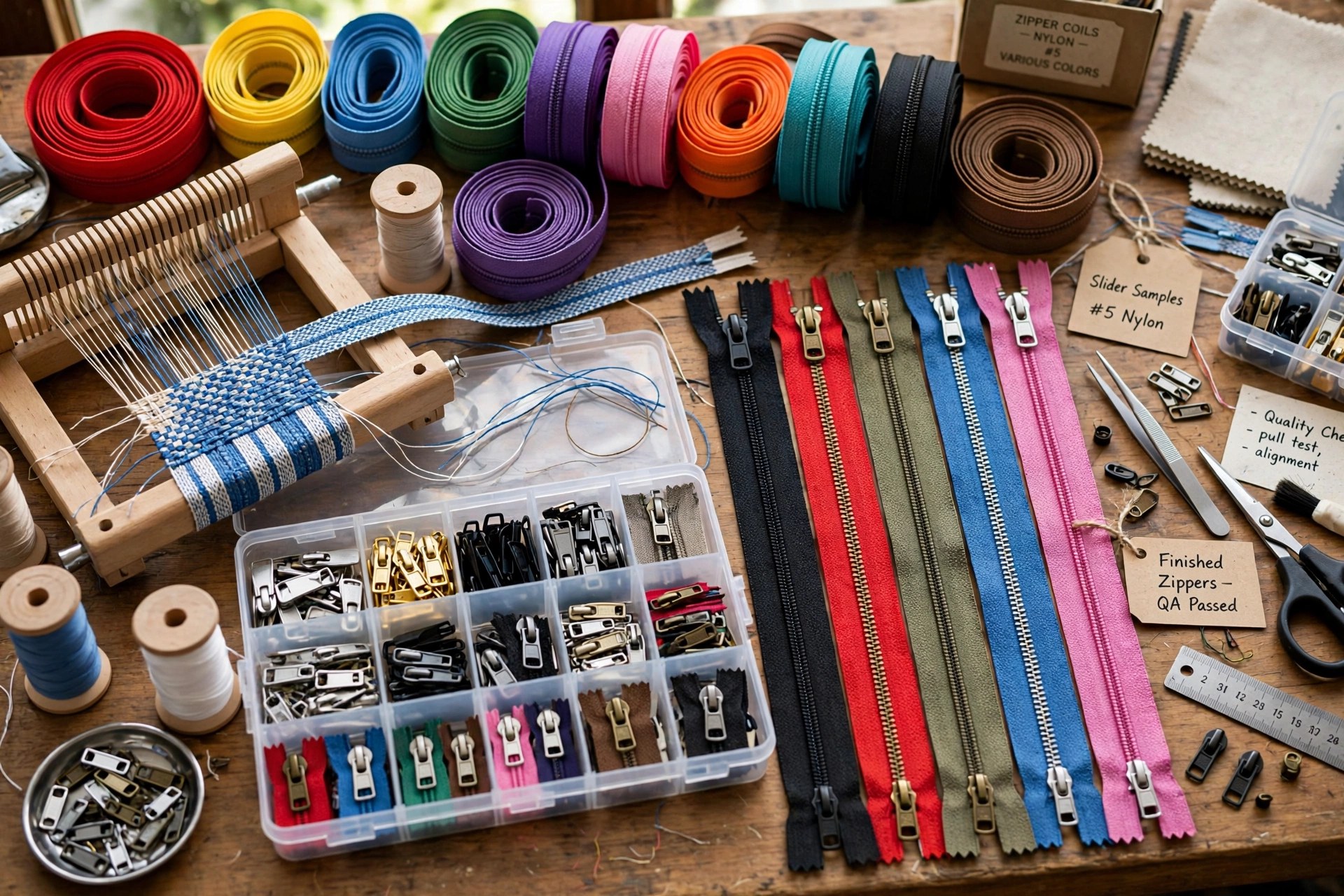
China's zipper export manufacturing industry is slowly but steadily moving to midrange and high-end production. Low-end products still dominate production, but more suppliers are releasing value-added zippers with multicolor teeth, patterned tapes and special functions to distinguish themselves from competitors, and increased competition in the low-end is pushing large suppliers upscale. China zippers are known for their low prices, which start at US$0.03 for a #5 20cm nylon model, but suppliers are finding it harder to compete on price alone. In general, suppliers are moving upscale within their product lines rather than shifting materials: makers that produce nylon zippers are producing more midrange and high-end versions in nylon itself. Suppliers shifting to upscale products are usually large private companies, local or foreign-owned, with direct export capability, and most have been in the business for 10 years or more; all 15 companies visited for this report have stopped or significantly decreased production of low-end models, 67 percent of these suppliers have operated for 10 years or more, and 27 percent have been making zippers for more than 20 years.
Suppliers moving upmarket are intensifying R&D and purchasing advanced equipment to design value-added zippers: the latest designs have tapes printed with colorful patterns or woven in multiple colors, pull tabs made from a variety of materials and customized to buyers' requests including etched logos, and teeth dyed or electroplated in gradated colors; some new releases are also water-resistant and fire-retardant. Upscale zippers use imported and branded materials such as Delrin, Tepcon and Bayer plastics, priced significantly higher than locally made materials and more durable. On trade: export sales of zippers and zipper parts from January to October 2004 were US$207.7 million, up 23 percent from the same period of the previous year, with finished and semi-finished zippers making up 79 percent of shipments — 3 billion meters worth US$167.3 million, up 18 percent in volume and 25 percent in value — and zipper parts making up 21 percent, at 16 million kilograms worth US$40.4 million. The industry snapshot counts 200 exporters, 100 trading companies, annual exports of US$207.7 million, export sales growth of 23 percent in 2004 and an OEM share of business of 40 percent.
How to Read This Overview as a Buyer
Read the overview for decisions, not background. The cost figures tell you how much room a supplier has to negotiate: a maker absorbing most of a cost increase will either raise prices soon or cut somewhere you cannot see, and both possibilities belong in your order planning. The competition analysis tells you where your enquiry has leverage — crowded, standardised segments compete on price, while design-led segments compete on capability — and the supplier survey turns the industry's own expectations about prices, sales, research focus and capacity into a planning horizon for the year ahead. In this report, the Wenzhou production base is examined in detail, where small and big suppliers complement each other, a fact the full overview develops with production and survey detail.
The overview also frames the 70 profiles that follow it. A profile's prices mean little until they are set against the overview's price trends; a factory's expansion plan means more when two-thirds of its competitors are expanding too. Buyers who read the overview first consistently shortlist better, because they know which claims to test when they reach the profiles and the product gallery.
Zippers Report at a Glance
Suppliers profiled: 70 | Products in the gallery: 141 | Pages: 104 | Published: February 2005 | Price: US$395
All information in the China Sourcing Reports is the result of independent, impartial research conducted by Global Sources analysts, based on in-person factory tours. Apparel Search works in association with Global Sources to promote these sourcing reports to the international fashion community. Questions about a report or the status of an order go to the Global Sources contact named in the navigation on this page.
Photos
Common Questions
What does the industry overview of the Zippers report cover?
Supplier demographics, products and prices, materials and components, manufacturing, research and design, and a supplier survey on export prices, sales, target markets and capacity plans — applied to zippers sourcing from China.
Why read the overview before the supplier profiles?
Because it supplies the market frame — cost pressure, price direction, competition and capacity — that makes each of the 70 profiles readable and lets a buyer test a supplier's claims against industry evidence.
How big is the full Zippers report?
104 pages with 70 supplier profiles and 141 gallery products, published in February 2005 at US$395.