Smart Fabrics and Intelligent Textiles in the UK: Seven Companies at the Forefront of Innovation
Twenty-one pages profiling Auxetix, d3o lab, Eleksen, Engineered Fibre Structures, EXO, Fibretronic and Peratech
This 21-page report, published in Issue 68 of Technical Textile Markets in the 1st quarter of 2007, profiles seven UK companies which are at the forefront of innovation in smart fabrics and intelligent textiles: Auxetix, d3o lab, Eleksen, Engineered Fibre Structures, EXO, Fibretronic and Peratech. Some of these companies have developed and commercialised functional fabric-based products incorporating integrated electronics — products capable of interfacing with or accommodating iPods, mobile phones and laptop computers, including sports jackets, bags, business suits and fabric keyboards. The report is the feature highlighted by the issue's editorial, which examines the enabling technologies of dye-sensitised solar cells and plastic electronics. Technical Textile Markets is published four times a year by Textiles Intelligence, formed in 1992 as a spin-off from the Economist Intelligence Unit.
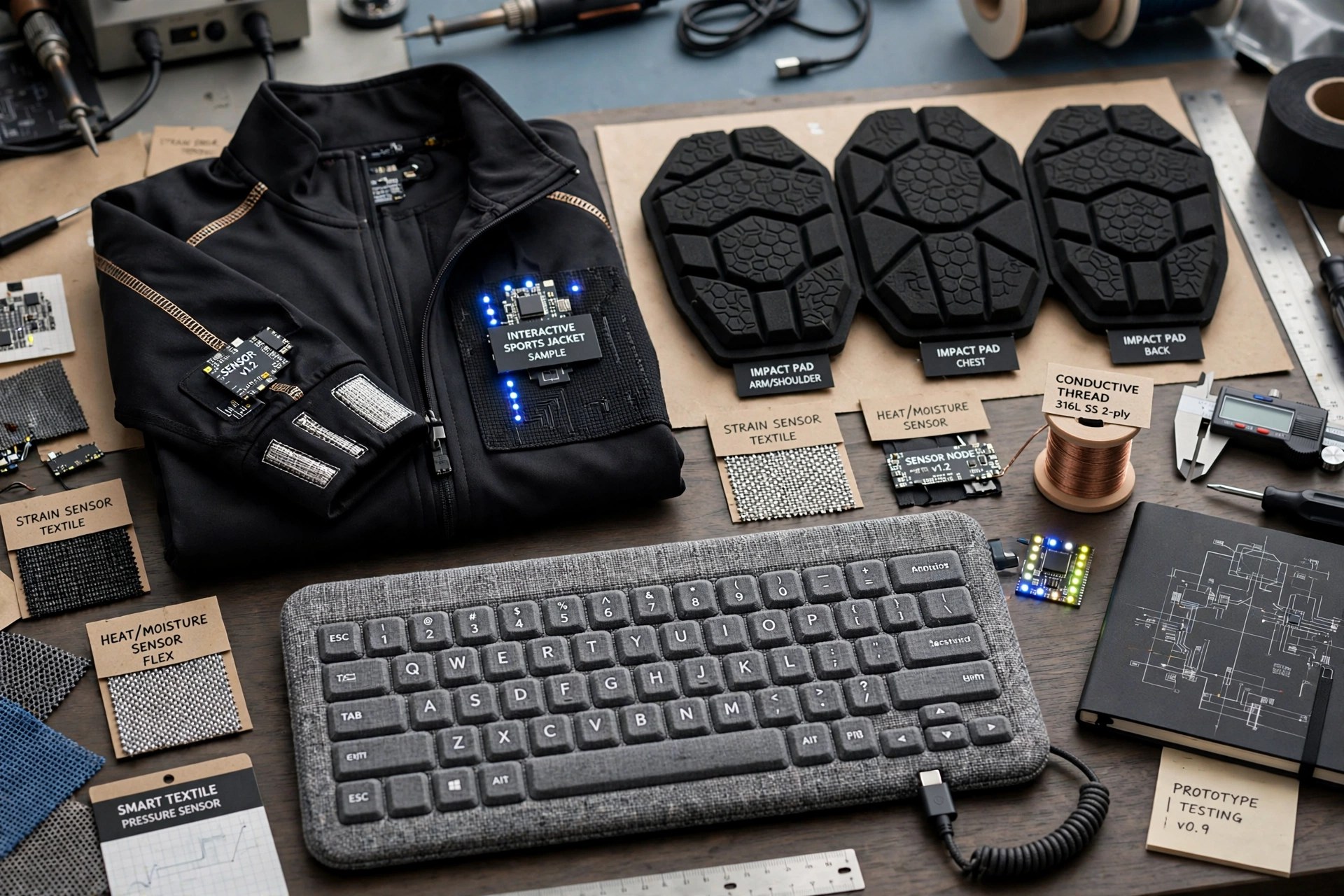
Fabric-Based Electronics: Eleksen, Fibretronic and Peratech
Eleksen, Fibretronic and Peratech are among a number of UK-based companies leading the field of fabric-based products with integrated electronics. The products named in the report show the range: sports jackets, bags and business suits that interface with or accommodate iPods, mobile phones and laptop computers, and fabric keyboards that turn cloth into a control surface. The commercial point is that the electronics disappear into products people already wear and carry, rather than asking users to adopt a new kind of device — the textile is the interface.
Smart Materials: Auxetix, d3o lab, Engineered Fibre Structures and EXO
At the same time, other smart materials offering new performance features for a varied range of end uses have emerged. Many are based on the results of academic research, and some have been created by modifying existing textile manufacturing technology. Such materials include blast curtains and self-locking sticking threads from Auxetix; protective equipment for high performance sports applications from d3o lab; a glove which can be used to control games consoles and other electronic devices from Engineered Fibre Structures; and heat conducting clothing technology from EXO. The seven profiles together divide the UK smart textiles field into its two halves: companies putting electronics into fabrics, and companies making the fabric itself behave in new ways — absorbing impact, resisting blast, conducting heat or locking a seam.
Why the UK, and Why 2007
The report's UK focus reflects the position described in the issue's editorial: the smart fabrics and intelligent textile sector was growing rapidly, albeit from a low base, and a number of UK-based companies were global leaders in their respective technologies. Each profile follows the publication's standing company profile pattern — the company's products and technology, the markets it is exploring and its opportunities — so a reader in fibres, textiles or one of the end use sectors can judge which of the seven approaches, electronic or material, bears on their own product development.
From Academic Research to Commercial Products
A thread running through the seven profiles is origin. Many of the smart materials described are based on the results of academic research, and some were created by modifying existing textile manufacturing technology rather than inventing wholly new processes. That combination — university research commercialised by small specialist companies — is presented as the UK sector's characteristic route to market, and it explains the field's shape in 2007: seven small companies at the forefront, each holding a distinct technology, rather than a single large producer dominating the field.
Common Questions
Which seven UK companies are profiled?
Auxetix, d3o lab, Eleksen, Engineered Fibre Structures, EXO, Fibretronic and Peratech — the UK companies at the forefront of innovation in smart fabrics and intelligent textiles.
What kinds of products have these companies commercialised?
Functional fabric-based products incorporating integrated electronics — sports jackets, bags, business suits and fabric keyboards interfacing with iPods, mobile phones and laptops — and smart materials including blast curtains, impact protective equipment, a games-control glove and heat conducting clothing.
How long is the report and where did it appear?
21 pages, in Issue 68 of Technical Textile Markets, 1st quarter 2007 — the report highlighted by that issue's editorial on dye-sensitised solar cells and plastic electronics.
More to Explore
- Technical Textile Market Report
- Textiles Intelligence Reports
- Apparel Research
- Apparel Industry Guides
- Fashion
- fabric
- fibers
- Fashion News
- Apparel Industry Jobs
- Trend Forecasting
- Editorial: New Technologies for Smart fabric and Intelligent Textile Products: Dye-Sensitised Solar Cells and Plastic Electronics
- Global Technical Textiles Business Update
- Profile of Lenzing: A Leader in Cellulosic Fibres and a Joint Venture Partner in Carbon Fibres
- Statistics: Asian Fibre Consumption and Production
- The World Nonwovens Industry: Part 3
- Belinda Carp