Royal & State Fashion · State Dressing Profiles
Queen Letizia of Spain: State Dressing from the Newsroom
Most royal wardrobes are inherited along with the role. Queen Letizia of Spain brought hers with her. Before her marriage she was a television journalist and news anchor with TVE and CNN+, and the professional, sober trouser-suit dressing of the newsroom carried straight over into royal life — sharpened, over two decades, into something more deliberate: a working wardrobe that doubles as an ambassador's brief for the Spanish fashion industry. This guide documents the formula: the white Armani suit that announced it, the wedding dress that summaries persistently credit to the wrong designer, the state gowns of Felipe Varela, the high-street labels worn as policy, and the honest limits of what anyone can claim about her effect on sales.
At a Glance
- The background
- Television journalist and news anchor (TVE and CNN+) before her marriage — the newsroom set the wardrobe's grammar
- The signature
- Tailored trouser suits and sober professional tailoring, carried from the anchor's desk into royal engagements
- The announcement
- A white Armani trouser suit, November 2003 — read symbolically at the time and analysed since by scholars
- The wedding dress
- Manuel Pertegaz, 2004 — not Felipe Varela, despite the usual shorthand
- Formal designer
- Felipe Varela — her proclamation outfit of June 2014 and her state evening wear
- The high street
- Zara, Mango and Massimo Dutti alongside Carolina Herrera and Hugo Boss; shoes by the Spanish brand Magrit
The Newsroom
From the Anchor's Desk: A Professional Wardrobe First
Newsreading is one of the few jobs in public life where clothes are a professional instrument with rules as strict as any court's. The anchor must look authoritative without looking decorative, current without looking fashionable, and identical in tone from one bulletin to the next — because the clothes are not the story, and the moment a viewer notices the outfit instead of the news, the outfit has failed. Letizia Ortiz built her career inside that discipline at TVE and CNN+, and its grammar is easy to list: tailored trouser suits, sober colours, clean lines, nothing that rustles, flutters or distracts.
What makes her case distinct in this section is that the grammar survived the change of job intact. Royal dressing usually works the other way round — a woman marries into a court and is gradually absorbed into its dress codes, its designers and its jewellery vault. Letizia instead carried her professional, sober trouser-suit dressing over from the newsroom into royalty, and the trouser suit remained her default uniform for working engagements: the garment of a woman presenting information, repurposed for a woman representing a state. The continuity was the message. Spain was not getting a fairytale princess in ballgowns; it was getting a working professional whose clothes said so.
That reading is not just retrospective fashion commentary. It is the starting point of the one substantial academic study of her wardrobe, discussed in the next section — and it explains why her dressing rewards the same kind of attention as a text. A journalist knows that everything in the frame communicates, including the things that look like nothing at all.
The Announcement
November 2003: The White Armani Trouser Suit
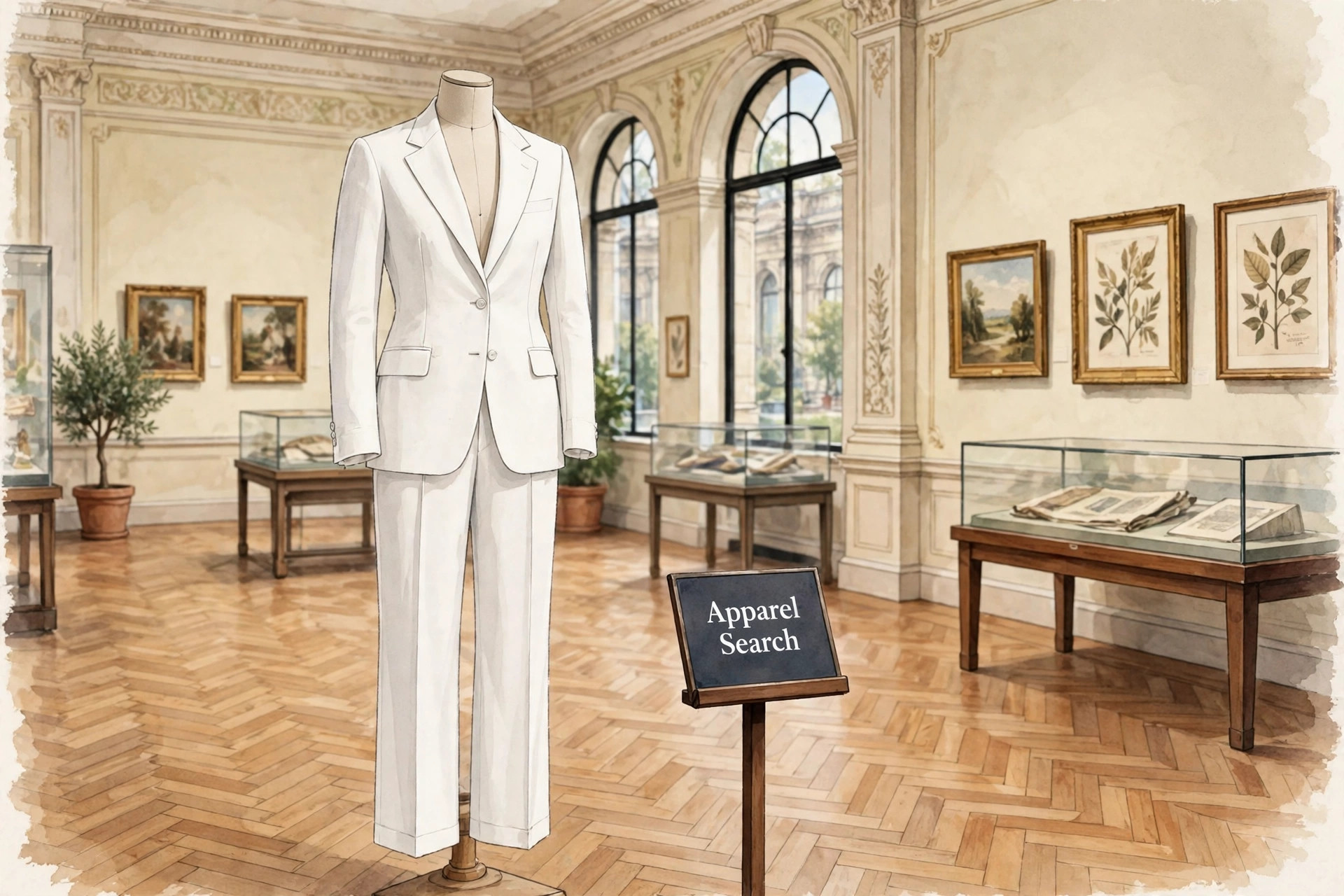
Her first appearance in the role was a masterclass in that discipline. For her engagement announcement in November 2003, the future queen wore a white trouser suit by Armani — not a dress, not a skirt suit, and not a Spanish label, but the international uniform of the serious professional woman, in the colour of a blank page. The choice was read symbolically at the time: white for a new beginning, trousers for a working life, tailoring for seriousness of intent. It announced, before she had said anything of substance in public, exactly what kind of royal she intended to be.
The fullest treatment of that symbolism is academic. In "Queen Letizia's Royal Fashion and Celebrity: From Curse to Asset," published in the Bulletin of Spanish Studies in 2024, Pérez argues that the engagement suit was the opening move in a sustained strategy: that Letizia deliberately became an ambassador for the Spanish fashion industry, and that her wardrobe functioned as a soft-power asset for a monarchy whose standing had been damaged. The subtitle's journey — from curse to asset — is the argument in miniature. A commoner journalist marrying the heir was initially framed as a liability; the wardrobe, run with a newsroom professional's understanding of images, became one of the instruments by which she was reframed as an asset.
Note what kind of evidence this is, because this guide will keep the categories separate throughout. The Armani suit is a documented garment at a documented event. The symbolic reading of it is interpretation — well-argued interpretation, by a named scholar in a peer-reviewed journal, but interpretation all the same. Where the record hardens into designers, dates and garments, this page says so; where it is argument, the argument is attributed. Her wardrobe attracts more confident claims than the evidence supports, and the next section deals with the most repeated of them.
The Correction
The Wedding Dress Was Pertegaz: Getting the Record Straight
Ask a search engine who designed Queen Letizia's wedding dress and a large share of the answers will name Felipe Varela. They are wrong, and the error is worth correcting at length because it shows how royal-fashion shorthand forms: Varela is so strongly her signature designer that his name attaches itself to every major garment of her life, including the one he did not make. Her 2004 wedding dress was designed by Manuel Pertegaz — one of the great names of Spanish couture, and the correct credit. (Our wedding traditions guides cover what such dresses mean culturally; our index of fashion designers by name is the place to keep the two men's careers separate.)
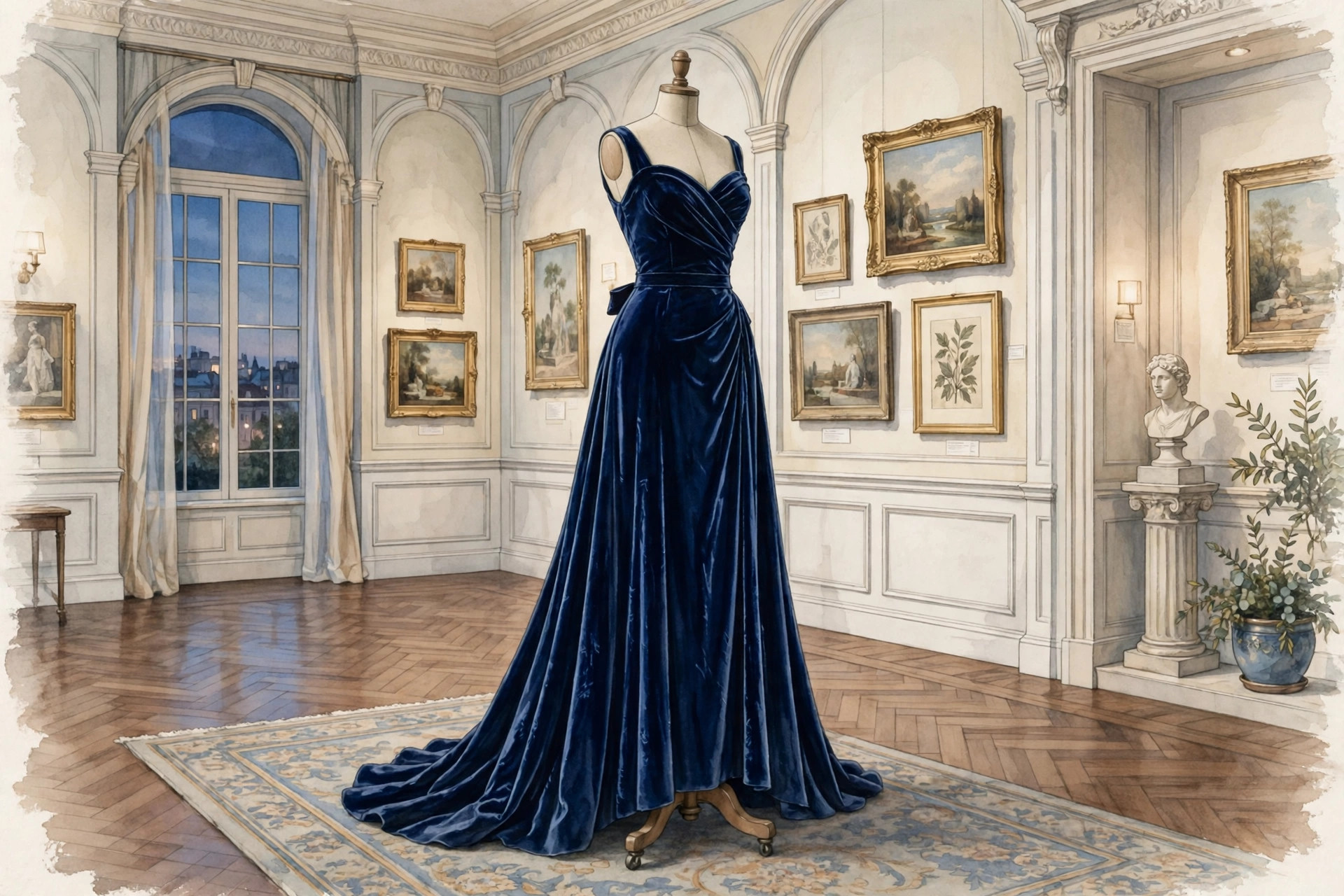
Felipe Varela's real role is substantial enough to need no borrowed wedding dress. He is her signature designer for formal and state dressing: he made her outfit for the proclamation of Felipe VI in June 2014 — the constitutional moment of the reign, dressed with the restraint her formula demands — and he has supplied evening wear across the reign. The clearest documented example is the blue velvet Varela gown she first wore in 2018 and wore again in January 2026: a state-level gown, kept, rested and re-worn across eight years, in the same spirit of wardrobe discipline that the newsroom taught. Re-wearing at that level is itself a statement — the opposite of the disposable red-carpet economy — and she has made it a habit rather than an exception.
So the accurate one-line summary is: Pertegaz for the wedding, Varela for the reign. Getting it right matters beyond pedantry. A directory of state dressing that cannot keep its two central Spanish designers apart has no business judging anyone else's wardrobe — and the correction, once made, actually improves the story, because it separates the couture elder honoured at the wedding from the working designer who built the wardrobe of the reign itself.
The Spanish Brief
Zara, Mango and Magrit: Dressing as Industry Policy
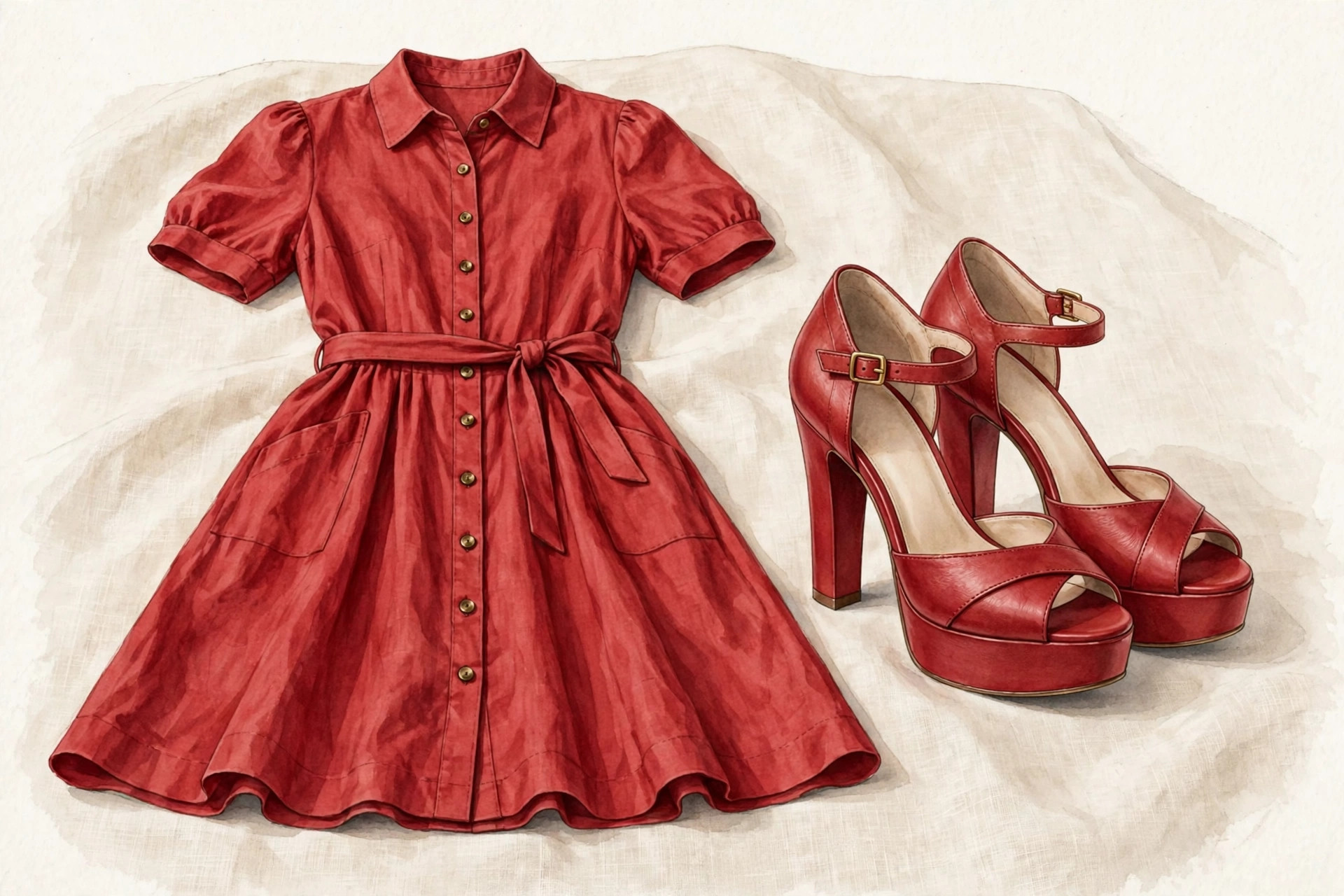
The most distinctive feature of Letizia's wardrobe is not a designer but a price range. Her Spanish high-street mix is documented and long-standing: Zara, Mango and Massimo Dutti worn in regular rotation alongside Carolina Herrera and Hugo Boss, with shoes frequently by the Spanish brand Magrit. A queen who wears the same high-street labels her citizens wear is making a legible point about accessibility — but the deeper point, the one Pérez's study presses, is industrial. Spain's fashion sector is a real national industry with global champions, and its queen wears it at every level of the market, from couture to the mall, in front of the world's cameras.
This is national-industry dressing of a kind this section documents in several wardrobes, but Letizia's version is the most systematic because it is vertical: she does not only wear Spanish couture on state occasions, she wears Spanish manufacturing on ordinary ones. The high-street pieces are not camouflage or relatability theatre layered over a couture wardrobe; they are in the working rotation, photographed at the same engagements, and identified by the Spanish fashion press as a matter of routine. For an industry ambassador, that is the correct strategy — a Zara dress photographed on a queen reaches more of the industry's actual customers than any gala gown.
It is also, again, a journalist's instinct. She spent years in a newsroom learning which images travel. A gown is admired; a high-street dress is bought, copied and talked about by people who will never attend a state banquet. Dressing down-market on purpose, consistently, for two decades is not a stylist's whim. It is an editorial decision renewed every morning.
The Nickname
The "Letizios": When a Shoe Gets the Wearer's Name
Every wardrobe in this section has one garment that escaped into the language, and Letizia's is a shoe. Her peep-toe platform pumps became so identified with her — worn so consistently, photographed so often, and recognised so instantly as hers — that they were nicknamed the "Letizios" and discussed Europe-wide. Pérez records the episode in the 2024 study, and it deserves its place in the record precisely because it is the kind of detail no palace would ever plant: a nickname is evidence of recognition that has passed beyond commentary into folk vocabulary.
Consider what has to be true for a shoe to acquire a wearer's name. The silhouette must be consistent enough to be a signature, the wearer visible enough for the signature to register, and the pairing durable enough that the public treats shoe and woman as a unit. The Letizios met all three tests during the years when her style was still being treated as a curiosity — the journalist who had married a prince. By the time the nickname was circulating across Europe, the reframing Pérez describes was already under way: the supposed curse was dressing like an asset.
The episode also marks the limit of the formula's sobriety. The newsroom wardrobe was designed to be unnoticeable, and mostly it is; but a signature, repeated faithfully enough, becomes noticeable by accumulation. The trouser suits built the reputation for seriousness, and the shoes — one playful, recognisable constant — gave the seriousness a trademark.
The Evidence
Her Effect: What Can and Cannot Be Measured
This section of Apparel Search holds itself to a rule: an impact claim is only as good as its measurer. For some wardrobes in these guides, platform search data and retailer-reported sell-outs exist and are quoted with their sources. For Queen Letizia, the honest finding is an absence, and this page states it plainly: research for this guide found no measured retail figures for her — no platform search-spike data of the kind published for other royal dressers, no retailer-reported sell-out series, and no academic sales study. Anyone who quotes you a "Letizia effect" number is inventing it.
What exists instead is qualitative, and it is genuinely documented. There is the academic argument: Pérez's 2024 study in the Bulletin of Spanish Studies, which makes the soft-power case in full — the wardrobe as a deliberate ambassadorship for the Spanish fashion industry and a reputational asset for a damaged monarchy. And there is the coverage record: consistent best-dressed recognition in titles such as W (in 2014) and HELLO!, sustained across the reign rather than confined to a wedding-year spike. Reputation of that durability is not a sales figure, but it is not nothing either; for a monarchy, reputation is close to the whole balance sheet.
Her place in this section follows from that evidence. She is its clearest case of dressing as national-industry promotion carried out by the wearer herself, with a professional communicator's understanding of how images work — and its clearest warning against confusing a well-documented reputation with a measured market effect. The wardrobe's work was real. It was just done in the currency she had always traded in: not sales, but standing.
Common Questions
Questions & Answers
Who designed Queen Letizia's wedding dress?
Her 2004 wedding dress was designed by Manuel Pertegaz, not Felipe Varela. The confusion is common because Varela became her signature designer for formal and state dressing, including her outfit for the proclamation of Felipe VI in June 2014 and evening gowns such as the blue velvet gown she first wore in 2018 and wore again in January 2026.
What did Queen Letizia wear for her engagement announcement?
For her engagement announcement in November 2003 she wore a white trouser suit by Armani. She had been a television journalist and news anchor with TVE and CNN+, and the suit carried her newsroom dressing into royal life. Perez, writing in the Bulletin of Spanish Studies in 2024, reads the choice symbolically and argues that she went on to act deliberately as an ambassador for the Spanish fashion industry.
Is there a measured Letizia effect on fashion sales?
No measured figures have been published that this guide can cite. Research for this page found no platform search data, no retailer-reported sell-out series and no academic sales study for Queen Letizia. Her documented impact is qualitative: the soft-power and industry-ambassador argument made by Perez in 2024 and consistent best-dressed coverage in titles such as W and HELLO!.
Royal Style on Apparel Search
More state-dressing profiles from this section, plus the site's own princess and fashion-queen guides.
Search Apparel Search