Crochet Stitches Guide · Shells, Clusters & Texture
Popcorn Stitch (pc)
The popcorn stitch — abbreviation pc — is five complete double crochets worked into one stitch, then folded into a ball: the hook comes out of the work, enters the first double crochet, and pulls the working loop through, rolling the fan shut. It is the roundest, firmest, most three-dimensional texture crochet can make — a bead of yarn standing off the fabric.
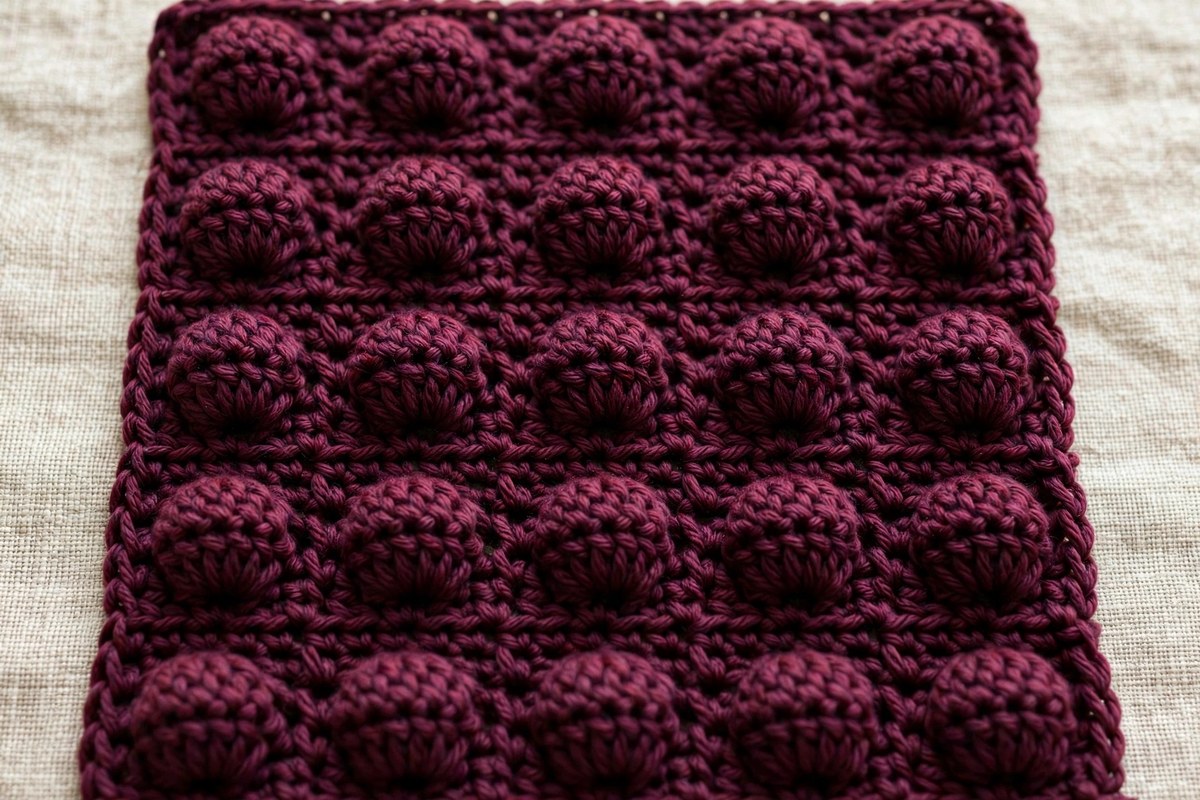
Every texture family has an extrovert, and in this one it is the popcorn. Bobbles mound, puffs swell, but the popcorn stands off the fabric as a separate object — a small, round, firmly packed ball that casts a shadow. It is also the only common stitch that asks you to take the hook out of the work mid-stitch, a small act of faith the first time and a satisfying click every time after. Heirloom bedspreads are paved with popcorns; so are cushion panels, vintage afghan motifs, and the christening blankets kept in drawers for grandchildren.
This guide works the stitch completely, settles the three-way distinction crocheters most often muddle — popcorn against bobble against puff — and covers the front-and-back working that decides which face the popcorn performs on.
How to Work It
Popcorn stitch — an original Apparel Search drawing. Five complete double crochets folded into a ball. Illustration by Apparel Search.
- Work five complete double crochets into one stitch — a full small fan.
- Take the hook out of the working loop, pinching the loop so it cannot pull out.
- Insert the hook into the top of the FIRST of the five double crochets and pick up the dropped loop.
- Draw the dropped loop through that stitch's top. The fan folds into a round ball; work the next stitch firmly to seat it.
Why the hook comes out. The five double crochets are finished, individual stitches — that completeness is the popcorn's whole identity. To fold them, the working loop (at the top of the fifth stitch) must be fastened to the top of the first stitch, gathering the fan's head into a ring. That join cannot be made with the hook still in the loop, so the loop is dropped, held by a pinch, and retrieved through the first stitch's top. Drawn through, it pulls the fan's ends together and the five posts roll into the ball. A firm next stitch locks the shape before the fabric can relax it open.
Front and back popcorns. A popcorn pops toward the side the hook enters from. Worked in the usual way on a right-side row, it stands on the fabric's face. A popcorn worked on a wrong-side row folds the other way and would be lost on the back — so patterns in turned rows direct the crocheter to push the popcorn through to the front as it is fastened, or to work the popcorn row from the back so the ball still lands on the face. Decide which face is the show face, and make every popcorn declare for it. In the round, with the right side always facing, the question never arises — one reason popcorns flourish in motifs.
Sizes. Five double crochets is the standard. Four-stitch popcorns make a smaller ball for finer yarns and baby work; three-stitch versions suit the lightest fabrics. The count changes the plumpness, never the method.
The Fabric It Makes
Popcorn fabric is two fabrics at once: a flat ground — usually plain double or single crochet — and a population of balls standing off it in whatever pattern the designer placed. The balls are dense and almost hard; they do not flatten in wear the way a bobble can, because their yarn is locked in a ring rather than gathered by a single thread. That firmness is the stitch's glory and its cost: a popcorn takes roughly five stitches' yarn plus its fastening, so popcorned fabric is heavy, warm and slow to grow, and a fully popcorned bedspread is a serious object.
The ground matters as much as the balls. Popcorns placed too close crowd each other and pucker the ground between them; classic layouts give each popcorn at least one plain stitch of breathing room on every side, and let the pattern — diamonds, hearts, flowers, initials — be drawn by placement rather than density.
Working Notes
Popcorn, bobble, puff — the honest distinction
The three raised stitches are confused constantly, and the difference is structural. A popcorn is made of complete stitches, folded and fastened — the roundest and firmest of the three. A bobble is made of unfinished double crochets — usually four or five, each left with its last loop open — closed together in one pull, gathering them into a softer, flatter mound. A puff is made of unfinished half double movements — loops drawn up repeatedly through one stitch and closed together — the softest swell of the three. Read the closing and you can name any of them from its diagram alone.
Do not lose the dropped loop
The one moment of risk is the dropped loop. Pinch it the instant the hook leaves it, keep the work still, and reinsert the hook promptly. A loop that pulls out unravels the fifth double crochet — annoying, not fatal: rework that stitch and proceed. After a dozen popcorns the pinch-and-retrieve becomes one gesture.
Seat every popcorn
The stitch after a popcorn does quiet structural work: worked firmly, it pins the ball's base and sets its height. A slack following stitch lets the popcorn slump sideways — which is why many patterns place a deliberately firm double crochet after each one.
Where It Is Used
Motifs and heirloom bedspreads — popcorn flowers, diamonds and medallions are the stitch's historic showcase. Texture panels on cushion covers, throws and garment yokes, where a field of popcorns reads as pattern from across a room. Baby blankets — the balls are firm, washable, and fascinating to small fingers. Letters and numbers — popcorns and their bobble cousins are the pixels of crochet graph work: charted on a double crochet ground, each raised stitch is one filled square of the chart, spelling names, dates and monograms. Borders and single motifs — one popcorn at a corner or flower centre gives a plain piece its jewellery.
Variations
Back popcorn
The same formation fastened from the other side, so the ball stands on the fabric's back — used deliberately in reversible work, and the form a popcorn takes when a wrong-side row is worked without pushing it through.
Four and three double crochet popcorns
Smaller balls for finer yarns, fastened identically. The four-stitch popcorn is the commonest modern variant; three-stitch versions suit lace-weight work.
Popcorns in other stitches
The fold-and-fasten idea transfers: treble popcorns make long, dramatic balls for shawl borders, and single-crochet popcorns — tiny and tight — appear in firm, sculptural work.
Where It Goes Wrong
The popcorns lie flat
Either the fan's stitches were not complete — unfinished stitches closed together make a bobble, flatter by nature — or the fastening was drawn through loosely, leaving the ball unrolled. Check that all five double crochets are fully closed before the hook comes out, and pull the loop through with a decisive tug.
Popcorns on the wrong face
The row was worked from the back without pushing the balls through. On turned work, plan the popcorn rows: work them on right-side rows where possible, and where a pattern places them on a wrong-side row, push each ball to the front with a fingertip as the following stitches are worked.
The ground puckers around the balls
Popcorns too close together, or a ground worked too tightly to absorb them. Give each popcorn its breathing room — at least one plain stitch on each side in the same row — and keep the ground rows at an honest, relaxed tension; the balls supply all the firmness the fabric needs.
Related Stitches
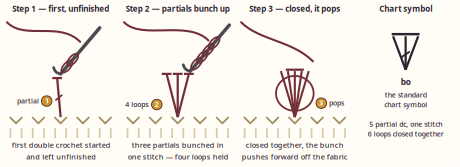 Bobble StitchUnfinished stitches gathered: the popcorn's softer sibling.
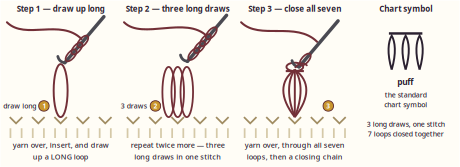 Puff StitchDrawn-up loops closed together — the softest of the three.
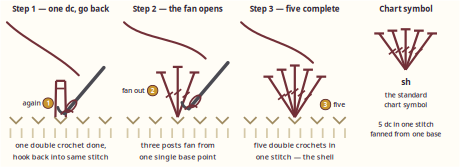 Shell StitchThe fan the popcorn folds up — the full guide.
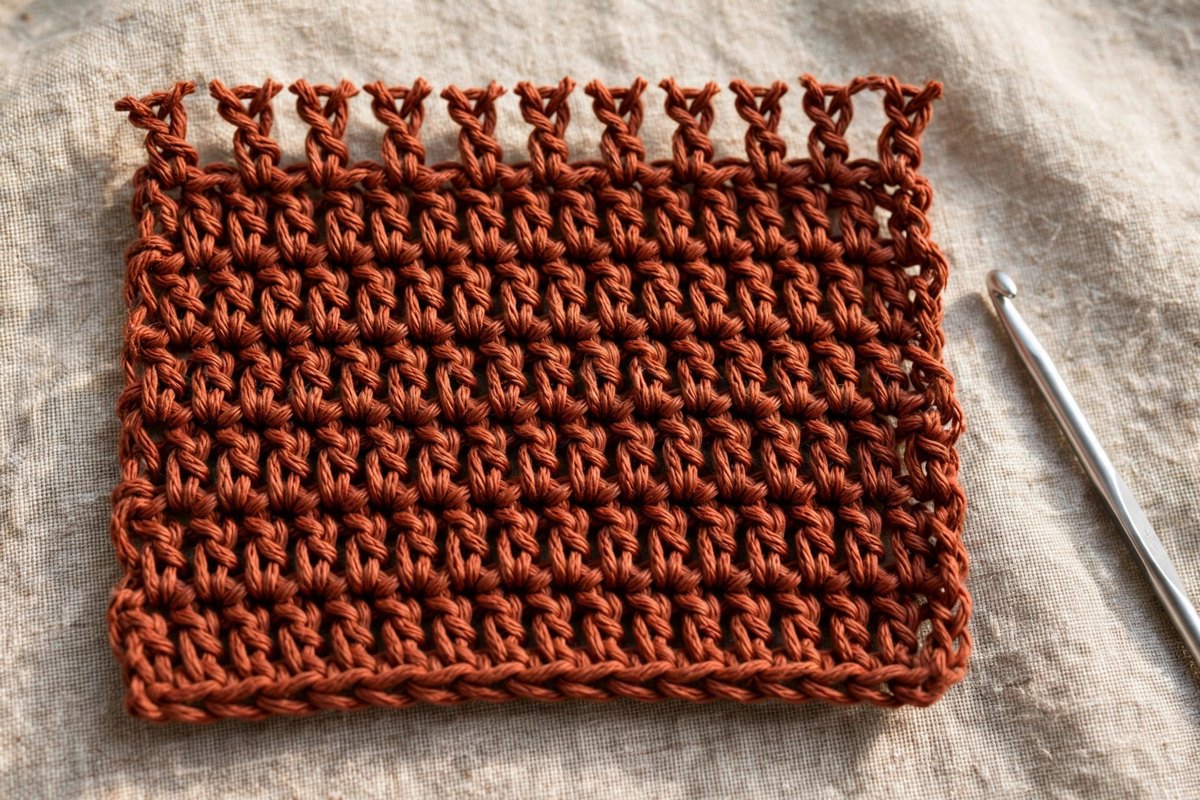 Double CrochetFive of these, folded, make one popcorn — the full guide.
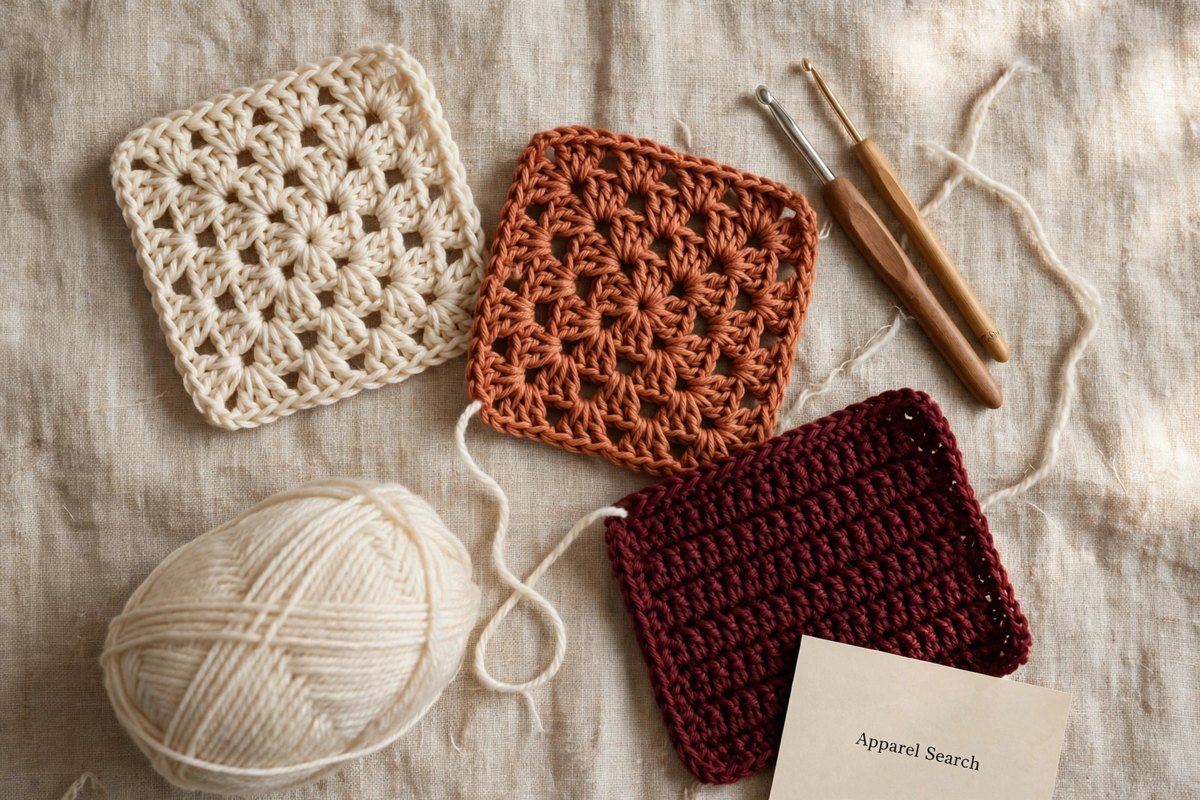 Shells, Clusters & TextureAll eight texture stitches with diagrams, on the family page.
Common Questions
What is the difference between a popcorn, a bobble and a puff stitch?
Construction. A popcorn is five complete double crochets folded and fastened into a ball — the roundest and firmest. A bobble is several unfinished double crochets closed together in one pull, making a softer mound. A puff is repeated half-double movements — loops drawn up in one stitch and closed together — making the softest swell. Complete and folded, gathered tall, gathered half: the closing names the stitch.
Why do you take the hook out in a popcorn stitch?
To fasten the fan shut. The working loop sits at the top of the fifth double crochet; it must be drawn through the top of the first double crochet to gather the fan's head into a ring, and that join cannot be made with the hook still in the loop. The loop is dropped, pinched so it cannot pull out, retrieved through the first stitch, and drawn through — the fan rolls into its ball.
Why are my popcorns on the back of the work?
A popcorn pops toward the side it is fastened from, so a popcorn worked on a wrong-side row stands on the back unless it is pushed through to the front. Patterns worked in turned rows either place popcorns on right-side rows or direct the push-through. In the round, with the right side always facing the crocheter, popcorns always land on the face.
How many double crochets are in a popcorn stitch?
Five in the standard popcorn, each one complete — that completeness is what separates a popcorn from a bobble. Four-stitch popcorns make a smaller ball for finer yarns, and three-stitch versions suit the lightest work. The fastening is identical at every size: hook out, into the first stitch's top, draw the loop through.
More to Explore
Search Apparel Search