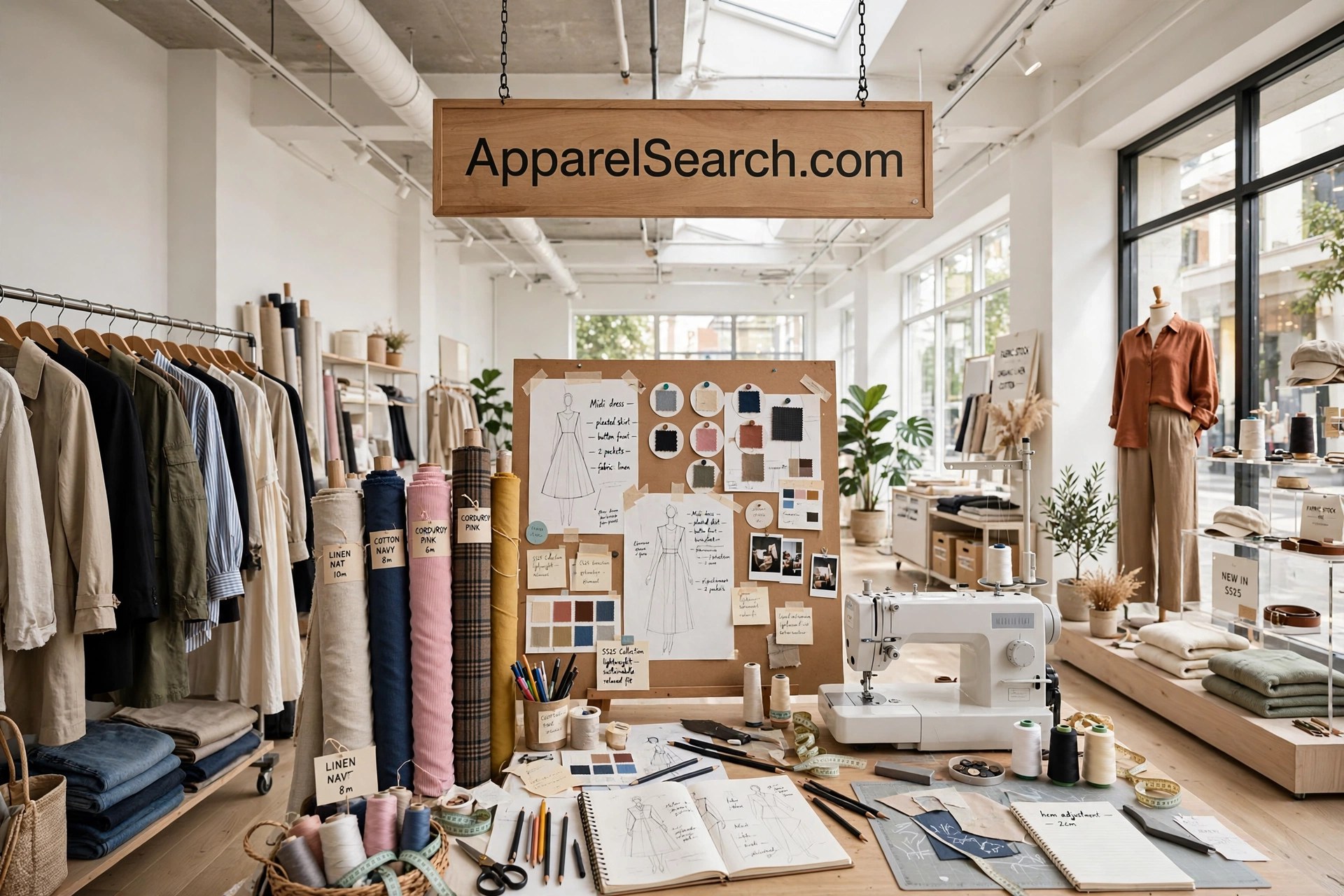
Fashion Terms — the Apparel Search fashion terminology directory
The fashion industry is the global business of designing, making, distributing, marketing and selling clothing, footwear and accessories. It stretches from fiber farms and textile mills at one end of the chain to the store window and the shopping app at the other, employing designers, pattern makers, sewers, agents, buyers, merchandisers, models, photographers, writers and retailers at every step in between.
The fashion industry is the global business of designing, making, distributing, marketing and selling clothing, footwear and accessories. It stretches from fiber farms and textile mills at one end of the chain to the store window and the shopping app at the other, and it employs people at every step in between: designers, pattern makers, sewers, agents, buyers, merchandisers, models, photographers, writers and retailers. Because nearly everyone wears clothes, it is one of the largest consumer industries in the world — and because clothing is also self-expression, it is one of the most creative. After food and shelter, clothing is the basic necessity that people turn into a statement about who they are, which is why this industry carries a cultural weight far beyond its size.
A garment passes through six connected parts of the industry before it reaches a closet. Each part is a business sector in its own right, with its own companies, jobs and vocabulary.
1. Fibers and Textiles
Everything starts as fiber — cotton, wool, linen, silk and synthetics such as polyester and nylon — which is spun into yarn, woven or knitted into fabric, dyed, printed and finished. Textile mills, converters and trim suppliers give designers the raw materials of fashion, and fabric choices made here decide much of a garment's cost, quality and care.
2. Design and Product Development
Designers and product developers research trends, sketch ideas, drape and draft patterns, and build samples. Technical designers turn the creative idea into a tech pack — measurements, materials and construction instructions a factory can follow — while merchandisers plan the line so it hangs together as a sellable range at the right prices.
3. Manufacturing
Factories and CMT (cut, make, trim) shops turn designs into finished garments: cutting fabric, sewing, pressing, inspecting and packing. Brands either own factories, contract production to independent manufacturers, or work through sourcing agents — and the choice of where and how to produce is one of the industry's defining business decisions, balancing cost, quality, speed and working conditions.
4. Wholesale and Distribution
Finished lines are sold to stores by brands' sales teams, independent sales representatives and showrooms, and presented at trade shows. Importers, distributors and logistics companies then move the goods — often across oceans — from factory to warehouse to shop floor on a strict seasonal calendar.
5. Retail
Retailers are the industry's face to the public: department stores, specialty chains, boutiques, discount and off-price stores, and e-commerce. Retail buyers choose which brands and styles reach consumers, and merchandisers decide how they are priced, displayed and promoted. Our clothes guide shows how the finished products are organized for shoppers.
6. Marketing and Media
Advertising, fashion shows, magazines, fashion blogs and social media create desire and spread trends — and our fashion industry news section follows the business as it happens. Around all six parts sits a ring of support services: industry associations, schools and publishers, software and technology providers, finance, legal and compliance specialists, and the industry guides and directories that help companies find each other.
Main Segments and Price Tiers
By product, the industry divides into apparel (womenswear, menswear and childrenswear), footwear, and accessories such as handbags, jewelry, hats and belts. By market position, brands sit on a ladder of price tiers: haute couture and designer labels at the top; bridge and contemporary lines below them; better, moderate and budget ranges for the broad middle; and fast fashion at the value end, built on speed and low prices. Resale, vintage and rental have grown into significant segments of their own as shoppers look for value and sustainability. The fashion business page in this directory looks at the commercial side of these divisions in more detail.
Seasons, Trends and the Fashion Calendar
Fashion runs on a seasonal calendar. Collections are traditionally designed a year or more before they reach stores, shown first at the fashion weeks of New York, London, Milan and Paris, and delivered for the spring/summer and fall/winter seasons, with smaller resort and pre-fall collections in between. Trends — a color, a silhouette, a fabric — flow from runways, designers, street style and popular culture down through the price tiers, each level interpreting them for its own customer. The internet has compressed this cycle dramatically: social media spreads a look worldwide in days, and fast-fashion supply chains can answer it in weeks, a pace the industry's older calendar never imagined.
A Truly Global Supply Chain
Very little fashion is made in one place. A single garment might use fiber from one country, fabric from a second, sewing in a third and design, branding and retail in a fourth. Production has concentrated where skills and costs fit each product — and because so much depends on people and working conditions, labor standards, sustainability, traceability and responsible sourcing have become central industry issues rather than side topics. The industry's long history of moving, adapting and reinventing itself is traced on our fashion industry history page.
Common Questions
What is the fashion industry?
The fashion industry is the global business of designing, making, distributing, marketing and selling clothing, footwear and accessories — everything from fiber production and textile mills through design studios and factories to wholesale showrooms, retail stores and fashion media.
What are the main parts of the fashion industry?
Six connected parts: fibers and textiles; design and product development; manufacturing; wholesale and distribution; retail; and marketing and media — supported by associations, education, technology, logistics and finance services.
How can I learn more about working in the fashion industry?
Start with the background reading in our fashion books section, explore the industry associations, and then look at fashion careers and education resources — all linked from this page — to see where your skills would fit in the chain.
Keep exploring: browse the full fashion terms directory or the fashion terms by category pages for the vocabulary of every part of the industry described above.
Common Questions
What is the fashion industry?
The global business of designing, making, distributing, marketing and selling clothing, footwear and accessories — one of the largest consumer industries in the world, and one of the most creative because clothing is also self-expression.
How is the fashion industry organized?
A garment passes through connected parts of the industry: fibers and textiles, design and product development, manufacturing, and the wholesale, marketing and retail stages that bring it to the consumer.
Where can each part of the industry be explored?
Apparel Search covers the industry in depth — its fashion industry section, the apparel industry overview and the terms in this directory each take one part of the chain in detail.