Cotton Prices — Cotton Pricing
How cotton gets its price — futures contracts, published indexes and market news — and the reference sources buyers use to follow it.
Cotton prices are important to the textile and apparel industries, because the fiber price sits underneath the price of cotton, yarn, fabric, and apparel. This page explains how cotton pricing works and gathers the market references buyers follow. No current price is quoted here, deliberately: cotton trades daily, and a price printed on a guide page would be stale before it was read.

Important: the Apparel Search Company does not guarantee the accuracy or timeliness of information listed on its websites or on the websites linked from them. Anyone using these pricing references does so at their own risk. Prices change constantly, contracts must be checked against the live market, and the resources below should be verified against their own current publications before any purchase or hedge is made.
Cotton Price References
Futures: The Cotton No. 2 Contract
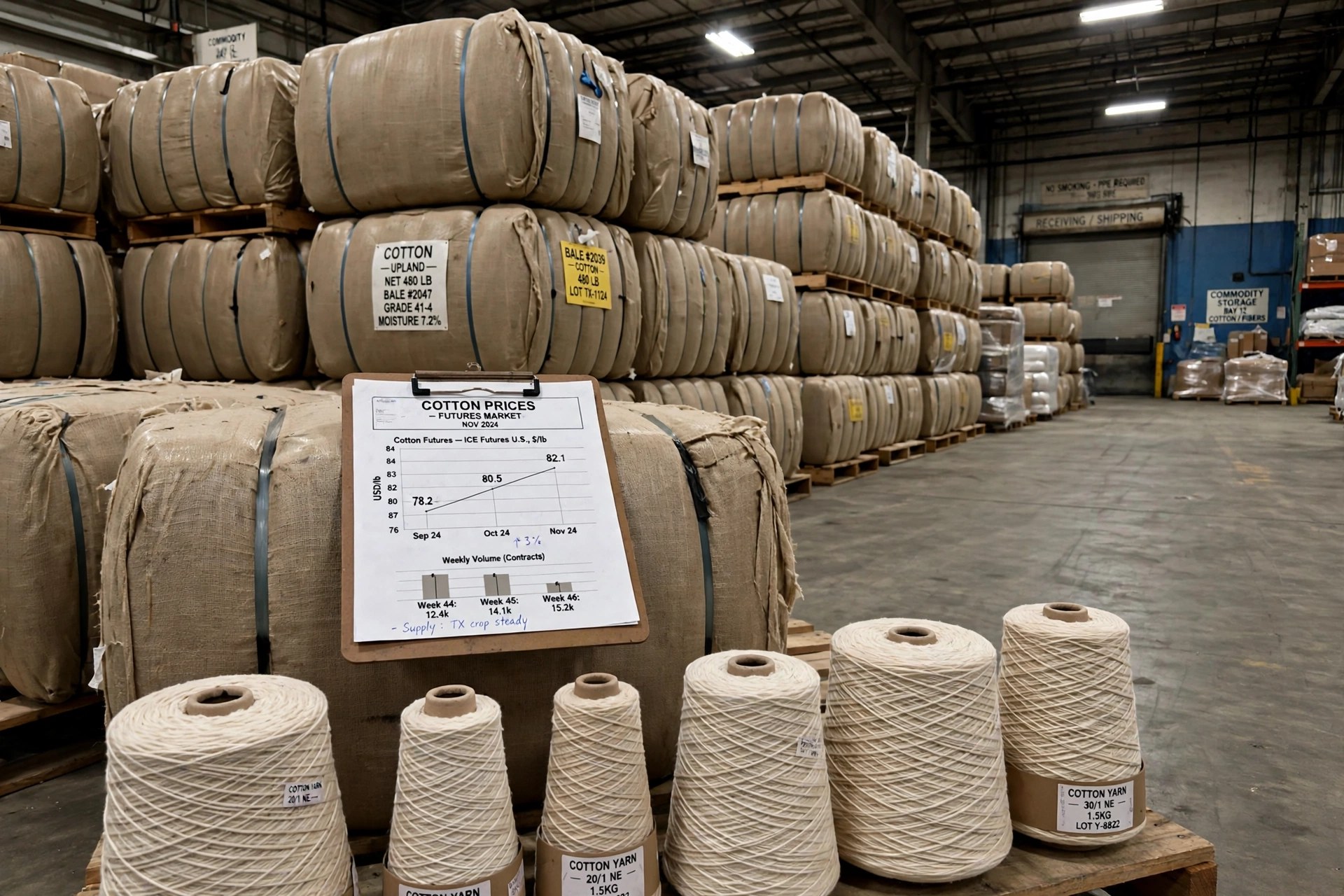
The benchmark for upland cotton is the Cotton No. 2 futures contract, traded on ICE, the Intercontinental Exchange — the successor market to the historic New York cotton trade. A futures price is the market agreement, today, on the value of a standardized quantity and grade of cotton for delivery in a future contract month. Mills, merchants and growers use the contract both to discover the going price and to hedge: locking a futures position protects a physical cotton purchase or sale against price movement between order and delivery.
Options on the same contract let a buyer insure a price ceiling or floor for a premium, and the exchange rulebook — linked in the references — sets the contract grades, delivery points and procedures that make the paper market track physical cotton. Contract months matter: a price quoted for a distant month is a different fact from the nearby price, and old contract symbols expire, which is why this page links the exchanges and index publishers rather than quoting numbers.
Indexes, Basis and Market News
Alongside futures, the trade follows published spot and index prices — assessments of what physical cotton is actually trading for — including the CotLook assessments used internationally. The difference between a local physical price and the futures price is the basis, and basis moves with freight, quality, local supply and demand, which is why two buyers in different regions can both pay correctly and pay different prices for cotton in the same week.
Hedging deserves a plain warning alongside the opportunity. A futures position protects a price, but it is a financial contract with margin obligations, and a business that hedges more cotton than it actually buys or sells has stopped hedging and started speculating. Merchants and mills manage that line with professional trading desks; smaller buyers usually work through a merchant or a fixed-price physical contract instead, letting the intermediary carry the futures position.
Government and industry reporting frames the whole market: United States Department of Agriculture market news and crop reporting, National Cotton Council price information, and commodity data services such as IndexMundi that publish monthly historical series useful for seeing where a market has been. For the harvest side of the story — how an oversized crop, a bumper crop, loosens supply — see the bumper crop guide in this directory. Read together, crop estimates, stock levels and futures prices are the three legs of a cotton price view.
Cotton Pricing References & Further Reading
- Cotton No. 2 Futures — ICE
- Cotton No. 2 Options — ICE
- ICE Cotton Rulebook (PDF)
- CotLook Cotton Prices
- CME Group Cotton Pricing
- Cotton Monthly Prices — IndexMundi
- Cotton Price Index — National Cotton Council
- Cotton Prices NYBOT
- Daily Cotton Prices
- Monthy Cotton Prices
- Cotton # 2 - Inside Futures
- EmergingTextiles.com Cotton Prices
More to Explore
Common Questions
Why does this page not list a cotton price?
Cotton prices change every trading day and differ by contract month, grade and region. A number printed on a guide page would mislead, so this page explains the pricing system and links the live sources instead.
What is the Cotton No. 2 contract?
It is the benchmark futures contract for upland cotton, traded on ICE. It lets mills, merchants and growers discover prices and hedge physical cotton purchases and sales for future delivery months.
What is the basis in cotton pricing?
The basis is the difference between a local physical cotton price and the futures price. It moves with freight, quality and local supply and demand, so correct prices differ between regions in the same week.