The Short Answer
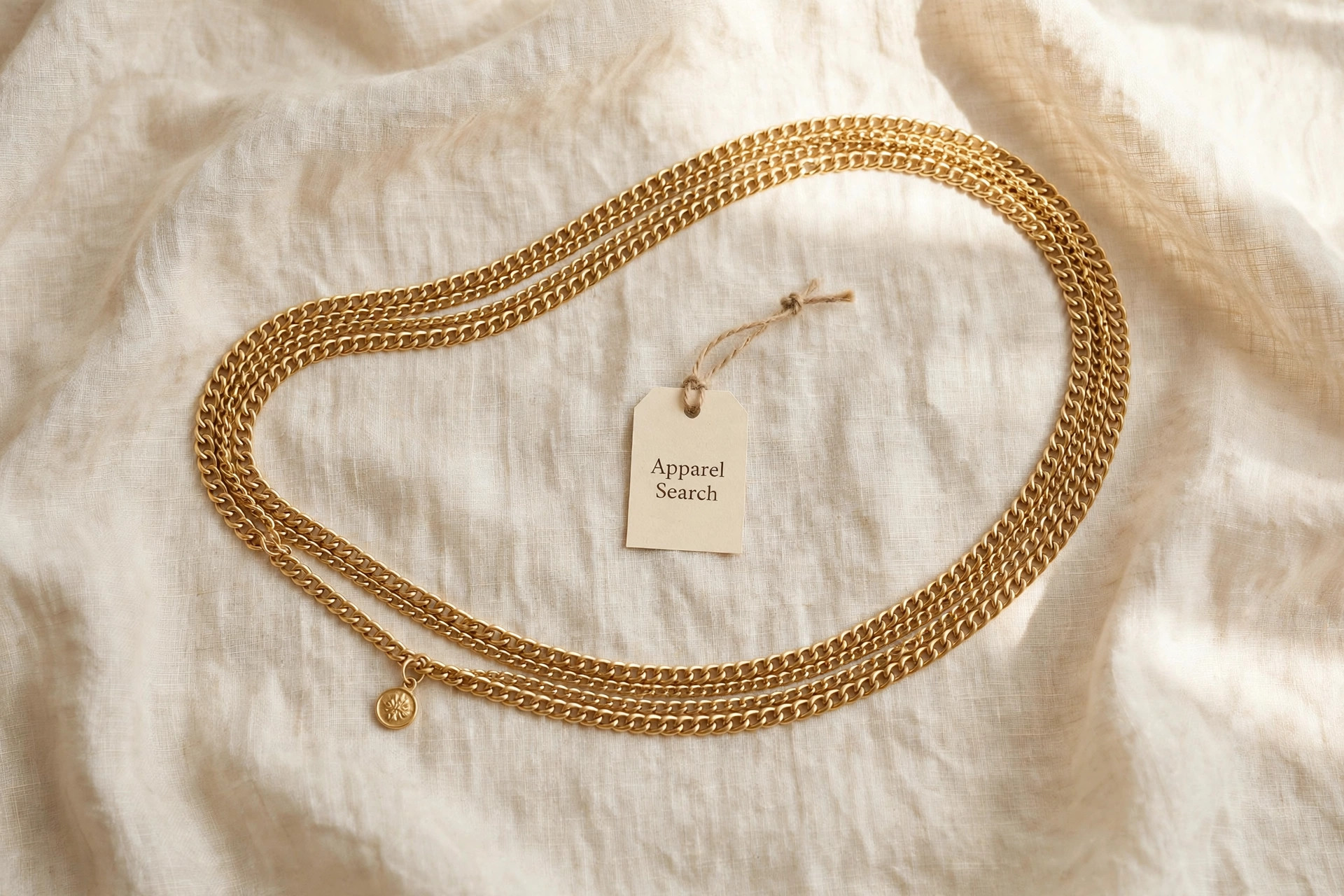
A chain belt is a belt made of metal links — a single strand or several draped rows — that fastens with a hook, clasp or toggle hooked into any link along its length. It is the decorative member of the belt family: it holds almost nothing up, and instead adds movement, shine and a drawn line at the waist or hips.
01 / Anatomy of a Chain Belt
Anatomy of a Chain Belt
A chain belt has four working parts. The chain itself does the circling: curb chain (flattened, interlocking links that lie flat) is the classic; rope chain twists two strands into a cord with more texture; figaro alternates link lengths in a pattern; and fine trace or cable chains make the delicate end of the family. The clasp is usually a simple hook, a lobster claw or a toggle — and because it can catch any link, the same belt fits at several sizes. Many styles add an extender or drape: the leftover length hangs in a decorative fall at the front or side, sometimes finished with a charm, coin, medallion or tassel. Multi-row designs link two or three chains of different lengths so they drape in parallel swags — the most recognizable evening version of the type.
Materials decide both look and lifespan. Fashion chain belts are typically zinc alloy or steel with a gold-, silver- or gunmetal-tone finish; better ones use heavier gauge links, soldered joints and a real plated layer rather than a surface spray. Weight is the quickest tell in hand: a chain belt should feel like jewelry, not like tinsel. If the links kink, twist unevenly or feel sharp at the edges, the belt will look cheap on the body no matter how it photographs.
02 / Where the Chain Belt Comes From
Where the Chain Belt Comes From
Belts made of linked metal are ancient — girdles of bronze and gold links appear across the ancient world — but the modern chain belt is a twentieth-century fashion piece. It surfaced in the 1960s as part of the era's love of metal and shine, became a signature of 1970s glamour slung low over dresses and trousers, and returned in the 1990s in a chunkier, charm-laden form worn at the hips over everything from slip dresses to jeans. Each revival keeps the same logic: when outfits go soft, plain or minimal, a line of metal at the waist or hip supplies the structure and the jewelry in a single gesture.
That history explains the type's two personalities. Worn at the natural waist, the chain belt is a waist-definer, the lightest-touch way to draw a line on an unstructured dress. Slung at the hips, it is pure ornament — it swings, catches light and decorates a waistband it does not pretend to hold up. Neither is the 'right' way; they are different sentences spoken by the same belt.
03 / How to Wear a Chain Belt
How to Wear a Chain Belt
Over dresses: a fine or medium chain at the natural waist gives a shift, shirt dress or knit dress a finished line without the visual weight of leather. Match the metal to your other jewelry and let the belt be the only statement at the waist. Over trousers and jeans: thread it through the loops if the chain is slim, or wear it slung over the waistband as a drape — the classic hip-slung look, best when the top is tucked or cropped enough to show it. Over blazers and coats: a medium chain belted over a long blazer is the type's most polished modern use — it shapes the jacket while the metal reads as deliberate jewelry.
Two styling rules keep the type elegant. First, one metal story per outfit: a gold chain belt with silver earrings and a silver-buckle shoe is three conversations at once. Second, mind the snag factor — open link chains can catch on open knits, lace and sequins, so pair them with smooth fabrics or check the link edges before wearing over anything delicate.
04 / Fit, Sizing & Choosing Well
Fit, Sizing & Choosing Well
Chain belts size like jewelry, not like clothing. Measure where you actually intend to wear it — natural waist or high hip — over the thickness of clothing you will wear beneath it, then choose a belt whose total length gives you clasp room at that measurement plus a few inches of graceful drape. A belt worn only at the waist can be shorter; one you want to sling at the hips needs the extra length. Because the clasp hooks at any link, one belt honestly covers both placements — the most forgiving fit in the belt drawer.
Quality checks before you buy: run the chain through your fingers — links should move smoothly with no sharp seams; tug the clasp connection points, the usual failure spots; check that draped rows are joined at enough points to hang parallel rather than tangling; and prefer soldered or closed links over open jump rings on any belt you plan to wear often. For finishes, a 'tone' spray over base metal wears at the edges within a season, while plated and stainless chains keep their color for years.
05 / Care & Storage
Care & Storage
Store a chain belt hanging or coiled loosely in a pouch — dropped in a drawer it knots itself into the classic jewelry tangle, and forcing a kinked curb chain flat can crack a link. Wipe after wearing with a soft dry cloth to lift skin oils from the finish, and keep plated chains away from perfume and hairspray, which dull and pit plating. If a drape chain detaches, the fix is usually one open link closed with two pairs of pliers — a five-minute repair that any jeweler will also do cheaply, which makes the chain belt one of the longest-lived accessories you can own.
Shop Chain Belts
Ready to shop? Product links are kept in one place on the Apparel Search shopping guide:
Shop Chain Belts on AmazonThis link opens the Apparel Search shopping guide for Amazon, where the product links are kept in one place.
Questions
Common Questions
Do chain belts hold trousers up?
No — and they are not meant to. A chain belt has no structure to resist the pull of a waistband; it decorates rather than supports. If trousers need holding, wear a leather belt for the job and, if you love the look, layer the chain over it or sling it below the waistband as pure ornament.
What length chain belt should I buy?
Measure at the point you will wear it — natural waist or high hip — over typical clothing, then add roughly 4 to 8 inches for the clasp position and a short decorative drape. Because the clasp hooks into any link, erring longer costs nothing in fit and buys you both waist and hip placements from one belt.
Can men wear chain belts?
Yes — the type's tailored end is understated: a slim curb or figaro chain worn through trouser loops or as a subtle drape at the waistband appears in menswear styling regularly, usually in antique silver or gunmetal finishes. The same any-link fit and the same quality checks apply.
Will a chain belt damage delicate fabrics?
It can: open or rough-edged links snag open knits, lace, chiffon and sequins. Run a fingertip along the links — a well-finished chain is smooth. Over delicate garments, choose a fine, closed-link chain and put the belt on after dressing, removing it before the garment.
More to Explore
Back to Belt Types & Styles
Every named belt type in brief — obi, chain, corset and braided — with placement and styling, as part of the handbag types and styles guide.