Children's Swimwear Guide
Children's swimwear covers swimsuits, swim shorts and trunks, rash guards and UV suits, and swim nappies for the youngest swimmers - all judged strictly as products in this guide: fabrics, fit systems, sun-protection ratings and care. Swimwear is the one category bought to work in an aggressive environment - chlorinated water, salt, sand and full sun all attack the garment at once - so fabric specification matters here more than in any other children's category.
Shop Children's Swimwear Now
Shop Children's Swimwear on Amazon Shop Children's Swimwear on eBayThe Amazon and eBay links on this page are affiliate links. If you make a purchase through them, Apparel Search may earn a commission.
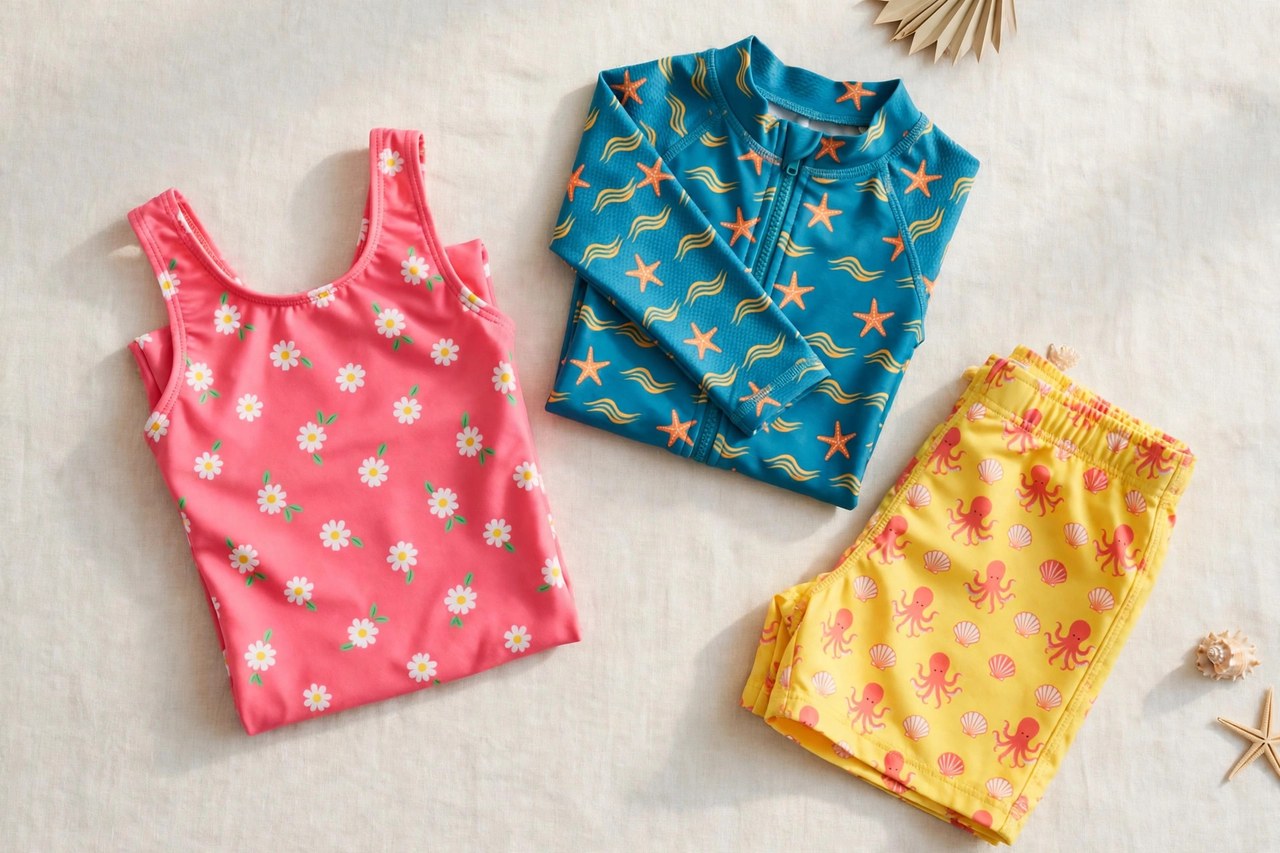
Children's swimwear covers swimsuits, swim shorts and trunks, rash guards and UV suits, and swim nappies for the youngest swimmers - all judged strictly as products in this guide: fabrics, fit systems, sun-protection ratings and care. See the main children's swimwear guide in the S letter for more detail. Swimwear is the one category bought to work in an aggressive environment - chlorinated water, salt, sand and full sun all attack the garment at once - so fabric specification matters here more than in any other children's category.
Start from where the swimming happens. Pool lessons need chlorine resistance and a close fit that does not balloon with water. Beach and holiday swimming need sun coverage - which is where rash guards and UV suits earn their place - and quick drying for repeated daily use. One child often needs both specifications across a year, and they are not interchangeable.
Fabrics and Chlorine
Standard swimwear blends nylon or polyester with elastane for stretch and recovery. Polyester-based fabrics, including PBT blends, resist chlorine far longer than nylon, which fades and loses elasticity in pool water over a term of lessons - if the swimming is weekly in a chlorinated pool, polyester is the specification to look for on the label. Elastane content gives the fit; its enemy is heat and chlorine together, so care habits decide how long the stretch survives.
UPF-rated swim fabrics - the tight weave itself blocks ultraviolet - give rash guards and UV suits their protection, typically rated UPF 50+. The rating belongs to the fabric and does not wash out, unlike lotions, which is why long-sleeve rash guards have become the default beach top for fair-skinned children: they convert the most-burned area, shoulders and back, into a solved problem.
The rated end of children’s swimwear has a dedicated buying page: our sun-protective clothing for kids covers coverage suits and rash guards, legionnaire hats and swim leggings, bought by rating and coverage and sized for growth.
Fit by Garment
Swimsuits and swim shorts should fit close without digging: straps and waistbands that stay put through jumping in and climbing out, leg openings that do not ride, and - for swim shorts and trunks - a drawstring or secure elastic plus a mesh or brief lining that is intact and comfortable. Loose swimwear fills with water, drags and embarrasses; tight swimwear chafes and gets refused. The test is a star jump and a pretend climb-out at the pool edge, at home.
Rash guards fit like a second skin by design and should be sized true - a baggy rash guard loses its point and snags. UV suits for toddlers add poppers or zips for nappy changes, which are worth checking for smoothness against skin. For babies and toddlers in pools, a proper swim nappy - reusable or disposable as the pool's rules require - is a separate essential worn under or instead of ordinary swim bottoms.
Care: Rinse, Dry, Rotate
Rinse swimwear in clean cool water after every swim, chlorine or salt, and dry it out of direct sun - the same ultraviolet the fabric blocks also degrades elastane over time. Never leave wet swimwear balled in a bag; that is how the mildew smell that no wash fully removes takes hold. Wash occasionally on a gentle cycle without softener, which harms stretch fibres.
Rinsing is also rating care: our UPF clothing care and durability guide explains what washing, chlorine and thinning do to a UPF number, for children’s and adults’ garments alike.
For holiday daily swimming, two sets in rotation let each dry and recover its stretch fully between swims, measurably extending life. Replace when the fabric thins, the elastane crackles and loses recovery, or white rubber strands appear in the weave - the garment has stopped fitting as designed. Bought in the right fabric for its water and rinsed like equipment, children's swimwear survives seasons instead of half-terms.
Common Questions
Which swimwear fabric lasts longest in a chlorinated pool?
Polyester-based fabrics, including PBT blends. They resist chlorine far better than nylon, which fades and its elastane breaks down over a term of weekly lessons. For occasional holiday swimming, nylon blends are fine and feel softer.
Do rash guards really protect from the sun?
Yes - UPF 50+ rated swim fabric blocks ultraviolet by its weave, and the rating does not wash out or need reapplying. A long-sleeve rash guard covers the shoulders and back, the areas that burn most in the water.
How should children's swimwear fit?
Close without digging: straps, waistbands and leg openings that stay put through jumping in and climbing out. Loose swimwear fills with water and drags; a home star-jump and pretend climb-out test exposes both problems before the pool does.
More in Children's Clothes Guide K
The K letter hub and the guides closest to this one:
More to Explore on Apparel Search
Looking for Children's Clothing Stores?
This guide helps you choose children's swimwear. To browse where to buy, visit our children's clothing store directory, where you can find retailers that carry them.