Men's Ear Muffs Guide
Men's ear muffs are a winter accessory built to do one job a hat does only halfway: cover the ears themselves against cold and wind. A pair consists of two insulated pads, one for each external ear, joined by a band of metal or thermoplastic that runs over the top of the head or, in the behind-the-head designs, around the back of it. The fashion version is the thermal earmuff - pads of cloth, fleece, faux fur or real fur over a light frame - and it is not to be confused with the acoustic earmuff, the bulky hearing protector worn on building sites and shooting ranges, which belongs to safety equipment rather than to a wardrobe.
Shop Men's Ear Muffs Now
Shop Men's Ear Muffs on Amazon Shop Men's Ear Muffs on eBayThe Amazon and eBay links on this page are affiliate links. If you make a purchase through them, Apparel Search may earn a commission.
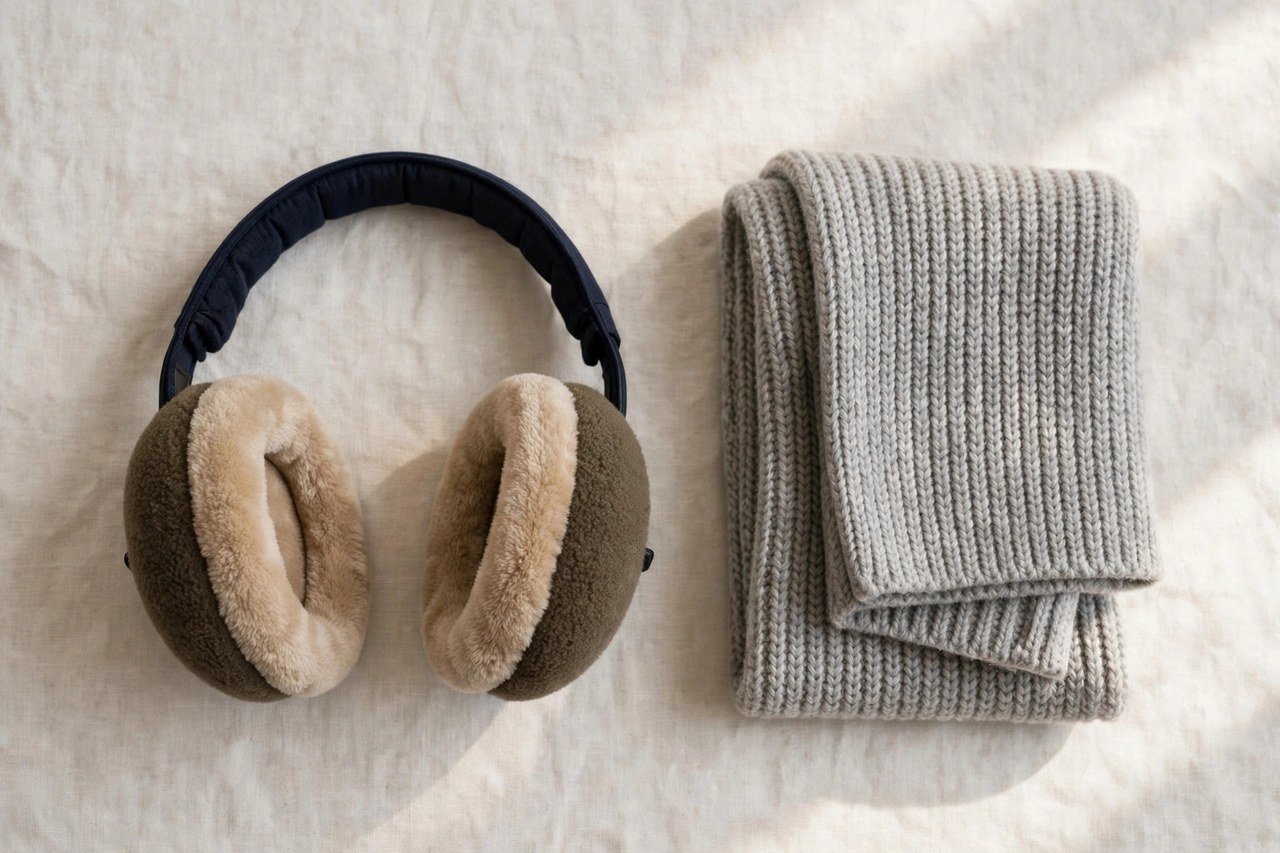
Men's ear muffs are a winter accessory built to do one job a hat does only halfway: cover the ears themselves against cold and wind. A pair consists of two insulated pads, one for each external ear, joined by a band of metal or thermoplastic that runs over the top of the head or, in the behind-the-head designs, around the back of it. The fashion version is the thermal earmuff - pads of cloth, fleece, faux fur or real fur over a light frame - and it is not to be confused with the acoustic earmuff, the bulky hearing protector worn on building sites and shooting ranges, which belongs to safety equipment rather than to a wardrobe. This guide covers the styles worth knowing, the fit points that decide comfort, the fabrics and construction that separate a good buy from a regret, and the simple care that makes the garment last.
Styles and Construction
Construction decides both warmth and survival. The pad is a sandwich: an outer shell that sheds weather (woven cloth, fleece, shearling, leather or faux fur), an insulating fill, and a soft inner face that sits against the ear without itching through a long walk. Better pairs seal the pad's edge so wind cannot lift it, because an ear muff fails at the gap, not in the middle. Bands divide into fixed spring bands, which grip by tension and fold flat, telescoping bands that adjust and travel well, and soft fabric or knit bands that trade grip for comfort under a hat. Behind-the-head bands keep a hairstyle intact and sit happily under a collar or hood; over-the-top bands are the classic silhouette and stay put in wind. Collapsible hinges are the commuter's feature - the pair folds to pocket size instead of riding in a hand all day.
Size headwear by measurement: a tape just above the eyebrows and ears gives the circumference every honest chart uses. Then check the parts listings skip - the sweatband (leather molds and absorbs, fabric bands wash), crown structure (structured holds a silhouette, unstructured packs flat), and ventilation, which decides the seasons a hat can honestly serve. Store hats on a hook or form, brush them instead of washing when the material allows, and they repay the respect for years.
Fit and Sizing
Fit is a seal test. The pads should cover the whole ear with margin to spare - a pad that ends on the ear's rim presses exactly where cold already bites - and the band's tension should hold the pair through a head shake and a turned collar without squeezing a headache into the temples by the second mile. Try ear muffs with the glasses you actually wear: temple arms and a tight band compete for the same real estate, and behind-the-head bands usually win that contest. With a hat, decide the order - muffs over a thin beanie is a deep-winter system that keeps both the crown and the ears; muffs alone suit the man whose hair is the point and whose cold is measured in city blocks rather than in hours outdoors.
Judge a hat after a full minute of wear with your usual hair and glasses: correct fits settle, tight ones announce themselves at the temples, loose ones shift when you look down. The brim sits level, shading without pressing the ears, and the sweatband contacts all the way round. Between sizes, take the larger with sizing tape inside the band rather than the tight hat you will quietly stop wearing.
Wearing and Care
Care is gentle because the enemies are compression and heat. Brush fleece and fur faces after wear, spot-clean shells with a damp cloth, and wash only what the label allows, by hand and cool - a dryer will warp a thermoplastic band and mat a fur pad in one cycle. Store the pair unfolded or loosely folded in a drawer where nothing heavy rests on the pads; a pad crushed flat for a summer loses the loft that was its insulation. Check the hinges and the band's spring each autumn, and treat leather shells with a light conditioner. A good pair is a five-winter purchase, and most early deaths are storage deaths, not wear deaths.
Brush hats after wear so dust never settles in, spot-clean the sweatband - the part that actually soils - and air everything fully before storage. Felt and structured crowns are never machine-washed; washable caps go through gently, ideally in a cap form, and dry on something head-shaped. Store where air moves and shapes are respected, off hooks rather than under piles.
Common Questions
What is the difference between thermal and acoustic ear muffs?
Thermal ear muffs are a fashion and winter accessory: light insulated pads on a slim band, made to keep ears warm in cold weather. Acoustic ear muffs are hearing protection - much bulkier sealed cups with sound-attenuating foam, rated for noise reduction on work sites and ranges. The names overlap but the products do not: if a listing quotes a decibel or NRR rating, it is selling safety equipment, not winter warmth.
Are behind-the-head ear muffs better than over-the-top ones?
Better for some jobs. Behind-the-head bands preserve a hairstyle, work under hats, hoods and collars, and coexist well with glasses, but they can slip down in hard wind or fast movement. Over-the-top bands grip more securely and read as the classic winter look, at the cost of pressing on the crown and the hair. Commuters and hat-wearers usually prefer behind-the-head; men buying for long, windy outdoor time usually prefer over-the-top.
Can you wear ear muffs instead of a hat in winter?
For the ears, yes - a good pair covers them better than most hats do, because the pad seals directly over the ear instead of relying on a brim or cuff reaching low enough. For the whole head, no: the crown loses the most heat to wind, and ear muffs leave it bare. The honest system in serious cold is both - a thin beanie for the crown, ear muffs over it for the ears - with the muffs alone reserved for milder days and shorter trips.
More in Men's Clothes Guide E
Thermal, Not Acoustic
The earmuffs of fashion are thermal earmuffs, worn in cold environments to keep the ears warm with pads of cloth or fur — not the acoustic earmuffs that protect hearing from loud sound. The garment is a thermoplastic or metal head-band fitting over the top or back of the head, with a pad at each end to cover the external ears. The topic sits under the men’s fashion accessory guide, and cold ears have hat alternatives — the knit hat and the wool hat.
More to Explore on Apparel Search
Looking for Men's Clothing Stores?
This guide explains men's ear muffs. To browse where to buy, visit our men's clothing store directory, where you can find retailers that carry them.