Men's Medical Gowns Guide
Medical gowns cover the two garments that share a name and almost nothing else: the patient gown the man in the bed wears, and the protective gowns - isolation and surgical - that staff wear over their scrubs. It is that hospital gown, open-backed, tie-closed and universally disliked, that most readers picture. This guide treats both sides honestly: the gown as the patient's dignity problem, and the gown as the staff member's barrier equipment.
Shop Men's Medical Gowns Now
Shop Men's Medical Gowns on Amazon Shop Men's Medical Gowns on eBayThe Amazon and eBay links on this page are affiliate links. If you make a purchase through them, Apparel Search may earn a commission.
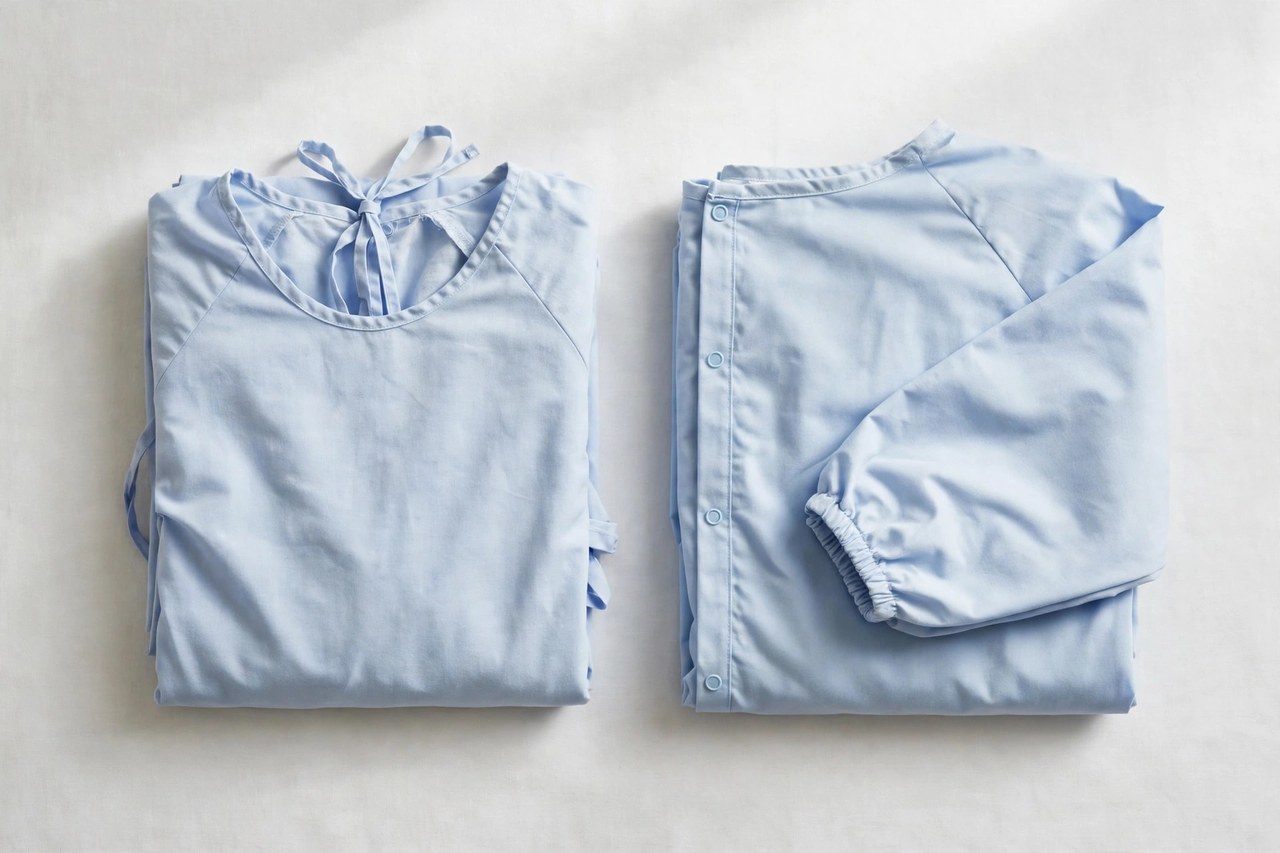
Medical gowns cover the two garments that share a name and almost nothing else: the patient gown the man in the bed wears, and the protective gowns - isolation and surgical - that staff wear over their scrubs. It sits among the medical uniform stores and the hospital gown definition, and it is that hospital gown, open-backed, tie-closed and universally disliked, that most readers picture. This guide treats both sides honestly: the gown as the patient's dignity problem, and the gown as the staff member's barrier equipment. This guide covers the styles worth knowing, the fit points that decide comfort, the fabrics and construction that separate a good buy from a regret, and the simple care that makes the garment last.
Two Garments, One Name
Patient gowns are specified by coverage and access: the classic open-back design exists so clinicians can reach the patient, but better modern versions add overlapping backs, shoulder snaps and side ties that restore coverage without slowing an examination. Fabrics run from paper disposables to woven poly-cotton that survives institutional laundering; sizing is the chronic failure - one-size gowns fit almost no one - so facilities increasingly stock bariatric and tall sizes alongside the standard. Staff gowns run the other direction: isolation gowns rated by barrier level for fluid exposure, and surgical gowns with reinforced fronts and sleeves for the operating suite, disposable or laundered reusable, chosen by the procedure's risk rather than habit.
Workwear is judged at the stress points, because the job finds them first: bar-tacked pocket corners and belt loops, double or triple-stitched main seams, reinforced knees, elbows and seats, and hardware - zippers, snaps, rivets - rated for daily cycling rather than occasional wear. Fabric weight is a specification, not a brag: heavier cloth resists abrasion and holds shape, lighter cloth breathes and dries, and the right answer is the one matched to the actual shift, climate and laundry the garment will live in.
Coverage Under Movement
For the wearer - patient or staff - fit is coverage under movement. A patient gown should close fully at the back or overlap enough that sitting, standing and walking to the bathroom never become exposures; sleeves should reach the wrist without binding, and ties should be reachable by the wearer's own hands where the design intends self-tying. Staff gowns fit over scrubs with sleeves that meet the glove cuff without a gap - the wrist is where barrier systems fail - and neck and waist closures that stay closed through a procedure. If you are buying for a facility, fit-test across your actual size range of people, not the sample size on the rep's hanger.
Fit workwear in the postures of the job: reach overhead, bend, kneel, climb, sit through a charting session or a cab ride. Seams should never be the thing that stops a movement, waistbands should stay where they were put without a belt doing structural work, and lengths should clear the floor and the machinery. Work garments are sized generously by design - buy your measured size and let the cut do its job, rather than sizing down into a uniform that fights every task.
Inspection Decides Retirement
Gowns live and die by the laundry and the inspection. Reusable patient gowns are washed hot and inspected for the failures that matter - broken ties, torn shoulders, thinning fabric at the stress points - because a gown that will not close is not a gown. Barrier gowns carry ratings that laundering gradually spends, so reusable isolation and surgical gowns are tracked by wash count in serious programs and retired on schedule. Disposables trade that bookkeeping for waste and storage. Either way, the rule is the same: the gown is equipment with a service life, and the inspection, not the appearance, decides when it ends.
Work garments earn a laundry system, not a laundry day: wash by the employer's or the label's hygiene rules, treat stains before heat can set them, and inspect as you fold - a pocket corner letting go, a hem fraying, a button hanging by a thread are all two-minute repairs now and garment failures next month. Keep the rotation honest: a spare set washed and ready is what makes daily laundering possible without wearing any single set to death.
Common Questions
Why do hospital patient gowns open at the back?
For clinical access: the opening lets staff reach the back, place monitors and examine the patient without removing the garment. The cost is the patient's coverage and dignity, which is why better modern gowns add overlapping panels, shoulder snaps and side closures that keep the access while restoring the coverage. If a facility offers a choice, the overlapping design is the one to ask for.
What is the difference between an isolation gown and a surgical gown?
The barrier duty. Isolation gowns protect staff and visitors during routine care and are rated by fluid-barrier levels for the exposure expected. Surgical gowns are built for the operating suite, with reinforced fronts and sleeves in the critical zones and higher barrier ratings, worn as part of the sterile system with gloves overlapping the cuffs. Both may be disposable or laundered reusables; the procedure's risk, not habit, should pick the gown.
What should a men's patient gown fit like?
Closed. The gown should overlap or fasten at the back so that sitting, standing and walking never open it, reach the wrist at the sleeve, and fall below the knee. Standard one-size gowns genuinely do not fit larger or taller men - ask for the bariatric or tall size without embarrassment; facilities stock them because the standard size's failure is the best-known complaint in the category.
More in Men's Clothes Guide M
Gowns and Their Definitions
This page sits with the medical uniform stores and the medical gowns factory, beside the hospital gown definition and the scrubs definition — the two garments a gown is worn over, or instead of, in the course of care. Wholesale medical clothing and wholesale uniforms are linked below as well.
Looking for Men's Clothing Stores?
This guide explains men's medical gowns. To browse where to buy, visit our men's clothing store directory, where you can find retailers that carry them.