Men's Messenger Bag Guide
The courier's crossbody, grown into the city's work bag: messenger sizes, flap and strap design, and carrying one without wrecking your shoulder.
Shop Men's Messenger Bags Now
Shop Men's Messenger Bags on Amazon Shop Men's Messenger Bags on eBayThe Amazon and eBay links on this page are affiliate links. If you make a purchase through them, Apparel Search may earn a commission.
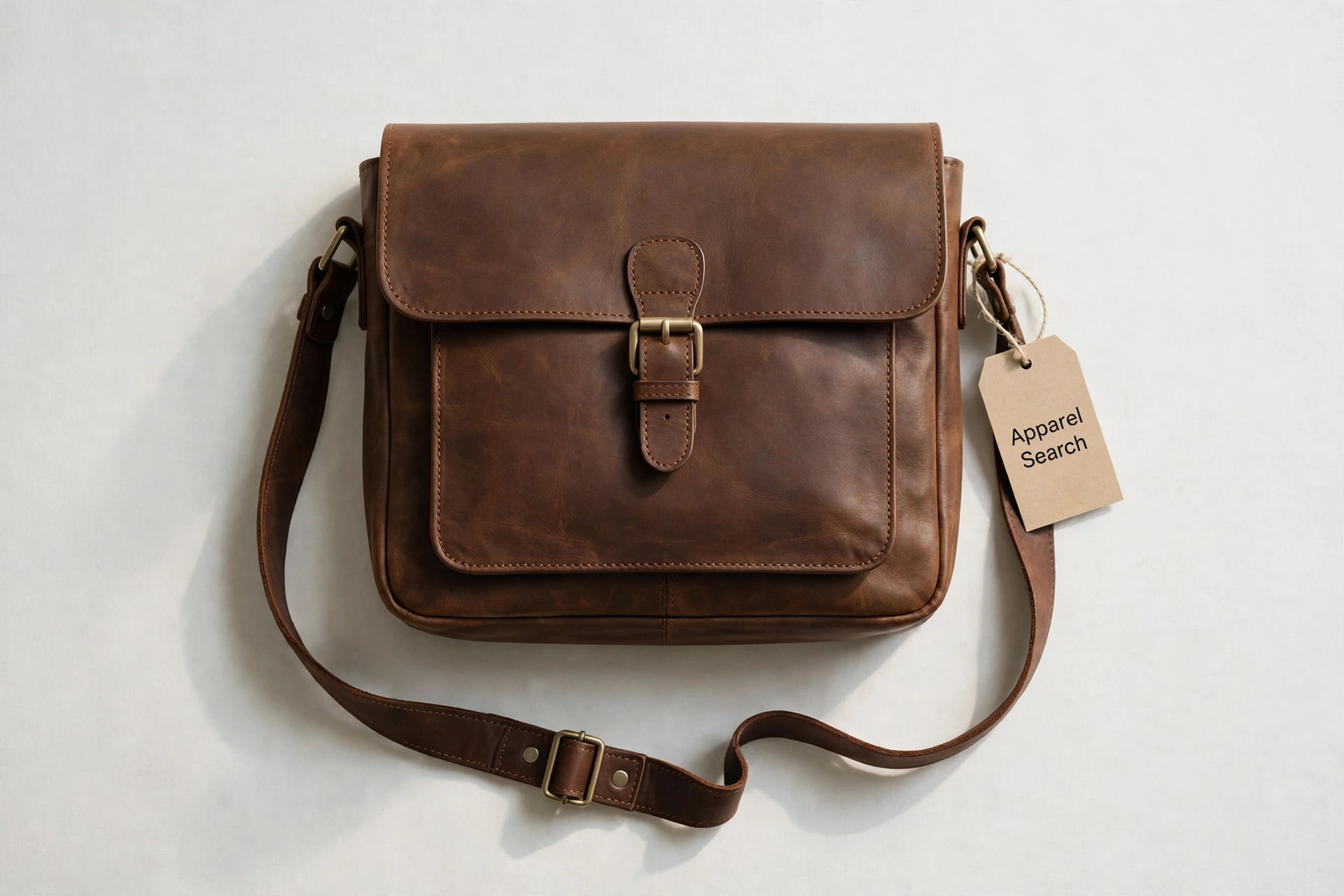
A messenger bag is a soft-sided bag worn crossbody on one wide strap, with a large flap closing over the main compartment. Bicycle couriers made it famous — a bag that swings from back to front for instant access without being taken off — and offices adopted it as the relaxed alternative to the briefcase: laptop, documents, lunch and gym-adjacent extras, carried hands-free through stations and streets.
The messenger's strengths are access and ease; its risk is one shoulder carrying a working day's weight. This guide covers sizes and laptop fit, the flap and strap details that decide daily comfort, and how a messenger differs from a laptop bag or backpack — so you choose the right tool and carry it well. For weekend loads, see the duffel bag guide.
Messenger, Briefcase or Backpack?
A briefcase is structured and hand-carried (or shoulder-strapped), projects formality, and protects contents rigidly. A messenger bag is soft, crossbody and casual-to-smart-casual, opening fast under its flap and moulding to the body. A backpack spreads weight across both shoulders and wins for heavy loads and long walks, but buries access and reads student or technical in formal settings. The messenger sits in the middle: professional enough for most offices, practical enough for a cycling or train commute.
Within messengers, the courier style is large, rectangular and utilitarian, with stabiliser straps for cycling. The urban or leather messenger is smaller and cleaner, sized for a laptop and documents, with the flap as a design feature. The vertical messenger stands tall rather than wide, suiting smaller laptops and crowded trains. Choose by your actual load and commute, not by photograph: measure your laptop and your bulkiest regular item before anything else.
Sizes, Laptop Fit and Organisation
Messengers are sold by laptop size — 13, 15 or 17 inch — but check the padded sleeve's internal dimensions against your machine, case included, and confirm the bag still closes with the laptop inside plus a charger. A realistic daily load test: laptop, charger, notebook, water bottle, lunch or a paperback, keys, phone and a light layer. If the flap strains or the bag bulges drum-tight, the next size up will carry better and look better.
Organisation to look for: a padded laptop sleeve suspended off the base (so a set-down bag does not land on your computer's corner), a zip pocket under the flap for valuables, pen and phone slots that you can reach by touch, and one external pocket for the item you grab on the move. The main compartment should have a light lining so dark objects are visible. A completely unorganised messenger becomes a lucky-dip within a week.
Straps, Materials and Carrying Well
The strap is a messenger's suspension system: wide, adjustable, with a sliding shoulder pad that stays where you set it. Wear the bag high on the back or at the hip, strap across the chest, and let the pad sit on the shoulder bone's flat, not the neck. Alternate shoulders by day if your load is heavy, keep the heaviest items closest to your body, and be honest about limits — a chronically aching shoulder is the sign to move heavy days to a backpack, not to buy a thicker pad.
Materials split by life: waxed canvas and ballistic nylon shrug off rain, platforms and bike rides; leather looks sharpest and lasts longest with care, at more weight and price; recycled technical fabrics split the difference for commuters. Check flap closures — magnets are silent and fast, buckles are secure and slower, Velcro is loud in quiet carriages and meeting rooms, a fact worth knowing before you buy. Care: brush canvas, condition leather, air the bag weekly, and never store it still stuffed with the week's accumulation.
Common Questions
What size messenger bag do I need for a laptop?
Match the padded sleeve to your laptop's actual measurements, case included — not just its screen size. Most men commuting with a 15-inch laptop, charger, notebook and lunch need a medium-to-large messenger. If the flap will not close smoothly over your full daily load in the shop, go up a size.
Are messenger bags bad for your back and shoulders?
They load one shoulder, so weight and duration matter. For light-to-moderate loads and typical commutes they are fine, especially worn high with a good shoulder pad and loads kept close to the body. For heavy loads or long walks, alternate shoulders or use a backpack — persistent one-sided ache is a signal to switch, not to endure.
Can a messenger bag look professional?
Yes — a clean leather or dark canvas messenger in a structured shape suits most modern offices, including many client-facing ones. It reads less formal than a briefcase, so for court, board-level or very traditional settings, the briefcase still wins. Keep the messenger unbulging and unbranded for its smartest effect.
Women's Bags Guides
Small bags, evening bags and everyday carry for women — every women's guide in this cluster:
Men's Bags Guides
Work, laptop and travel bags for men — every men's guide in this cluster:
More to Explore on Apparel Search
Need more structure and protection for the machine? Continue to men's laptop bags.
Next: Men's Laptop Bag Guide: Briefcase-Style Carriers That Protect »Looking for Men's Clothing Stores?
This guide helps you choose a men's messenger bag that fits your laptop and your commute. To browse where to buy, visit our mens clothing store directory, where you can find retailers that carry them.