Men's Laptop Bag Guide
Protection first, polish included: laptop briefcases, sleeves-with-handles and hybrid carriers — padding, sizing and the drop test that matters.
Shop Men's Laptop Bags Now
Shop Men's Laptop Bags on Amazon Shop Men's Laptop Bags on eBayThe Amazon and eBay links on this page are affiliate links. If you make a purchase through them, Apparel Search may earn a commission.
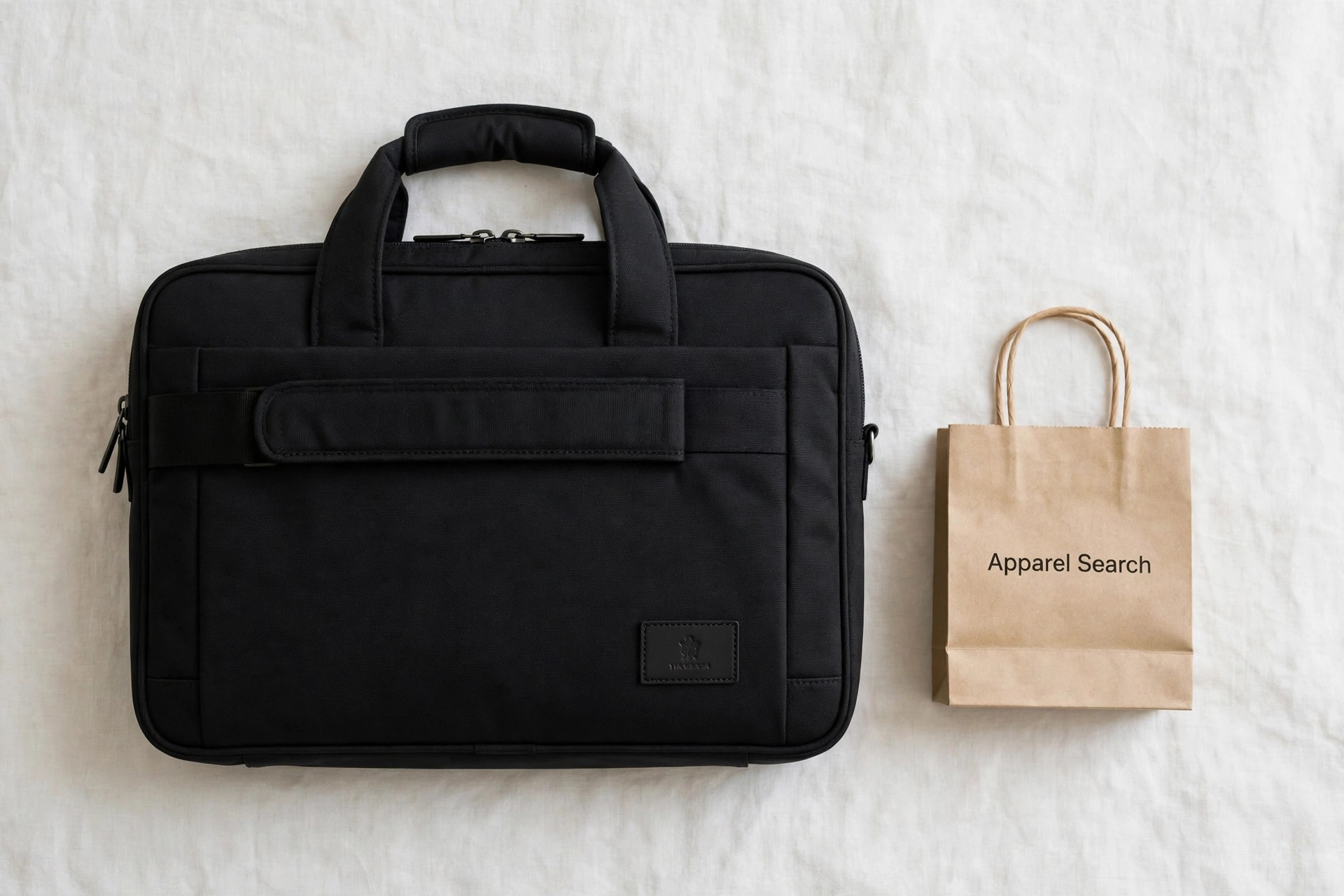
A laptop bag is any bag built around protecting and carrying a laptop — but in men's ranges the term centres on the briefcase-style carrier: a structured bag with handles, a padded laptop compartment, and room organised for a working day. Between the soft messenger bag and the formal briefcase, the modern laptop bag borrows from both, adding travel features neither classic had.
Protection claims are easy to print and hard to judge, so this guide gets specific: how sizing really works, where padding must be (and where bags cheat), which organisation survives a real workday, and the travel details — trolley straps, cable management — that separate a considered carrier from a padded tote with handles.
Laptop Bag Styles: Briefcase, Hybrid and Sleeve-Plus
The laptop briefcase is the structured standard: top handles, a detachable shoulder strap, a padded main compartment and a front organiser panel. In leather it is boardroom-ready; in structured nylon it is lighter and weatherproof. The hybrid or convertible laptop bag adds backpack straps that stow away, switching between briefcase polish and backpack comfort on the same trip — the frequent traveller's favourite compromise.
The sleeve-plus is a padded laptop sleeve given handles, a strap and a pocket or two: the minimum viable bag for short, light commutes, best inside another bag on bigger travel days. At the other extreme, rolling laptop bags put the load on wheels for heavy files and samples. All styles share the same test — your laptop, in its compartment, with everything else you carry, closing without force. A bag that only fits the laptop fits nothing.
Sizing and Protection: Where Padding Must Be
Screen size is a starting guess, not a measurement. Two 15-inch laptops differ in width, depth and thickness, and cases add more: measure your machine and compare with the compartment's internal dimensions, leaving a finger's clearance, not an inch of slop — a loose laptop slides and strikes corners. Thickness matters most in slim bags, where a gaming or workstation laptop simply will not pass the zip.
Protection lives at the base and corners, where drops land. Judge a bag by pressing its base: a suspended sleeve or a padded, reinforced bottom protects the machine when the bag is set down hard, while thin padding on the big flat faces — where bags advertise thickest — matters least. Rigid or semi-rigid panels near the screen side prevent flex damage in a crowded boot or overhead bin. Water resistance is the other real protection: a coated fabric or a rain cover keeps a commute shower from becoming an insurance claim.
Organisation, Travel Features and Care
A working laptop bag organises three zones: the machine zone (laptop, tablet), the power zone (charger, cables, mouse, power bank — look for a dedicated cable pocket, because chargers shred loose interiors), and the day zone (documents, notebook, bottle, keys). Check that the day zone still functions with the laptop zone full; bags photographed empty hide how zones steal space from each other. Pen slots and a key leash sound minor and save minutes daily.
For travel, a trolley sleeve that slips over a suitcase handle is worth more than any other single feature, and a bag that opens flat speeds security in some regions. Choose detachable straps you can stow before a bag goes in an overhead bin. Care: shake out cable dust and crumbs monthly (they migrate into ports), wipe exteriors, condition leather handles where hands wear them hardest, and store the bag with the laptop compartment empty and unzipped so padding recovers its loft. For flights and weekends away, a duffel bag carries the clothes this bag cannot.
Common Questions
How do I size a laptop bag correctly?
Measure your laptop's width, depth and thickness — with any case you use — and compare them with the bag compartment's internal dimensions. Screen-size labels are only a guide because same-screen laptops differ in body size. Aim for a close fit with about a finger's clearance: snug enough not to slide, loose enough to remove one-handed.
What makes a laptop bag protective?
Padding and structure at the base and corners, where drops land; a suspended or reinforced laptop compartment; a semi-rigid panel protecting the screen from flex; and water-resistant fabric for weather. Thick padding on the flat faces alone is mostly marketing. Test by pressing the base — it should feel cushioned and firm, not thin.
Laptop briefcase or messenger bag — which is better?
For formality and protection, the briefcase-style laptop bag: structure, handles and organisation suit offices and client settings. For cycling, walking commutes and fast access, a messenger is easier to live with. Hybrids with stowable backpack straps split the difference and are the best single choice for men who travel for work.
Women's Bags Guides
Small bags, evening bags and everyday carry for women — every women's guide in this cluster:
Men's Bags Guides
Work, laptop and travel bags for men — every men's guide in this cluster:
More to Explore on Apparel Search
From the working day to the weekend away: continue to duffel and holdall bags.
Next: Men's Duffel Bag Guide: Weekend & Gym Holdalls, Sized Right »Looking for Men's Clothing Stores?
This guide helps you choose a men's laptop bag that truly fits and protects your machine. To browse where to buy, visit our mens clothing store directory, where you can find retailers that carry them.