Women's Sling Bag Guide
One wide strap, endless positions: sling bags worn crossbody, on the chest or on the back — for commuting, travel and dog-walk miles.
Shop Women's Sling Bags Now
Shop Women's Sling Bags on Amazon Shop Women's Sling Bags on eBayThe Amazon and eBay links on this page are affiliate links. If you make a purchase through them, Apparel Search may earn a commission.
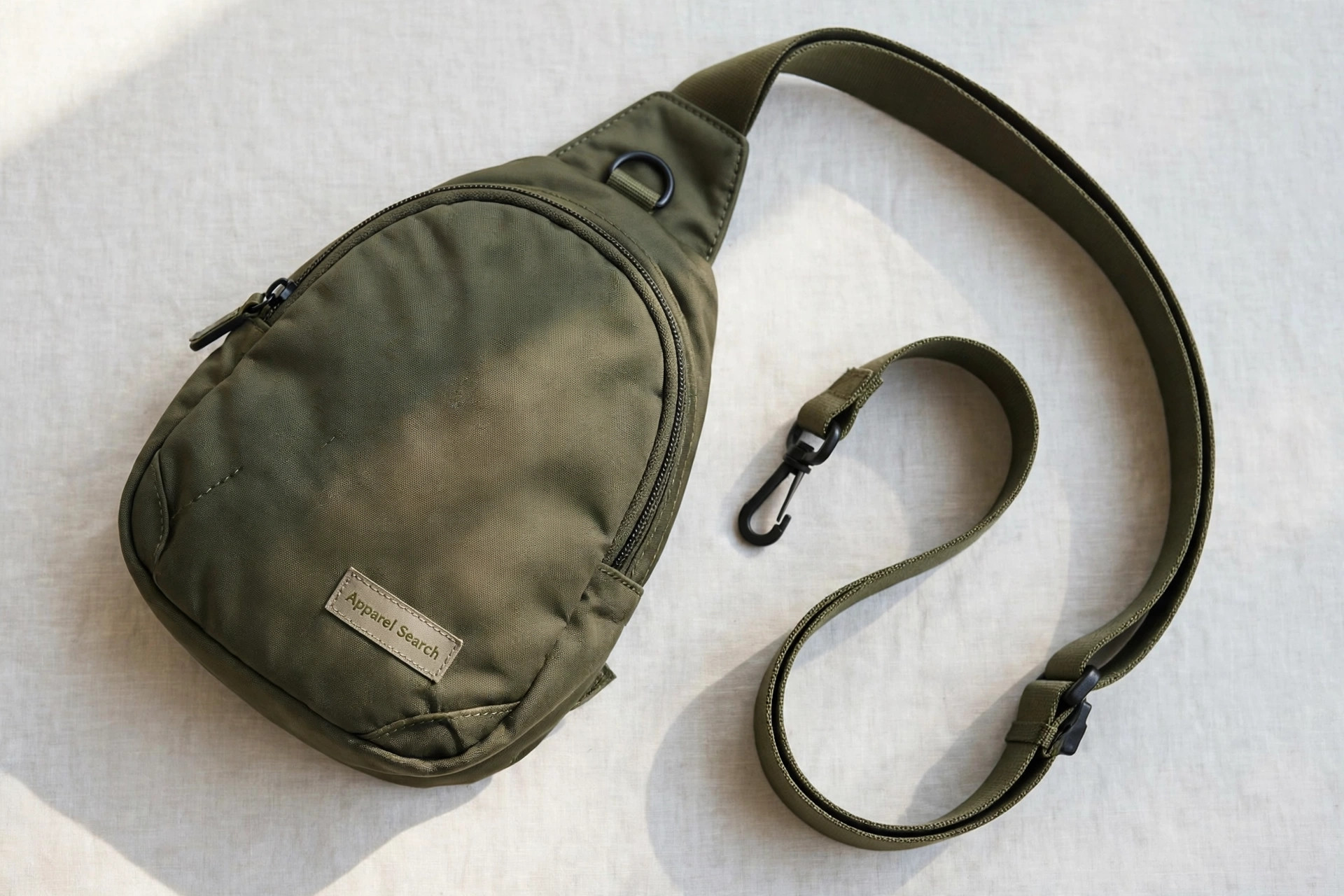
A sling bag is a small bag worn on a single wide strap across the body, so the bag rests on your chest, hip or back and can be swung round to the front without taking it off. It borrows from messenger bags, belt bags and small backpacks, and it has become the default carry for commuting, travel, festivals and long dog walks — more capacity than a phone bag, far less bulk than a backpack.
The sling's appeal is access: everything is one swing away, on your front, where you can see it. This guide explains how slings differ from ordinary crossbody bags, what fits in each size, strap comfort over a day of wear, and the materials that survive weather and crowds.
Sling Bag, Crossbody Bag or Belt Bag?
An ordinary crossbody bag hangs at the hip on a thinner strap and is styled like a handbag. A sling bag is shaped and strapped to hug the torso — worn high on the chest, across the back, or low at the waist — with a wider, often padded strap and a tapered body that stays put while you move. A belt bag (or fanny pack) is the smallest relative: it clips around the waist or is worn sling-style across the chest, and holds phone-and-cards loads only.
Choose a sling when you walk, cycle, commute or travel and want the bag stable against your body. Choose a classic crossbody when the look matters more than the movement, and a belt bag when your load is truly minimal. Many slings convert: the strap adjusts long enough for crossbody wear at the hip, which is why the categories blur in shop listings — judge by strap width, body shape and how the product is photographed being worn.
Sizes and What Fits
Small slings (around 1–2 litres) carry a phone, cardholder, keys, earbuds and sunglasses — a step up from a wristlet with real freedom of movement. Medium slings (2–4 litres) add a small water bottle, paperback or e-reader, snacks and a compact umbrella, and are the commuter sweet spot. Large slings approach small-messenger territory and can swallow a tablet or a light layer, at which point weight on one shoulder becomes the limit, not space.
Organisation separates good slings from sacks: look for a padded phone sleeve, a zip pocket against the body for cards and cash (the anti-theft pocket), and one external quick pocket. Test the swing: with the bag on your back, you should reach the main zip by sliding it to your chest with one hand. Left- and right-shoulder versions exist — the zip direction and strap anchor follow your dominant side, so check before buying if you always carry on one shoulder.
Comfort, Materials and Styling
One strap carries all the weight, so strap design is the comfort story: wide and lightly padded beats thin and pretty over any real distance, and the bag should sit high and close rather than bouncing at the hip. Alternate shoulders on long days, and keep the load honest — a sling that hurts is a sling that is too full, whatever its litre rating claims. For serious walking loads, a small backpack distributes weight better; the sling wins on access and profile, not on maximum comfort.
Nylon and technical fabrics dominate slings for good reason: light, weather-resistant and easy to clean, in sporty and street styles. Leather slings exist at the polished end and pair with smarter outfits, trading weatherproofing for looks. Styling is uncomplicated — a sling worn on the chest is a modern, intentional look with dresses as well as athleisure, and a neutral sling disappears into travel outfits while a bright one becomes the accent. Care: sponge technical fabrics clean, air the strap padding, and store the bag unclipped so buckles do not press marks into the body.
Common Questions
How do you wear a sling bag?
Three ways: across the chest with the bag at your front, swung to your back for walking, or lengthened to sit at the hip like a crossbody. Most wearers walk with it on the back or chest and swing it to the front to reach inside. Adjust the strap so the bag sits high and close to your body — that is what stops it bouncing.
What fits in a women's sling bag?
A medium sling fits a phone, cardholder, keys, sunglasses, earbuds, a small water bottle and a paperback or e-reader. Small slings hold the phone-and-cards essentials only. If you regularly carry a laptop or a change of clothes, choose a messenger or backpack instead — a sling's single strap is not built for that weight.
Are sling bags good for travel?
Yes. A sling keeps valuables on your front in crowds, swings round for instant access at gates and tills, and fits under a coat for extra security. Look for a body-side zip pocket for cards and cash, a lockable or covered main zip, and a size that holds your passport, phone and a small bottle.
Women's Bags Guides
Small bags, evening bags and everyday carry for women — every women's guide in this cluster:
Men's Bags Guides
Work, laptop and travel bags for men — every men's guide in this cluster:
More to Explore on Apparel Search
Wide, low and elegant: continue to the east-west bag, the shape of the season.
Next: Women's East-West Bag Guide: The Wide, Low Handbag Shape »Looking for Women's Clothing Stores?
This guide helps you choose a women's sling bag sized for your commute, trip or daily walk. To browse where to buy, visit our womens clothing store directory, where you can find retailers that carry them.