Men's 1960s Fashion Guide
The decade that broke menswear’s rules — it opened with slim suits and narrow ties, and closed with velvet, fringe, bell-bottoms and hair over the collar.
Shop Men's 1960s-Style Clothing Now
Shop Men's 1960s-Style Clothing on Amazon Shop Men's 1960s-Style Clothing on eBayThe Amazon and eBay links on this page are affiliate links. If you make a purchase through them, Apparel Search may earn a commission.
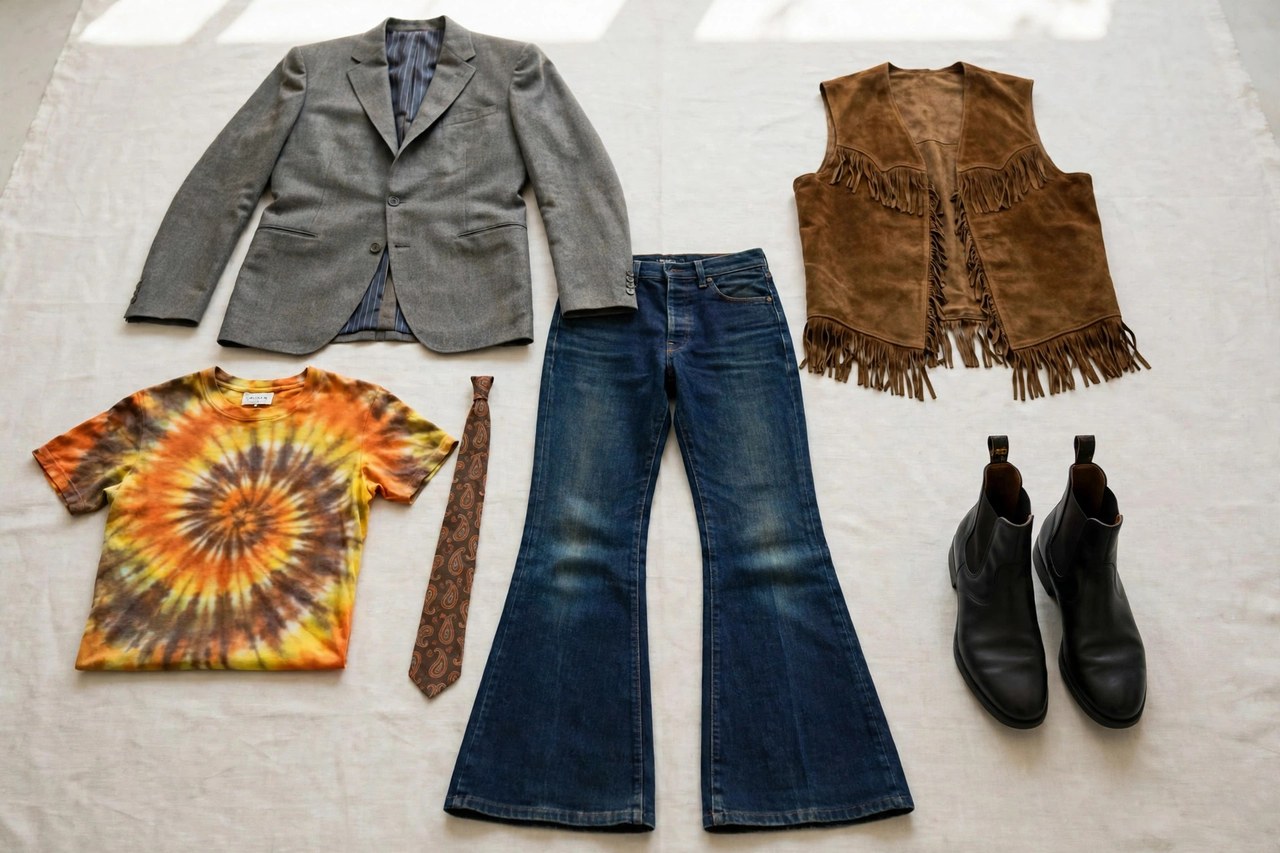
The 1960s broke more fashion traditions than any decade before it, mirroring the social movements that ran through the same years. For men, the break is easiest to see as a handover: the decade began as an extension of the tidy 1950s — short hair, slim suits, narrow ties — and ended in a wardrobe of velvet and fringe that a 1960 office worker would not have believed. In between stand two great engines of change, one on each side of the Atlantic: the Mods of London, who made menswear faster, sharper and younger, and the American hippie counterculture, which rejected tailoring altogether in favor of denim, beads and clothes borrowed from everywhere on earth.
What makes the decade remarkable is that both engines won. Mod sharpened the suit into something a young man could want; hippie made casual clothes a philosophy. Modern menswear — which still swings between sharp tailoring and dressed-down ease — has been replaying that argument ever since.
The Early 1960s: Slim Suits and Narrow Ties
Early-decade menswear stayed close to the ’50s pattern: single-breasted suits cut slim with narrow lapels, white shirts, and slim neckties an inch or two wide. The silhouette was neat and vertical — trousers tapered, shoes pointed, hair short. But change was already arriving from Italy and London in the form of shorter jackets, slimmer trousers and ankle boots, and young men who had grown up in grey flannel began looking for a version of the suit that belonged to them rather than to their fathers’ offices.
Mod: London Sharpens the Suit
In the early-to-mid 1960s, the London Modernists known as the Mods were shaping and defining popular fashion for young British men, and trends changed more frequently than ever before in fashion history. The mod wardrobe took the Italian-cut suit — short jacket, slim trousers, pointed collar, Chelsea boots — and wore it with fanatical neatness, then layered street details over it: the fishtail parka worn over the suit on a scooter, bold striped or checked shirting, knitted ties. Carnaby Street became its shopping shrine, and boutiques replaced department stores as the place young men actually wanted to buy clothes — a retail revolution as significant as any garment.
The Hippie Counterculture
In the United States, the hippie lifestyle was in full bloom by the decade’s second half. Bell-bottom jeans and tie-dye clothing were the rage, joined by ponchos, moccasins, love beads, peace signs, medallion necklaces, chain belts and headbands; both men and women wore frayed bell-bottomed jeans, tie-dyed shirts, work shirts and Jesus sandals. Inspiration was deliberately multicultural, drawn from the traditional clothing of Nepal, India, Bali, Morocco and African countries — which is why hippie dress never settled into a single uniform: the pieces shared elements and silhouettes, but the philosophy was personal assembly, not a prescribed look.
1969: Psychedelia Takes the High Street
By 1969, psychedelia had begun to influence mainstream menswear, with the pale, toned business suits replaced by Bohemian Carnaby Street creations that included velvet or brocade double-breasted suits, frilly shirts, cravats, wide ties and trouser straps, leather boots, and even collarless Nehru jackets. The slim neckties of the early ’60s gave way to kipper ties exceeding five inches in width and featuring exuberant prints, stripes and patterns. Fringed buckskin vests and flowing caftans completed the turn: within nine years, the acceptable width of a man’s tie had more than doubled, and the acceptable contents of his wardrobe had changed beyond recognition.
Wearing the 1960s Today
The decade survives in pieces rather than whole outfits. The mod inheritance is the safest: a slim suit, Chelsea boots and a knitted tie are simply good modern tailoring. The hippie inheritance works best diluted — a single tie-dye or a pair of true flares with plain companions, rather than beads, fringe and denim all at once. Vintage buyers should note the decade’s split personality: early-’60s tailoring is sturdily made and ages well, while late-’60s pieces in velvet, brocade and thin printed cotton are fragile, and bell-bottom hems show the wear of everything they swept.
Common Questions
What did men wear in the early 1960s?
Slim single-breasted suits with narrow lapels, white shirts and slim neckties, with tapered trousers and pointed shoes - a neat continuation of 1950s tailoring, before the mod and hippie movements transformed the wardrobe later in the decade.
What is mod fashion for men?
The London Modernist look of the early-to-mid 1960s: Italian-cut slim suits worn with fanatical neatness, Chelsea boots, knitted ties and bold shirting, with a fishtail parka layered over the suit. Carnaby Street boutiques were its headquarters.
What is a kipper tie?
The very wide necktie of the late 1960s - over five inches across, in loud prints, stripes and patterns. It replaced the slim tie of the early 1960s as psychedelic style moved into mainstream menswear around 1969.
Men's Fashion by Decade
Six decades of menswear, one page each — follow the series from the grey flannel 1950s to the streetwear 2000s.
- Men's 1950s Fashion
- Men's 1960s Fashion
- Men's 1970s Fashion
- Men's 1980s Fashion
- Men's 1990s Fashion
- Men's 2000s Fashion
More to Explore
- 1960's Fashion
- Men's Clothes
- 1960's Fashion History
- Retail Hippie Clothing
- Vintage Clothing Stores
- Fashion History
- Clothes
- 60's Fashion
- 1970's Men's Fashion
- shopping for men's clothing
- Fashion Designers by Name
- Fashion
- Clothing Retail Stores
- Clothes Shopping
- Fashion News
- Fashion Designers
- Popular Brands
- Apparel
- Men's Fashion News
- Shopping for Men's Clothing
- Men's Clothing Stores
- Men's Clothing Wholesalers
- Men's Fashion
- Men's Clothes Guide M
- Men's Clothes Guide A-G
- Men's Clothes Guide H-P
- Men's Clothes Guide Q-Z
The Women's Version of This Decade
See how the same decade dressed women, in the companion guide from the Women's Clothes Guide.
Looking for Men's Clothing Stores?
This guide is part of the Men's Fashion by Decade series in the Clothes Guide. To browse where to buy, visit our men's clothing store directory for vintage and vintage-style menswear.