Men's Soccer Shoes Guide
Men's soccer shoes are the complete footwear of the game: the low-cut boots whose uppers are built to strike, control and pass a ball and whose cleated soles - the subject of our soccer cleats guide - plant the foot on grass and turf. Soccer shoes range across the whole sport's footwear, from firm-ground boots to futsal shoes, in a game governed worldwide by FIFA, with futsal as the indoor variant. This guide takes the shoe whole: uppers, positions, surfaces and the indoor branches of the family.
Shop Men's Soccer Shoes Now
Shop Men's Soccer Shoes on Amazon Shop Men's Soccer Shoes on eBayThe Amazon and eBay links on this page are affiliate links. If you make a purchase through them, Apparel Search may earn a commission.
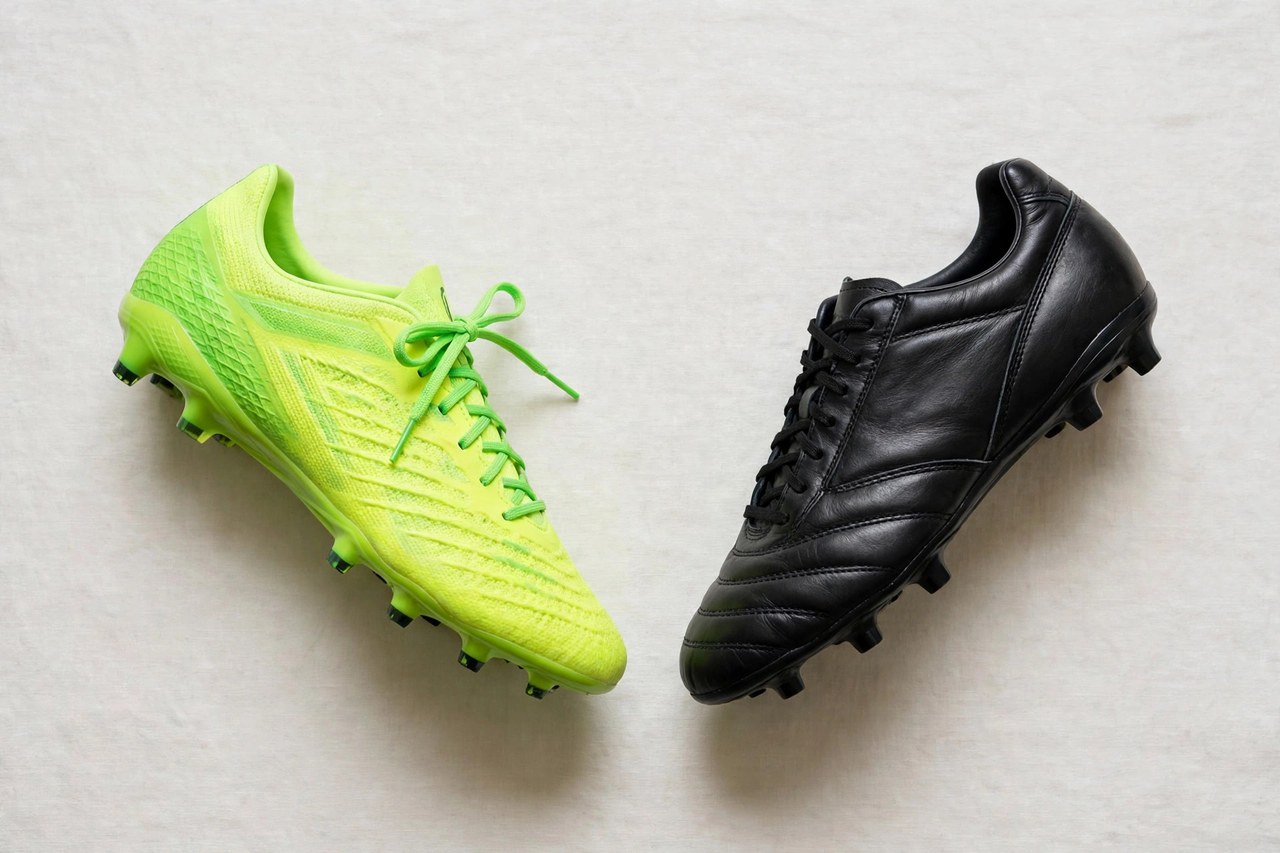
Men's soccer shoes are the complete footwear of the game: the low-cut boots whose uppers are built to strike, control and pass a ball and whose cleated soles - the subject of our soccer cleats guide - plant the foot on grass and turf. Soccer shoes range across the whole sport's footwear, from firm-ground boots to futsal shoes, in a game governed worldwide by FIFA, with futsal as the indoor variant. This guide takes the shoe whole: uppers, positions, surfaces and the indoor branches of the family. This guide covers the styles worth knowing, the fit points that decide comfort, the fabrics and construction that separate a good buy from a regret, and the simple care that makes the garment last.
Uppers, Positions and the Indoor Branches
Uppers divide by philosophy. Leather - kangaroo historically, calf today - molds to the foot, cushions touch, and rewards players whose game is control; it asks care and gives a little in wet weather. Synthetics are lighter, hold their shape, shrug off rain and carry the speed-boot brief: thin, grippy-textured uppers for forwards who strike and sprint. Between them sit knitted uppers with coated yarns, molding without leather's weight gain when wet. Position lines are marketing with a kernel of truth - control boots add textured strike zones, speed boots strip grams, power boots stiffen the strike face - but the surface choice underneath (firm ground, soft ground, artificial ground, turf, indoor) is the decision with consequences, and it belongs to the cleats guide's plate logic.
Judge footwear by attachment and compound: cemented soles are light and affordable, stitched or welted constructions cost more and can be repaired, and the outsole rubber decides grip against longevity - soft compounds bite, hard compounds endure. Linings decide comfort over hours, removable insoles decide whether your own supports can come along, and honest weight decides whether the pair disappears on the foot or taxes every mile of the day.
Fit and Sizing
Soccer shoes fit like instruments: close everywhere, the ball of the foot over the plate's flex point, the heel locked, toes a whisper from the end. The game's shoes are lasted narrower than trainers, and wide-footed players should seek the wide lasts brands now offer rather than sizing up into length their toes do not need. Try them with match socks and a ball if the shop allows a touch or two - the upper's feel on the ball is data no mirror provides.
Fit footwear late in the day in the socks you will actually wear, with roughly a thumb's width beyond the longest toe, the heel held without lift, and the foot's widest point meeting the shoe's widest point. Sizes are unstandardized between makers - trust your measured length and width over the printed number, and require no break-in argument: a shoe that needs excuses in the shop delivers them on the road.
Wearing and Care
Care for soccer shoes as match equipment: clean after play, dry stuffed with paper away from heat, condition leather before it dries stiff, and keep them from living in the kit bag, where damp leather and synthetics alike go to mildew. Futsal and indoor shoes - gum-rubber soles, suede-reinforced toes - live easier lives but the same drying law. A boot maintained between matches touches the ball the way it did when it was new, for seasons longer than its neglected twin.
Rotation is the first care rule: a day of rest between wears lets linings dry and cushioning rebound, and it doubles a rotation's life compared with daily wear of one pair. Clean after use, dry at room temperature away from radiators, hold shape with trees or paper, and condition leather on a schedule rather than when it looks thirsty. Reproof weather finishes when water stops beading, and resole stitched footwear before the wear reaches the welt.
Common Questions
Soccer shoes or soccer cleats - are they the same thing?
In American usage the words blur: the whole shoe is often called 'cleats' after its most visible feature. Precisely, the soccer shoe is the complete boot - upper, fit and sole - and the cleats are the studs and plate underneath it. This guide covers the shoe whole; our soccer cleats guide goes deep on stud configurations and surface plates, which is where the two pages divide the subject.
Leather or synthetic soccer shoes?
Leather molds to your foot, softens touch and suits control players; it needs care and gains weight when soaked. Synthetics are lighter, weatherproof, consistent from the first wear and built for speed; their touch is engineered rather than natural. Neither is the professional's unanimous answer because the game's positions are genuinely different - choose by how you play, then by the surface you play on.
What shoes does futsal and indoor soccer need?
Indoor shoes: a flat gum-rubber outsole with a herringbone or circular tread for court grip, a low profile for feel, and suede or reinforced toe panels against the drag of the indoor game. They carry no cleats at all - the plate logic inverts, and traction comes from rubber compound and contact area. FIFA's futsal game and its American cousins are played in these, never in outdoor boots.
More in Men's Clothes Guide S
It Is Not Only About Cleats
Football boots, called cleats or soccer shoes in North America, are footwear worn when playing football, and those designed for grass pitches have studs on the outsole to aid grip - but it is not only about cleats; a player must learn about firm ground cleats, soft ground cleats and artificial grass cleats, and there are other types of footwear important to soccer players besides. The substantive external references for this family - FIFA, FIFA’s futsal section and U.S. Futsal - are in this page’s References.
More to Explore on Apparel Search
References & Further Reading
Looking for Men's Clothing Stores?
This guide explains men's soccer shoes. To browse where to buy, visit our men's clothing store directory, where you can find retailers that carry them.