Men's Training Shoes Guide
Men's training shoes are cross-trainers: gym shoes built for mixed work - lifting, short sprints, lateral drills, classes and conditioning circuits - where no single sport's shoe is right. Where a running shoe is a straight-line specialist and a tennis shoe a lateral specialist, the trainer compromises deliberately: a flatter, more stable base than a runner, more cushioning than a pure lifting shoe, and an upper that holds the foot in every direction the workout goes.
Shop Men's Training Shoes Now
Shop Men's Training Shoes on Amazon Shop Men's Training Shoes on eBayThe Amazon and eBay links on this page are affiliate links. If you make a purchase through them, Apparel Search may earn a commission.
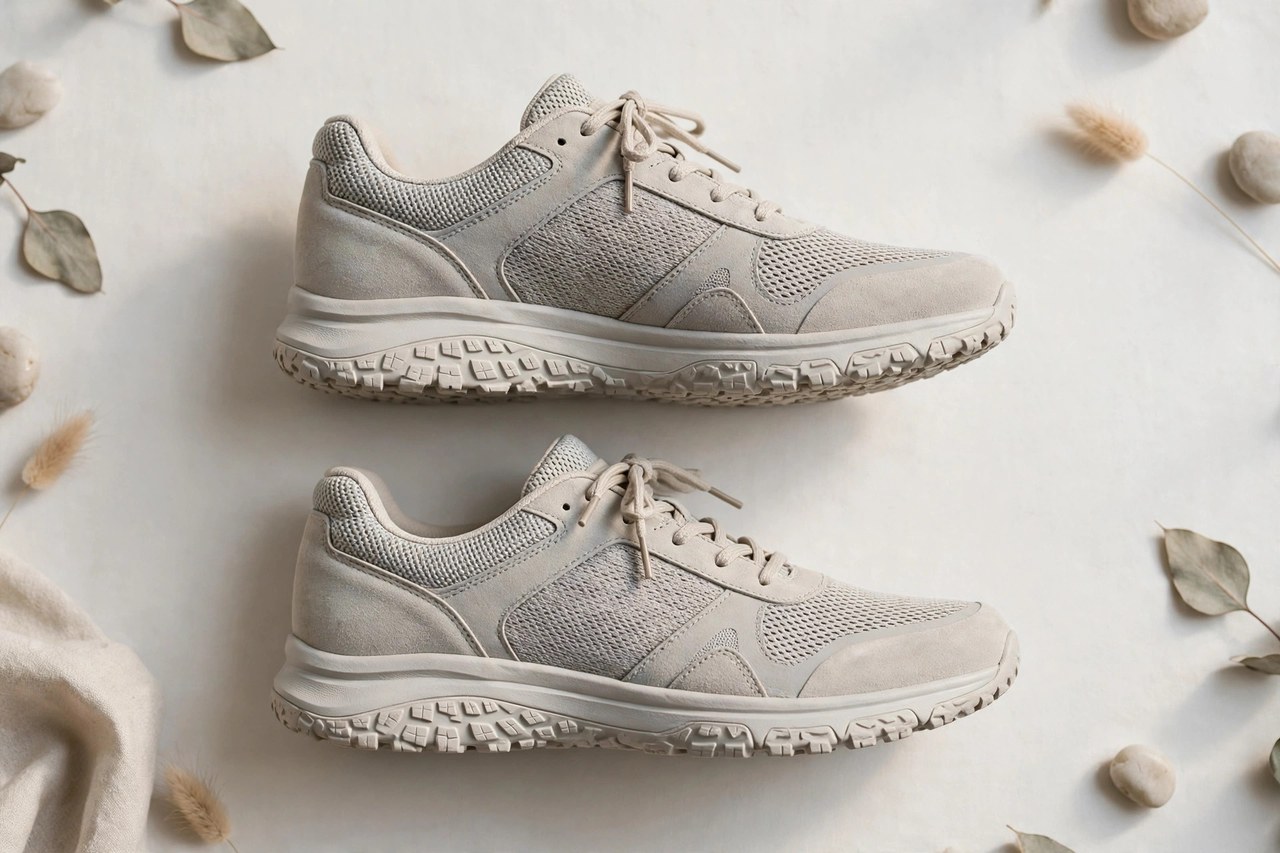
Men's training shoes are cross-trainers: gym shoes built for mixed work - lifting, short sprints, lateral drills, classes and conditioning circuits - where no single sport's shoe is right. Where a running shoe is a straight-line specialist and a tennis shoe a lateral specialist, the trainer compromises deliberately: a flatter, more stable base than a runner, more cushioning than a pure lifting shoe, and an upper that holds the foot in every direction the workout goes. This guide is built around the questions buyers actually ask: which style, which size, which fabric, and what will it look like after a year of real use - answered in order, with the trade-offs stated plainly.
Styles and Construction
The sole tells the trainer's philosophy. A low, firm heel (a small heel-to-toe drop) keeps lifting stable - you cannot squat heavy through a marshmallow - while a cushioned forefoot absorbs jumps and short runs. Rope guards and reinforced medial uppers serve rope climbs and sled work; a wide, flat outsole with multidirectional tread serves everything else. Training lines split by emphasis: stable, minimal trainers for lifters; cushioned all-rounders for classes and circuits; and hybrid run-trainers for workouts that end in mileage. The honest question is what your training week actually contains, because a shoe optimized for deadlifts and one optimized for box jumps are cousins, not twins.
Judge footwear by attachment and compound: cemented soles are light and affordable, stitched or welted constructions cost more and can be repaired, and the outsole rubber decides grip against longevity - soft compounds bite, hard compounds endure. Linings decide comfort over hours, removable insoles decide whether your own supports can come along, and honest weight decides whether the pair disappears on the foot or taxes every mile of the day.
Fit and Sizing
Fit training shoes in gym socks, late in the day, with a thumb's width for forward slide and a locked heel for lateral work - the two fits trainers must reconcile. The midfoot should feel held when you cut side to side on the shop floor. Lifters who also run intervals often keep two pairs rather than compromise both; if one pair must do everything, choose the middle: moderate drop, moderate cushion, secure upper, and accept that it will be second-best at each extreme and good at all of them.
Fit footwear late in the day in the socks you will actually wear, with roughly a thumb's width beyond the longest toe, the heel held without lift, and the foot's widest point meeting the shoe's widest point. Sizes are unstandardized between makers - trust your measured length and width over the printed number, and require no break-in argument: a shoe that needs excuses in the shop delivers them on the road.
Wearing and Care
Keep training shoes for the gym and they will outlast street-rotated pairs several times over - concrete is an abrasive no gym floor matches. Air them after every session, loosen the laces, pull the insoles when they are soaked, and never leave them in a hot car, which ages foam and glue. Rotate two pairs in a heavy training week, and retire a trainer when the midsole feels dead underfoot or the outsole smooths at the forefoot - stability lost is an injury rehearsing.
Rotation is the first care rule: a day of rest between wears lets linings dry and cushioning rebound, and it doubles a rotation's life compared with daily wear of one pair. Clean after use, dry at room temperature away from radiators, hold shape with trees or paper, and condition leather on a schedule rather than when it looks thirsty. Reproof weather finishes when water stops beading, and resole stitched footwear before the wear reaches the welt.
Common Questions
Training shoes vs running shoes - what is the real difference?
Stability versus straight-line cushioning. A trainer has a flatter, firmer, wider base and lateral support for lifting and side-to-side work; a running shoe has a softer, higher, curved sole built to roll forward. Lifting in runners feels unstable because it is; running long in trainers feels harsh because they are not built to absorb miles. Match the shoe to the dominant work.
Can I lift weights in training shoes?
For general strength work, yes - a firm, low-drop trainer is designed for it. For maximal barbell lifting, a dedicated lifting shoe (raised, incompressible heel for squats) or a minimal flat shoe (for deadlift mechanics) outperforms any cross-trainer. Most men's training lives comfortably in the middle ground a good trainer covers; specialize when the loads, not the marketing, demand it.
How long do training shoes last?
Roughly 300-500 hours of gym work for the midsole's working life, though uppers and outsoles often look fine long after the foam has packed out. New aches in knees, shins or lower back after sessions are the practical retirement signal. Keeping them indoors-only and rotating pairs extends the honest life considerably.
More in Men's Clothes Guide T
Background and History
The first question is obviously, "what activity are you training for?" This style of footwear is generally used for sports training. The type of shoe is somewhat dependent on the sport for which you are training. However, the term "training shoes" are typically defined as an all purpose sport shoe . The most common type of sports training shoe would be a sneaker. Sneakers are a good choice if you enjoy participating in a variety of sports or work out in the gym. Although the general term is used to define an all purpose sports shoe, athletes can train in shoes that are more unique to their particular goals. Training shoes can consist of wrestling shoes, turf shoes, sneakers in a wide variety, boots, etc. If you are training for climbing Mount Everest you will do some of your training activities in a different pair of shoes than someone training for a bowling tournament. When we think of trainers we think in terms of running shoes for sports training. If
More to Explore on Apparel Search
Looking for Men's Clothing Stores?
This guide explains men's training shoes. To browse where to buy, visit our men's clothing store directory, where you can find retailers that carry them.