Men's Twill Pants Guide
Men's twill pants are trousers and chinos cut from twill cloth - the diagonal-rib weave that makes denim, chino, gabardine and cavalry twill some of the most durable fabrics in menswear. The weave is the subject of this guide: how the diagonal structure gives twill its strength, drape and characteristic hand, and how the many twill cloths divide into pants for work, weekends and the smarter end of casual.
Shop Men's Twill Pants Now
Shop Men's Twill Pants on Amazon Shop Men's Twill Pants on eBayThe Amazon and eBay links on this page are affiliate links. If you make a purchase through them, Apparel Search may earn a commission.
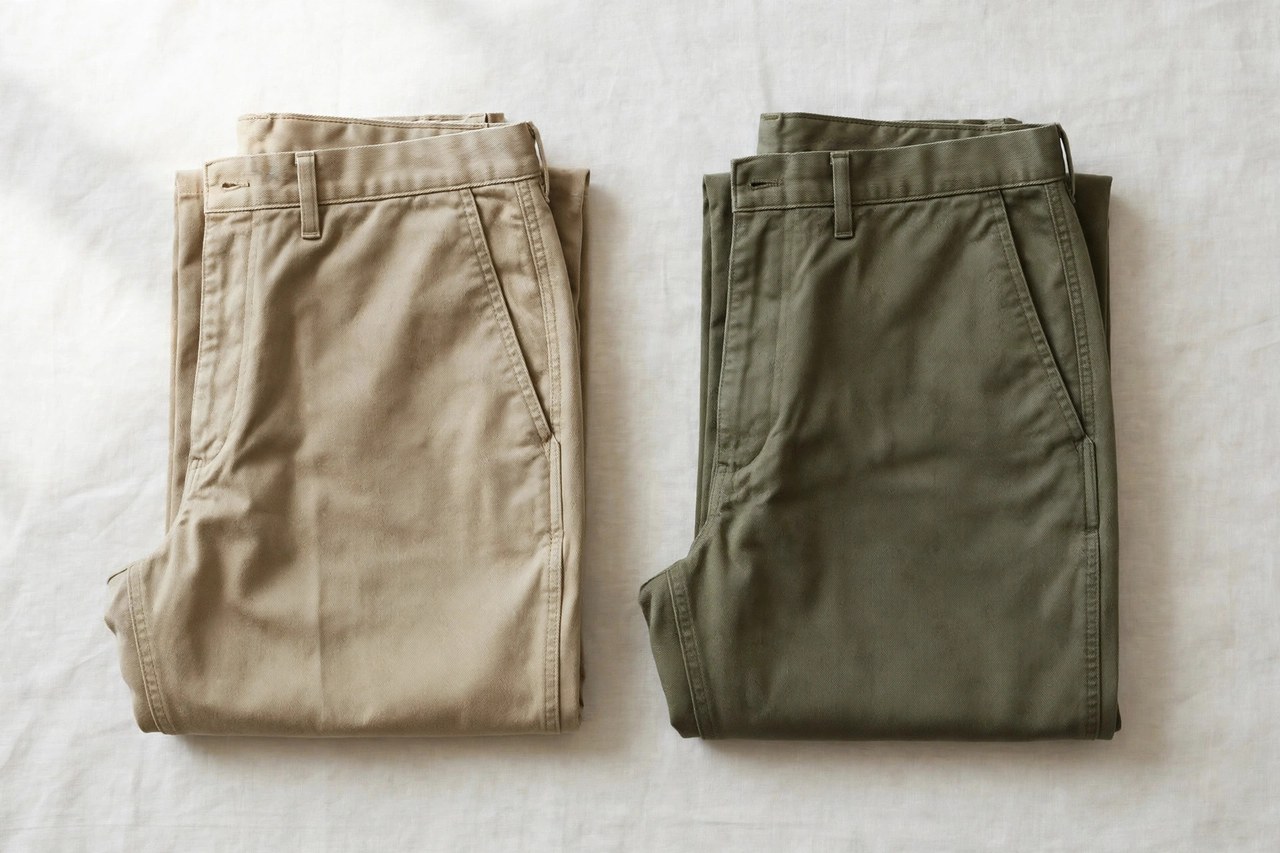
Men's twill pants are trousers and chinos cut from twill cloth - the diagonal-rib weave that makes denim, chino, gabardine and cavalry twill some of the most durable fabrics in menswear. The weave is the subject of this guide: how the diagonal structure gives twill its strength, drape and characteristic hand, and how the many twill cloths divide into pants for work, weekends and the smarter end of casual. This guide is built around the questions buyers actually ask: which style, which size, which fabric, and what will it look like after a year of real use - answered in order, with the trade-offs stated plainly.
Styles and Construction
Twill's diagonal comes from the weft passing over and under warp threads in a stepped pattern, producing a cloth that is dense, drapes softly, hides soil in its grooves and resists wrinkling better than plain weave at the same weight. The family by weight and finish: chino cloth (light, smooth, the khaki standard), cotton drill for work pants, wool gabardine for dress trousers, cavalry twill (steep double diagonal, elastic recovery from the weave itself) for riding-descended tailored pants, and denim - a twill - for jeans, covered in its own guides. Stretch twills add a percent or two of elastane; the honest trade is comfort now against earlier bagging at the knee. Inspect the inside: a twill's diagonal should mirror cleanly, and serged or bound seams separate pants that survive the wash from pants that fray in it.
For any leg garment the rise is the first specification, because it decides sitting comfort before fabric gets a vote: measure from front waistband through to back and compare it with a pair that already works. Then audit the stress points - bar-tacked belt loops and pocket corners, double-stitched inseams, hems finished evenly - and the pocketing, which should be deep, smooth and strong enough to carry what the garment's pockets invite you to carry.
Fit and Sizing
Fit twill pants by rise and thigh first, because twill's slight natural give forgives the waist more than the leg. Cotton twills relax through the day and tighten back in the wash, so the morning fit should be secure, not snug; wool twills hold their cut all day and can be bought closer. Break follows the pant's station - clean and short for chinos worn with minimal shoes, a touch fuller for tailored twill trousers. Hem cotton twills after the first washes if the maker has not pre-shrunk them; inseams settle measurably in early laundering.
Measure where the waistband will actually sit, plus inseam to your preferred break, and thigh and seat for closer cuts. Then sit, squat and climb a step in the fitting room - a leg garment that only works standing still does not work. Waistbands relax roughly half an inch in wear and inseams shrink most in early washes, so buy the fit you want after those changes rather than the fit in the mirror.
Wearing and Care
Wash cotton twill pants inside out, cool, to keep the face of the diagonal from abrading and fading - twill shows its age first as lightening along the ribs. Dry low or on the line, press on the reverse to avoid shining the diagonal, and brush wool twills rather than washing them often. Mend pocket corners and hem edges early; a durable weave deserves durable maintenance, and twill pants properly kept are among the longest-serving garments a man owns.
Wash leg garments inside out and cool; heat is the agent that fades dye, tires elastic and shortens inseams. Dry low or on the line, hang or fold promptly, and crease deliberately or not at all. Walk the stress points each season - hem edges, pocket corners, seat and inner thigh - and mend the small fray while it is still small: leg garments fail gradually, then suddenly, and the two-minute October repair prevents the November replacement.
Common Questions
What makes twill different from plain-weave cloth?
The diagonal. Twill's stepped over-under pattern packs more yarn into the same area, giving a denser, stronger, softer-draping cloth that wrinkles less and hides dirt in its grooves - which is why work pants, chinos, gabardine trousers and denim are all twills. Plain weaves (poplin, broadcloth) are crisper and lighter but show wear and creasing sooner at the same weight.
Are twill pants the same as chinos?
Chinos are one member of the family: pants cut from chino cloth, a light cotton twill, usually in khaki-family colors. Twill pants is the wider category - wool gabardine dress trousers, cavalry twill tailored pants and cotton drill work pants are all twills without being chinos. If the diagonal rib is in the cloth, it belongs to this guide's family.
Do twill pants stretch out?
Cotton twill relaxes with wear - noticeably at waist and knee by day's end - and recovers in the wash; that cycle is normal, not a defect. Versions with 1-2% elastane relax further and recover less over the garment's life. Buy cotton twill secure at the waist in the morning, and judge any pair after its first wash rather than off the rack.
More in Men's Clothes Guide T
Background and History
Although our directory covers all aspects of the fashion industry, we find that discussing men's clothing and men's fashion accessories is more fun the dealing with textile machinery, garment hangers, woven labels etc. Therefore, we have spent a great deal of time developing this men's apparel section to help you learn about men's fashion such as men's twill pants. Let's assume you already understand what a trouser is and what fabric is. But here is a brief summary just in case. Trousers (pants in North America) are an item of clothing worn from the waist to the ankles, covering both legs separately (rather than with cloth extending across both legs as in robes, skirts, and dresses). A fabric is a material made through weaving, knitting, spreading, crocheting, or bonding that may be used in production of further goods (garments, etc.). Twill is a type of fabric weave. More specifically, twill is a type of textile weave with a pattern of diagonal parallel ribs (in contrast with a satin and plain
Looking for Men's Clothing Stores?
This guide explains men's twill pants. To browse where to buy, visit our men's clothing store directory, where you can find retailers that carry them.