Women's Bolero Jacket Guide
Short, chic and endlessly useful — the bolero adds sleeves, warmth and polish to dresses without hiding the dress itself.
Shop Women's Bolero Jackets Now
Shop Women's Bolero Jackets on Amazon Shop Women's Bolero Jackets on eBayThe Amazon and eBay links on this page are affiliate links. If you make a purchase through them, Apparel Search may earn a commission.
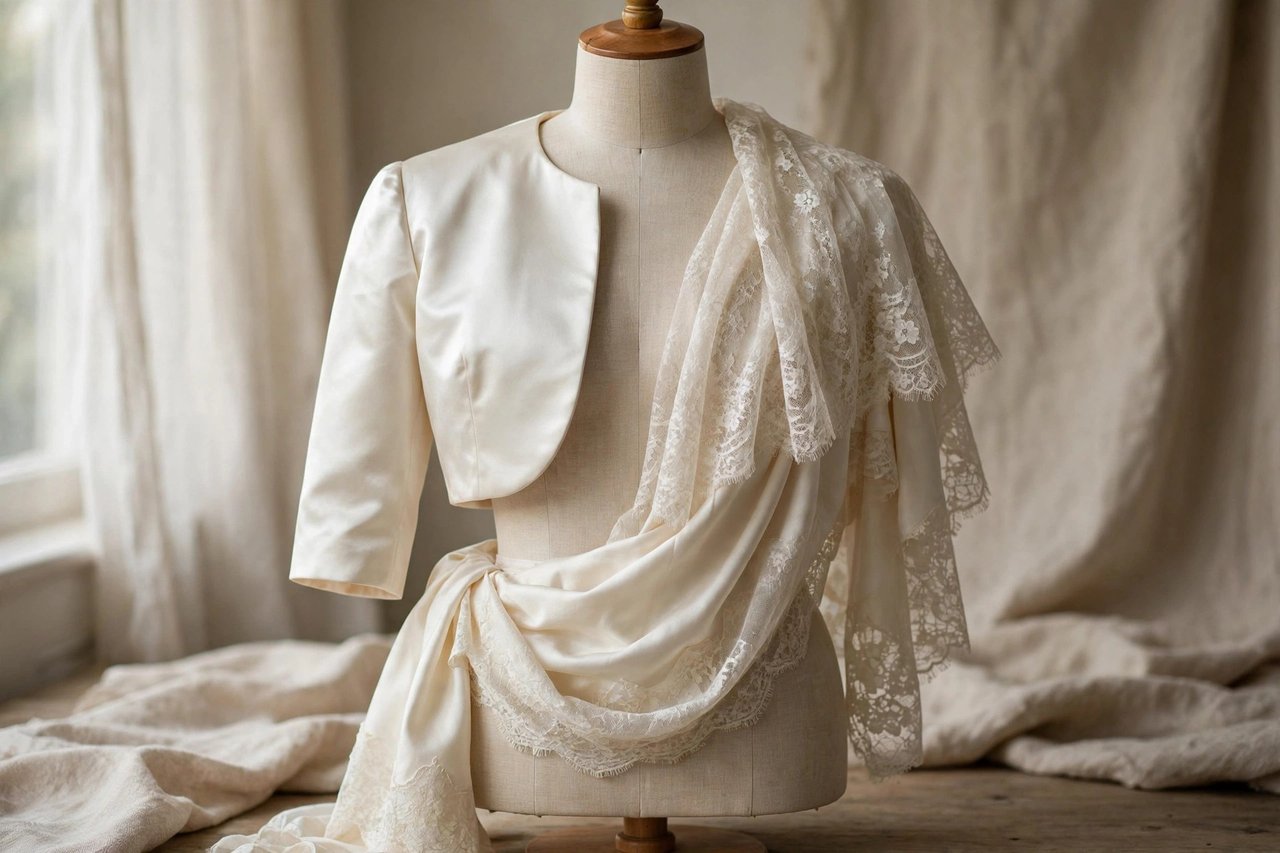
A bolero is a short, open-fronted jacket that ends just below the bust or at the high waist, named for the cropped jackets of Spanish bullfighters and popularized in women's fashion since the nineteenth century. Its genius is proportion: it covers the shoulders and arms while leaving a dress's bodice, waistline, and skirt completely visible. When a strapless or sleeveless dress needs a touch more coverage — for a ceremony, a chilly venue, or personal preference — the bolero solves it without redesigning the outfit.
Today's boleros range from beaded bridal lace to soft knit versions that dress up sundresses and tank tops. They are the smallest jacket with the largest effect, and a well-chosen one will serve across weddings, evenings out, holiday parties, and air-conditioned restaurants for years.
Bolero Versus Shrug: What Is the Difference?
The terms blur in shops, but a distinction exists. A true bolero is a tailored, jacket-like garment with set-in sleeves, a defined (if short) body, and often a curved front edge that sweeps from the neckline down around the hem. It holds its shape on a hanger like a miniature jacket. A shrug is softer and simpler — essentially sleeves joined across the back, often knitted or made from stretch fabric, with minimal body and no tailoring.
In practice, choose by effect. A bolero reads formal and intentional, pairing with gowns and cocktail dresses. A shrug reads casual and cozy, pairing with sundresses and everyday tops. Cropped cardigans sit between the two. If the product photos show structure, lapels or shaped seams, you are looking at a bolero; if it drapes like a sweater snippet, it is a shrug. Both belong in this guide's family, but knowing the difference keeps your expectations (and your outfit's formality) aligned.
Styles and Fabrics
Lace boleros are the bridal and formal standard: scalloped edges, floral motifs, and three-quarter sleeves that photograph beautifully and soften bare shoulders. Satin and taffeta boleros bring a smooth, structured sheen matched to formal dresses. Beaded and sequinned boleros turn a plain dress into an embellished ensemble and shine at holiday events.
Knit and jersey boleros handle everyday duty — over camisoles at the office, over maxi dresses on cool evenings. Chiffon and organza versions are nearly weightless, adding coverage without warmth for summer ceremonies. Velvet boleros own winter formality. Sleeve lengths run from cap to full; elbow and three-quarter sleeves flatter most arms and keep the jacket's cropped line clean. Colors cluster in ivory, white, and black for formal use, with metallics (gold, silver, champagne) as versatile evening options, and jewel tones for festive dressing.
Bridal and Evening Use
For brides, the bolero answers real needs: many ceremony venues request covered shoulders, outdoor and winter weddings add a chill factor, and some brides simply prefer arm coverage in photographs. An ivory lace bolero over a strapless gown creates a romantic two-look day — covered for the ceremony, bare for the reception. Bridesmaids benefit too: a matching bolero unifies different dress styles and keeps the party comfortable.
Evening wear beyond weddings uses boleros the same way. A black satin bolero finishes a cocktail dress for dinners and theater; a sequinned one revives a simple column dress for New Year's Eve. Keep proportions in view: the bolero should end where the dress is most defined — typically just above the natural waist on fitted bodices. If the dress has a detailed back or a low neckline, choose a bolero with simpler lines so the pieces complement rather than compete.
Fit and How to Choose
Bolero fit is close by design: it should skim the shoulders and upper back without pulling across them, and the sleeves should allow a comfortable bend. Because the front is open, bust size matters less than shoulder width and arm comfort. Try it on over the actual dress — sleeve fullness, neckline shape, and fabric bulk under the arm all change with the pairing.
Check the back view: the hem should sit level, not ride up, and the fabric should lie smoothly between the shoulder blades. Edges deserve attention — scalloped lace should frame symmetrically, and satin edges should roll cleanly without puckering. If you fall between sizes, choose the larger for structured fabrics and the smaller for knits, which forgive. Petite frames may prefer cap or elbow sleeves to keep the scale delicate; longer three-quarter sleeves elongate the arm line elegantly on everyone.
Care and Storage
Boleros ask for the gentle care their fabrics announce. Lace, beaded, and structured satin versions are safest dry-cleaned or carefully hand washed per the label; knits usually wash cold and gentle, reshaped flat to dry so the short body does not stretch longer. Never hang a knit bolero wet — its own water weight will distort the shoulders.
Store beaded and lace boleros flat or on padded hangers, with tissue at the folds to prevent creasing and snagging; keep lace away from hook closures and jewelry in the closet. Steam satin lightly from the inside, and never press lace with a hot iron — a cool iron under a press cloth, or professional pressing, protects the pattern. Because boleros are occasion pieces worn a few times a year, inspect yours a week before the event, not the morning of, so cleaning or a loose-button repair never becomes an emergency.
Related Women's Guides
More to Explore
Photos

Looking for Women's Clothing Stores?
This guide helps you choose women's bolero jackets by fabric, sleeve and occasion. To browse where to buy, visit our women's clothing store directory, where you can find retailers that carry them.