Women's Petite Cotton Fashion Guide
Shorter rises, scaled prints, and hems in the right place — cotton clothing proportioned for petite frames.
Shop Women's Petite Cotton Fashion Now
Shop Women's Petite Cotton Fashion on Amazon Shop Women's Petite Cotton Fashion on eBayThe Amazon and eBay links on this page are affiliate links. If you make a purchase through them, Apparel Search may earn a commission.
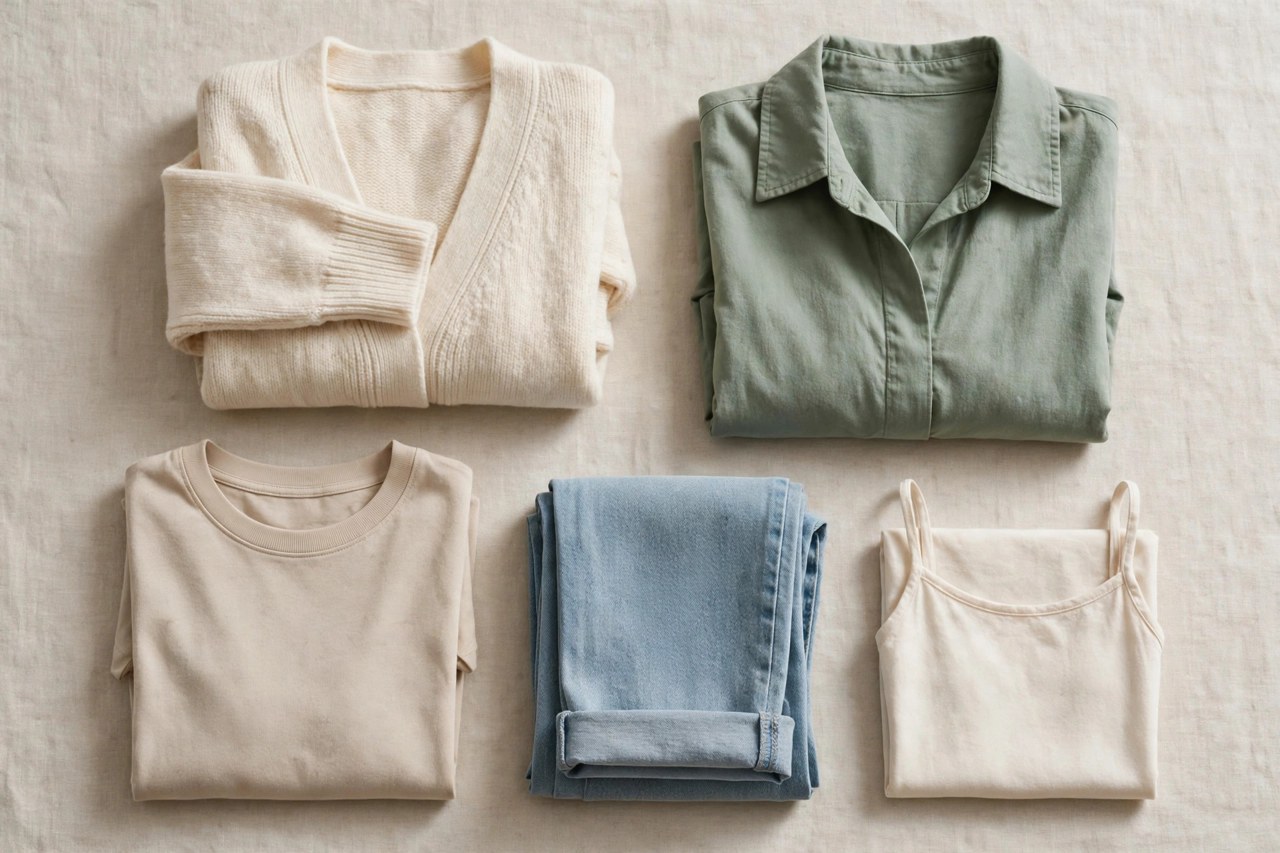
Petite fashion is about proportion, not just height. Petite sizing is generally designed for women around five feet four and under, and true petite garments are re-proportioned throughout: shorter bodices and rises, narrower shoulders, sleeves and inseams scaled down, and waistlines, knees, and pockets placed where they belong on a shorter frame. Simply shortening a regular garment rarely achieves the same result, because the balance points stay in the wrong places. Cotton is an especially friendly fabric for petite wardrobes, since its many weaves, from fine lawn to sturdy twill, come in small-scale prints and plain colors that do not overwhelm, and cotton pieces alter cleanly when a near-perfect fit needs a final adjustment. This guide explains how to judge proportion in cotton tops, dresses, skirts, and pants, and where alterations help most.
Proportion Rules That Actually Matter
Start with length placement. A petite top should end at or above the hip bone to keep legs looking longer, and three-quarter or bracelet sleeves avoid the bunching that full-length regular sleeves create. Dress and skirt waist seams should sit at your true waist, not an inch below it, or the whole silhouette slides downward visually. Necklines scaled slightly smaller, such as a modest V or scoop rather than a deep plunge, stay in balance with a petite frame. In cotton shirting, look for petite-cut poplin shirts where the placket, pocket, and cuffs are also reduced, not merely the hem. For pants, the rise matters as much as the inseam: a petite rise keeps the waistband at the waist and the shaping through the hip in the right place, which no amount of hemming can fix on a regular cut.
Print Scale, Color, and Texture
Scale is the petite shopper's most useful rule. Small to medium prints, fine stripes, narrow checks, and subtle textures keep their proportion on a shorter frame, while very large florals, wide horizontal bands, and oversized plaids can dominate the wearer. This is where cotton's variety shines: lawn and voile carry delicate prints beautifully, gingham and seersucker offer inherently small-scale patterns, and madras in petite sizing keeps its checks lively without overwhelming. Monochrome or tonal outfits in cotton, such as a navy poplin shirt with navy twill pants, lengthen the line simply, and a column of one color broken by a belt at the true waist adds shape. None of this forbids bold choices; a single vivid piece, like a bright cotton skirt with a plain top, reads as intentional styling rather than a proportion problem.
Best Cotton Pieces for a Petite Wardrobe
Certain cotton garments earn their place repeatedly. A petite shirtdress in poplin, with its waist seam correctly placed and skirt ending just above or at the knee, is a complete outfit in one piece. Cropped and ankle-length twill pants in petite cuts show the ankle bone, which lengthens the leg more than a full break does. Fitted cotton tees and fine-gauge cotton sweaters in petite sizing avoid excess fabric through the body. A-line and straight skirts at knee or short midi lengths keep their shape without trailing. Wrap tops and dresses adjust the waist precisely where you want it. When shopping general ranges, look for cropped, short-length, and ankle designations, which often approximate petite proportions in tops and pants even when the label does not say petite outright.
Alterations: What Is Worth Tailoring in Cotton
Cotton is one of the easiest fabrics to alter, and a few inexpensive adjustments transform near-misses. Hemming skirts, dresses, and pants to the ideal length is the highest-value alteration and usually straightforward in cotton. Taking up sleeves, narrowing a shirt through the body, and moving a button to refine a wrap front are also simple. More complex changes, such as raising a waistline, shortening a rise, or resizing shoulders, cost more and sometimes exceed the garment's value, which is why buying true petite cuts for structured pieces makes sense. Before altering, wash the garment first, because cotton shrinkage, particularly in length, should happen before the tailor measures. Keep a note of your ideal inseam, skirt length, and sleeve length once you learn them; those three numbers make every future cotton purchase, online or in store, faster and more accurate.
Shopping and Care Tips
Shop petite ranges first for anything with fixed balance points, especially dresses, shirts, and trousers, and treat regular ranges as a source for relaxed pieces like oversized tees and lounge shirts where proportion is forgiving. Read garment measurements rather than relying on size labels, which vary widely between brands, and favor retailers with free returns while you learn a brand's petite block. Care for cotton as usual, cool washes and low or line drying, but remember that shrinkage hits petite lengths harder in proportional terms: an inch lost from a short inseam matters more. Pre-wash new pieces before deciding on hems, and store knit cotton folded. A petite cotton wardrobe built on correct proportion needs fewer pieces, because everything in it actually fits, mixes, and gets worn.
Related Women's Cotton Guides
More to Explore on Apparel Search
Looking for Women's Clothing Stores?
This guide helps you choose women's petite cotton fashion proportioned for petite frames. To browse where to buy, visit our women's clothing store directory, where you can find retailers that carry them.