Women's Flannel Shirts Guide
The everyday flannel shirt, explained from the fabric up: brushed cotton warmth, the main daywear fits, how weights change the wear, and how to style one shirt five ways.
Shop Women's Flannel Shirts Now
Shop Women's Flannel Shirts on Amazon Shop Women's Flannel Shirts on eBayThe Amazon and eBay links on this page are affiliate links. If you make a purchase through them, Apparel Search may earn a commission.
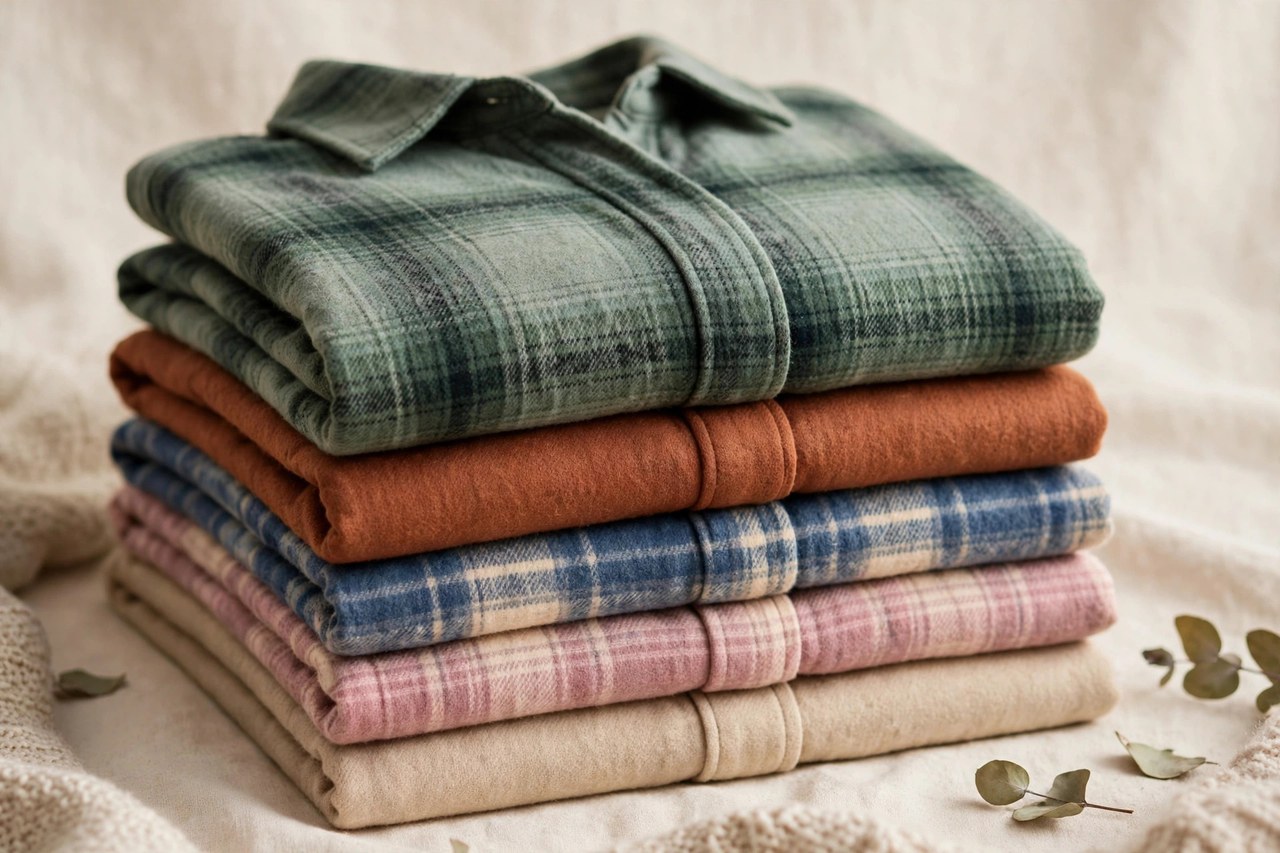
Start with the cloth, because a flannel shirt is only as good as its fabric. Plain flannel is a woven cotton (sometimes cotton-blend) cloth that has been brushed — fine wire brushes raise a soft nap from the yarns — so the surface feels fuzzy, traps still air and insulates far better than a smooth poplin of the same weight. No checks are required: solid colours, heathers and subtle stripes are flannel too, and for daywear those plain versions are often the most versatile shirts in the wardrobe.
This is the umbrella guide to the daywear shirt — the button-front top you wear to work, weekends and everywhere between — as opposed to the sleep shirts and lounge shirts covered in their own guides. What follows separates the fits, weights and details so you can pick the shirt that matches your climate and your closet, not just the first soft one you touch.
The Main Daywear Fits
The classic fit is the benchmark: a straight body, a full button placket, one or two chest pockets and room to layer a tee underneath. It is the shirt that works tucked, untucked or open. Relaxed and boyfriend fits add width through the body, drop the shoulder slightly and lengthen the hem — built for wearing open over tops or half-tucked into jeans. Tailored fits add back darts or princess seams, narrow the sleeve and tidy the collar, turning flannel into a shirt that sits comfortably under a blazer.
At the heavier end sits the overshirt or shacket: a shirt cut with jacket manners — thicker flannel, bigger pockets, sometimes snaps — worn as a light outer layer. Sleeve details matter too: button cuffs for rolling, snap plackets for speed, and curved shirttail hems that look intentional untucked, versus straight hems made to tuck.
Weight, Weave and Hand Feel
Flannel warmth is mostly a question of weight and brushing. Lightweight flannels feel like a soft cotton shirt and suit spring, autumn and heated offices. Midweight flannels are the all-rounders — genuinely warm without bulk — while heavyweight cloth, sometimes brushed on both sides, behaves almost like a light jacket. Double-brushed fabric is napped inside and out: softer against the skin, warmer, and a little more prone to pilling, so quality shows in how tight and even the weave underneath looks.
Check the fibre content while you are at it. All-cotton flannel breathes and softens with washing; cotton-polyester blends resist wrinkles and shrinkage and dry faster; a touch of wool in the blend adds warmth at a higher price. Hold the shirt to the light — a dense weave with no see-through gaps will wear longer and pill less, whatever the label promises.
Choosing Your Shirt
Fit the shoulders first: the seam should sit at the shoulder point, because flannel has no stretch to forgive a bad shoulder line. Sleeves should reach the wrist bone with the arm relaxed, and the body should button closed without pulling across the chest — if the placket gaps, size up and tailor the waist rather than living with the strain. Length decides the job: hip-length shirts tuck cleanly, while longer hems are made to be worn out.
Then match weight to wardrobe. One midweight shirt in a deep solid colour will out-work three novelty versions: it layers under coats, over tees and dresses up or down. If you run warm, choose a lighter flannel and get your warmth from layering; if the shirt is your main autumn layer, go heavier and check that the cuffs and collar feel substantial rather than flimsy.
Styling and Care
The styling range is the reason the shirt endures. Buttoned to the top with tailored trousers it reads polished; open over a plain tee with jeans it is the classic off-duty layer; tied at the waist over a dress it adds warmth and shape; and a long relaxed shirt over leggings with boots covers the coldest errand days. In its heavier, jacket-weight form, the flannel shirt becomes the shacket — covered in our shacket guide. Solid plain flannel takes jewellery, scarves and printed bottoms without competing — the quiet advantage over busier patterned shirts.
Care keeps the nap alive: wash inside out in cool or warm water on a gentle cycle, button the placket to protect the buttons, and tumble dry low or line dry to limit shrinkage and pilling. Skip fabric softener overload, which coats the fibres and flattens the brushed surface. A quick pass with a clothes brush restores the nap between washes, and a well-made shirt actually improves over its first season as the cotton settles into softness.
Related Women's Guides
More to Explore on Apparel Search
- Women's Shirts
- Clothes
- Flannel fabric Mills
- plaid shirts
- Women's Flannel Sleep Shirts
- Women's Flannel Lounge Shirts
- Women's Printed Flannel Sleep Shirts
- Women's Printed Flannel Lounge Shirts
- Women's yarn Dyed Flannel Sleep Shirts
- Women's yarn Dyed Flannel Lounge Shirts
- Fashion
- Fashion Designers
- Popular Brands
- Women's Apparel
- Women's Clothing Stores
- Women's Fashion News
- Women's Clothing Wholesalers
- Women's Fashion
- flannel pajamas
Women’s Clothes Guide by Letter: Women's Clothes Directory A · Women's Clothes Directory B · Women's Clothes Directory C · Women's Clothes Directory D · Women's Clothing Directory E
Looking for Women's Clothing Stores?
This guide helps you choose women's flannel shirts by fit, fabric weight and style. To browse where to buy, visit our women's clothing store directory, where you can find retailers that carry them.