Women's French Cuff Shirts Guide
The most formal shirt cuff, folded back and fastened with cufflinks. How French cuff shirts work for women, when to wear them, and choosing cufflinks that finish the look.
Shop Women's French Cuff Shirts Now
Shop Women's French Cuff Shirts on Amazon Shop Women's French Cuff Shirts on eBayThe Amazon and eBay links on this page are affiliate links. If you make a purchase through them, Apparel Search may earn a commission.
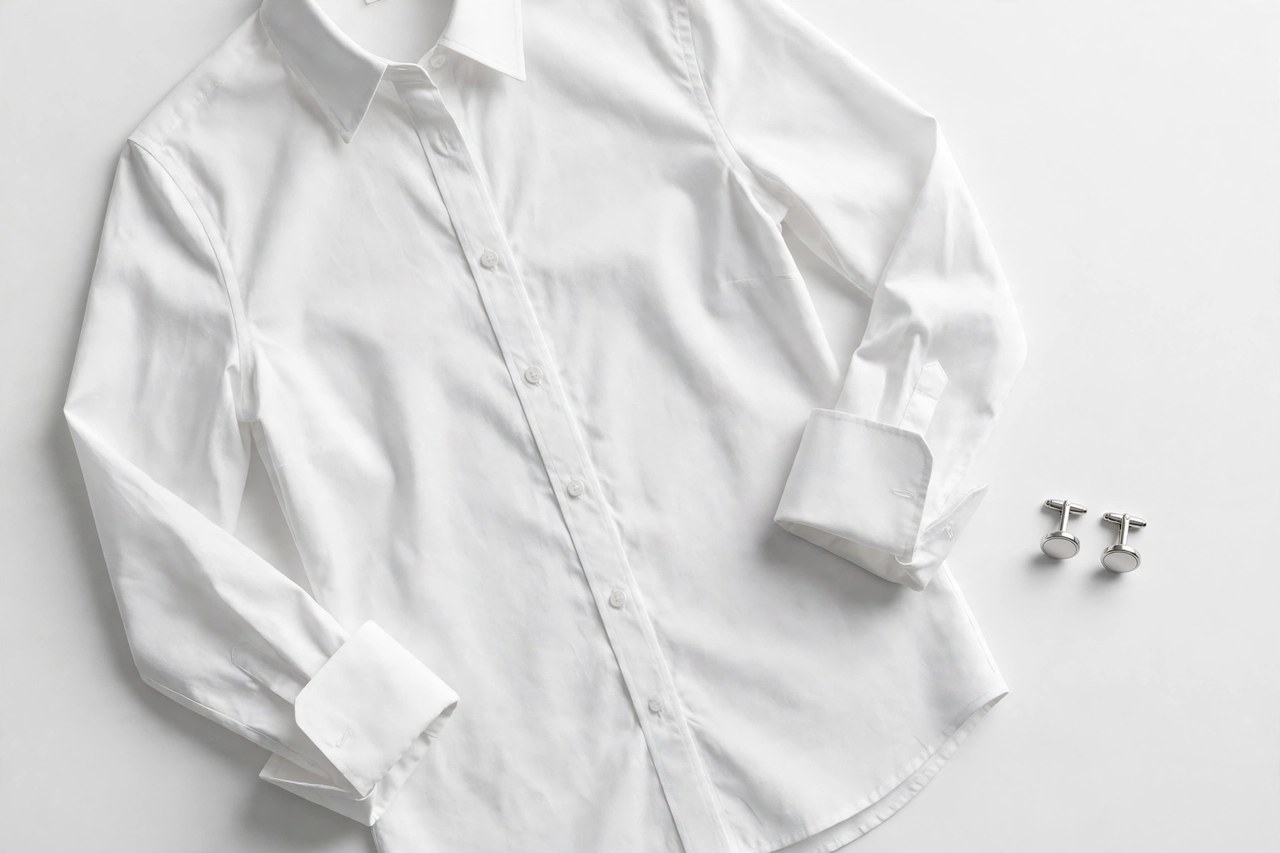
A French cuff shirt is a formal shirt whose cuffs are made double-length, folded back on themselves, and fastened not with a button but with cufflinks passed through both layers. It is the most polished cuff in shirting — the cuff of boardrooms, weddings and black-tie-adjacent dressing — and in women's tailoring it has become a deliberate power detail rather than a borrowed one.
This guide explains how the French cuff works, the cufflink types that fasten it, when the formality is right (and when it is too much), and how women wear the style well.
How the Double Cuff Works
The French (or double) cuff is cut twice the length of a standard barrel cuff. You fold the extra length back so the cuff shows two layers, align the four holes (two per layer), and pass a cufflink through all four. The result sits slightly longer and squarer than a button cuff, with the cufflink visible at the wrist — jewellery with a job, displayed exactly where hands gesture and sign and shake.
The shirts themselves are usually formal in other ways too: cotton poplin or twill in white and pale colours, a structured collar (often a spread collar that takes a tie or sits crisply open), and a clean front, sometimes with a covered placket. Barrel-cuff versions of the same shirts exist for ordinary days; the French cuff is the dressed form.
Cufflinks: The Working Jewellery
Cufflink types are a small education: toggle (bullet-back) links are the standard, easy one-handed fastening; chain links show a face on both sides and drape most elegantly; stud or ball links are minimal; silk knots are the soft, inexpensive classic. Materials run from sterling silver, mother of pearl and onyx (the formal canon) through enamel, crystal and novelty designs.
Styling rules: match metals to your other jewellery and watch; keep novelty links to festive occasions; and let the cufflink be the wrist's single statement — bracelet stacking over a French cuff fights the very neatness the cuff creates. A first pair in plain silver or mother of pearl covers every formal situation a woman will meet.
When French Cuffs Are Right
Wear them where formality is the dress code: formal business, law and finance settings, weddings, evening events, and anywhere a suit is worn at its most polished. The cuff signals deliberateness — nobody ends up in cufflinks by accident — which is exactly its professional value.
Skip them where the setting is casual or the work is physical; a double cuff is impractical at a keyboard all day for some wearers (the extra length rests on the desk) and overdressed for smart-casual offices. Convertible cuffs — which take either a button or a link — are the pragmatic middle, and many women's formal shirts quietly offer them.
Fit, Fabrics and Care
The cuff should extend about half a centimetre beyond a standard shirt's — showing roughly a centimetre and a half below a jacket sleeve when the arm is bent, cufflink visible. Sleeves that are too long bunch the double cuff; this is the shirt most worth a tailor's adjustment. Collars should frame the face cleanly, and the body fit follows the shirt's purpose: tailored for suiting, relaxed only in specifically casual versions.
Fine cotton poplin is the classic fabric; our fine gauge sweaters guide covers the knit layer often worn over or instead. Wash formal shirts cool, unbuttoned, with cufflinks removed (always), and iron the cuff flat and folded once to set the crease. Stored hung, a French cuff shirt is the wardrobe's standing invitation to dress properly.
More Shirt & Formal Guides
Photos

Looking for Women's Clothing Stores?
This guide helps you choose women's French cuff shirts. To browse where to buy, visit our women's clothing store directory, where you can find retailers that carry them.