Women's Hip Hop Fashion Guide
Hip hop fashion grew from New York City block parties into a global style language: tracksuits and gold chains, baggy denim and designer labels, and a women's take that reshaped streetwear itself.
Shop Women's Hip Hop Fashion Now
Shop Women's Hip Hop Fashion on Amazon Shop Women's Hip Hop Fashion on eBayThe Amazon and eBay links on this page are affiliate links. If you make a purchase through them, Apparel Search may earn a commission.
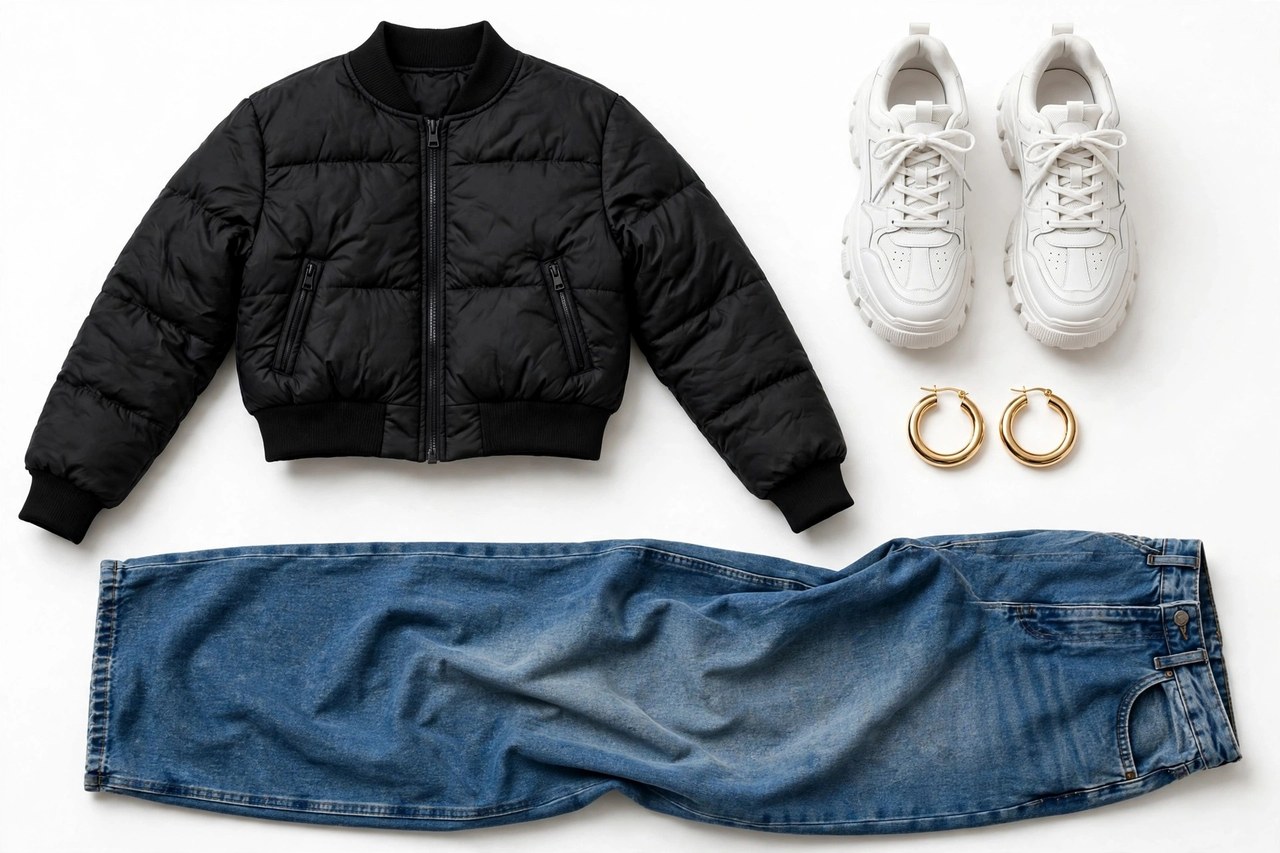
Hip hop fashion, also known in its early years as big fashion, is a distinctive style of dress that originated with African American, Latino and other inner-city youth in New York City, and spread to Los Angeles, Houston, Chicago, Atlanta and cities across America and then the world. It has changed significantly during its history, and today it is a prominent part of popular fashion across the whole world and for all ethnicities.
This guide tells that history by its silhouettes — what people actually wore, era by era — and then looks at how women wear hip hop fashion now. It is a fashion history, told respectfully: hip hop style was created by communities dressing with ingenuity and pride, and the fashion industry has been following its lead ever since.
Origins: The Bronx and the First Uniforms (Late 1970s–1980s)
Hip hop began in the Bronx in the 1970s, and its first style signatures were sportswear worn with intent. In the late 1970s, brands such as Le Coq Sportif, Kangol, Adidas and Pro-Keds attached themselves to the emerging scene, and by the early 1980s the uniform was set: tracksuits, sneakers worn with pride and kept spotless, and Kangol hats. Sneaker culture — the idea that a shoe could be a status symbol and a canvas — starts here.
Through the 1980s, hip hop icons wore brightly coloured name-brand tracksuits, sheepskin and leather bomber jackets, with accessories scaled up to match: large eyeglasses, Kangol bucket hats, nameplate necklaces, name belts and multiple rings. Heavy gold jewellery became an enduring element of the style — a portable, visible statement of success in neighbourhoods the luxury industry ignored. Women's takes on the look kept the same pieces but styled them their own way, mixing the sportswear with glamour from the start.
The 1990s: Baggy Silhouettes and Artist-Owned Labels
The 1990s supersized everything: baggy jeans, oversized jerseys and tees, workwear boots and head-to-toe denim, in a silhouette that read as confidence. Music drove dress more directly than ever, and many artists became fashion icons in their own right. Brands such as FUBU — 'For Us, By Us' — Southpole, Ecko Unltd., Mecca USA and Rocawear arose to serve the market for urban streetwear, alongside the sportswear giants.
The decade's turning point was ownership. Artists and executives started their own labels: Russell Simmons' Phat Farm, and — most significantly for women's fashion — Kimora Lee Simmons' Baby Phat, which proved hip hop style designed by a woman, for women, could be a major business. Women's 90s hip hop style paired the baggy pieces with fitted and feminine ones: crop tops, mini skirts, hoop earrings and sleek hair and makeup against oversized denim — a contrast that still defines the look's revival today.
2000s to Now: From Streetwear to the Luxury Runway
Through the 2000s the artist-label wave widened — Sean John, Rocawear under Damon Dash and Jay-Z, Nelly's Apple Bottoms for women, G-Unit Clothing, Wu-Wear and others — while the street uniform absorbed snapback caps, basketball and skate shoes, hoodies and leather jackets. Around 2012, hip hop fashion shifted toward modern high streetwear and haute couture, popularised by online fashion forums: designer sneakers, luxury logos and tailored pieces entered the mix without displacing the classics.
Today the influence runs in both directions at full strength. Luxury houses collaborate with hip hop artists and streetwear labels; artists sit in front rows their predecessors were shut out of; and silhouettes invented on New York streets — the oversized hoodie, the baggy jean, the statement sneaker — are global fashion basics. Hip hop fashion did not join the mainstream; in large part, it became it.
How Women Wear It Now
The contemporary women's version is a fluent mix of the eras. Anchor an outfit with one historic silhouette — baggy or cargo jeans, an oversized hoodie or varsity-style jacket, chunky sneakers — then style it with today's hand: a fitted or cropped top against the volume, gold-tone hoops and layered chains in the 80s tradition, and hair and makeup kept polished. Matching co-ord tracksuits, another 80s inheritance, remain the fastest route to the look as a complete outfit.
Above all, wear it as the originators did: with the pieces chosen deliberately and kept immaculate. Sneakers spotless, denim crisp, jewellery intentional. Hip hop fashion has always been about self-presentation as self-respect, and that principle — more than any single garment — is what each era handed to the next.
More Style Guides
Photos

Looking for Women's Clothing Stores?
This guide helps you choose women's hip hop fashion. To browse where to buy, visit our women's clothing store directory, where you can find retailers that carry them.