Women's Jersey T-Shirts Guide
The classic tee is a fabric story: single jersey knit, tubular bodies and necklines — how weight and drape make one T-shirt feel cheap and another perfect.
Shop Women's Jersey T-Shirts Now
Shop Women's Jersey T-Shirts on Amazon Shop Women's Jersey T-Shirts on eBayThe Amazon and eBay links on this page are affiliate links. If you make a purchase through them, Apparel Search may earn a commission.
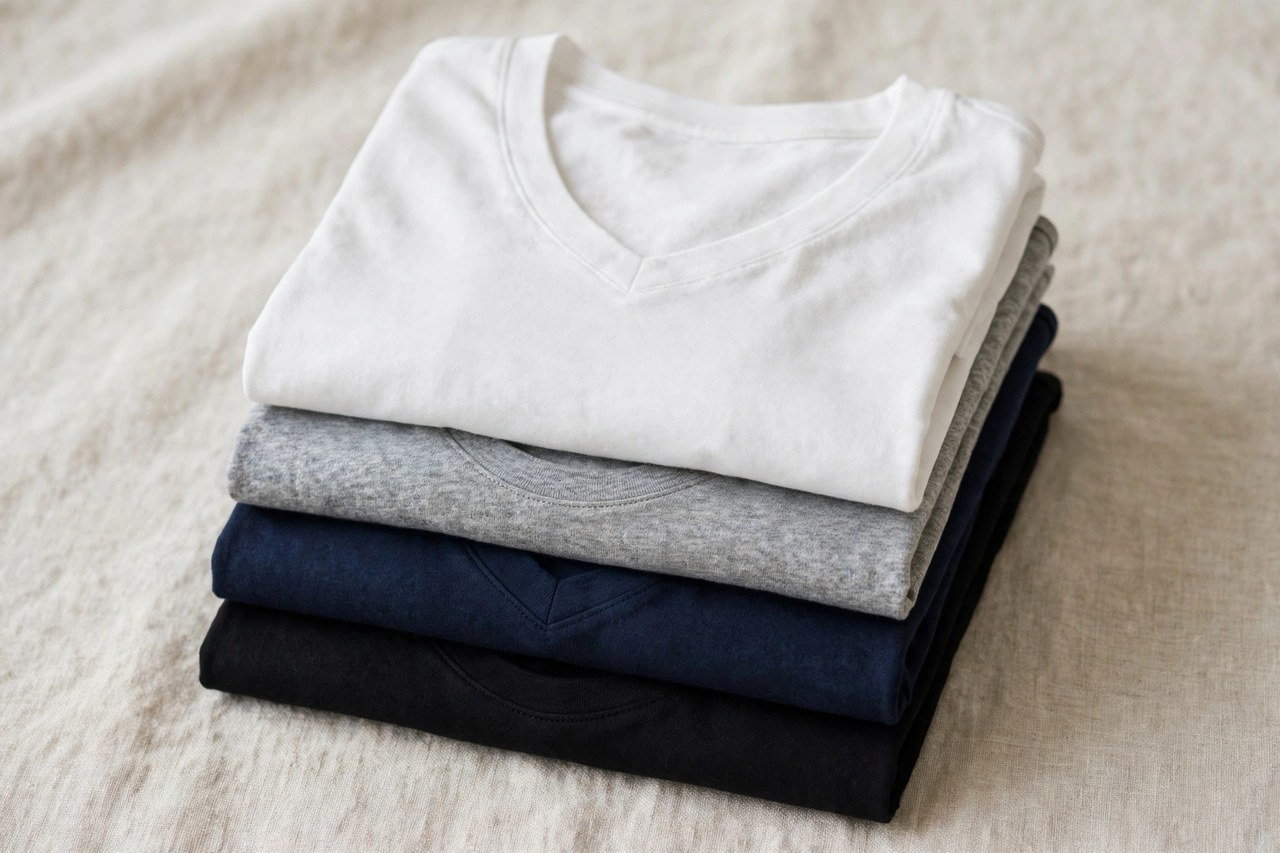
A T-shirt is, at bottom, a piece of jersey that learned a shape. Jersey is a knit fabric used predominantly for clothing manufacture, and the fabric of the classic tee is its lightest common form: a very stretchy single knitting, usually lightweight, with one flat side and one piled side. When made with a lightweight yarn, this is the fabric most often used to make T-shirts — which is why “jersey tee” and “T-shirt” are so often the same garment described twice.
This guide sticks to the tee itself: the weight of its knit, how it is constructed, and how its necklines and drape decide whether it becomes a favorite or a rag. The wider family of jersey shirts — polos, button-fronts and team jerseys — is covered in our jersey shirts guide, and jersey tops of every other cut are in the jersey tops guide.
Construction: The Tube and the Seams
A T-shirt (tee shirt, or tee) is a style of unisex fabric shirt named after the T shape of its body and sleeves. Some modern versions have a body made from a continuously knitted tube, produced on a circular knitting machine, such that the torso has no side seams at all. A tubular tee cannot twist a seam around your waist and tends to hang straighter; a side-seamed tee is cut and sewn from flat cloth, which costs less and allows a more shaped, tapered fit for women.
The details to check are the collar and the hem. A good crew collar is ribbed jersey with a touch of elastane, sewn so it recovers flat after every wash; a collar that bacon-waves after three washes marks a tee knitted and finished cheaply. Shoulder tape — a strip of fabric sewn along the shoulder seam — keeps the T shape honest over time.
Weight and Drape
Tee fabric is weighed in grams per square metre, and the number predicts the feel. Featherweight jerseys (around 120–140 gsm) drape, layer invisibly and can run sheer in white. Classic mid-weight tees (150–180 gsm) are the workhorses — opaque, soft, and structured enough to wear alone. Heavyweight jersey (200 gsm and up) feels almost like a sweatshirt's younger sibling and shrugs off years of washing.
Fiber changes the drape as much as weight. Cotton jersey is soft and matte and relaxes as the day goes on; cotton-modal and cotton-elastane blends recover their shape and skim rather than cling; slub jersey is knitted with uneven yarns for a deliberately textured, lived-in surface. Match the fabric to the job: drapey and light under blazers, mid-weight and opaque for a tee worn as the whole top.
Necklines and Sleeves
Women's jersey t-shirts can have long or short sleeves — and cap, three-quarter and raglan sleeves besides — and their necklines do most of the styling. A ladies v-neck T-shirt has a V-shaped neckline, as opposed to the round neckline of the more common crew neck (also called a U-neck). V-necks were introduced so that the neckline of the shirt would not show beneath an outer garment — an undershirt origin the style still carries in its clean, layering-friendly line.
Crew necks frame the face and suit shorter necklaces and higher layers; scoop necks widen the opening for a softer line; boat necks run shoulder to shoulder. None of them is a quality marker — they are proportion tools. The tee that works is the one whose neckline balances your shoulders and whose fabric weight matches how you actually wear it.
Washing the Perfect Tee
Jersey tees die by heat and agitation more than by age. Wash inside out, cool or warm, with similar colors; skip the hottest dryer settings, which cook elastane and shrink cotton unevenly; and fold rather than hang, because a hanger's points will grow little horns in the shoulders of a soft knit. White cotton jersey keeps its brightness with occasional oxygen-based soaks — chlorine bleach yellows the elastane in modern blends.
Related Women's Guides
Looking for Women's Clothing Stores?
This guide helps you choose women's jersey t-shirts. To browse where to buy, visit our women's clothing store directory, where you can find retailers that carry them.