Women's Petite Underwear Guide
Petite underwear is sized and cut for a shorter rise and smaller frame — waistbands sit where petite clothing sits, leg openings match a shorter hip, and nothing needs folding, rolling or constant adjustment.
Shop Women's Petite Underwear Now
Shop Women's Petite Underwear on Amazon Shop Women's Petite Underwear on eBayThe Amazon and eBay links on this page are affiliate links. If you make a purchase through them, Apparel Search may earn a commission.
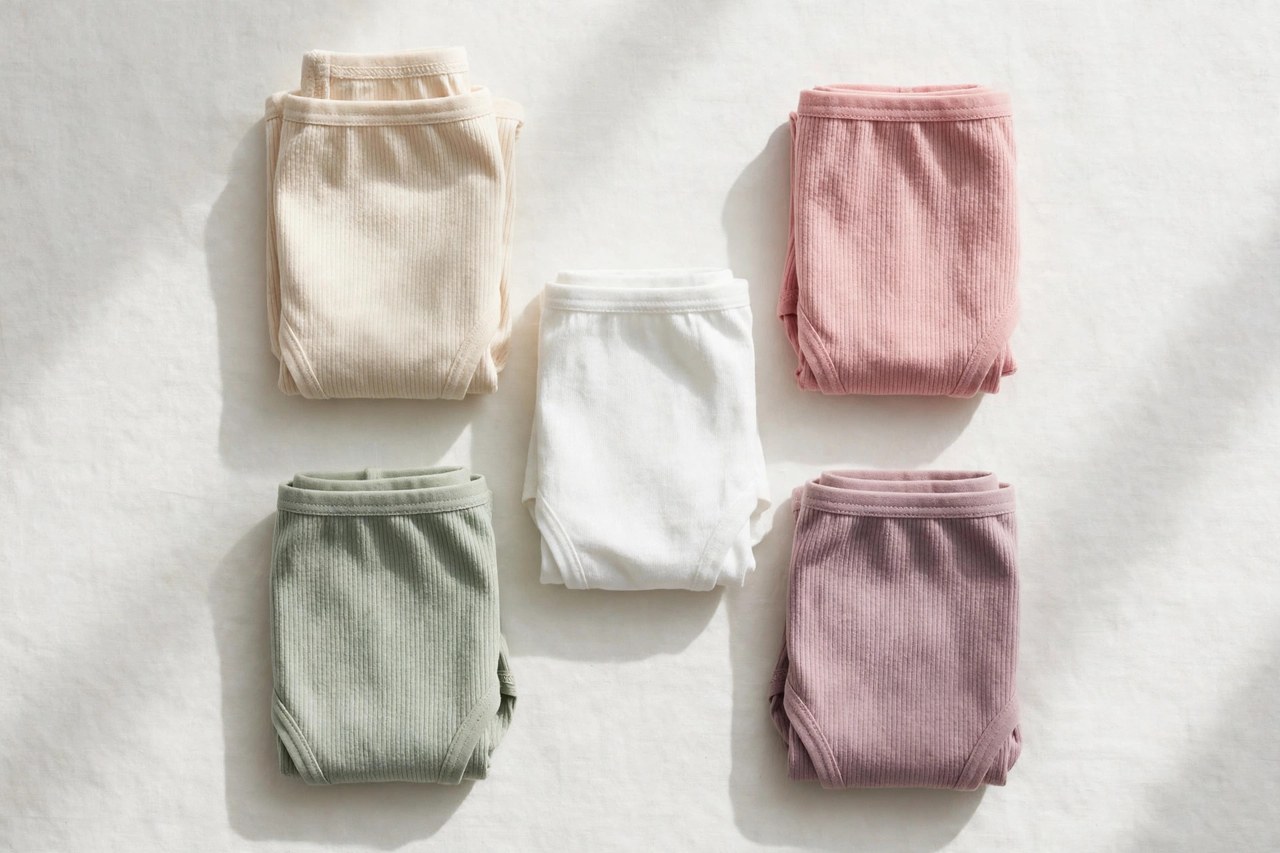
Underwear is the base layer every other garment depends on, and in regular sizing it is cut for a longer rise and a taller hip than a petite body has. On women 5'4" and under, that extra rise fabric folds at the waist, waistbands peek above petite pants that are themselves cut with a shorter rise, and leg openings sit lower than the natural crease. Petite underwear corrects the rise first, then scales the waistband width, leg elastic and overall coverage to a smaller frame.
This guide is a plain product guide: the main petite underwear styles, the rise and sizing measurements that decide fit, everyday and seamless fabrics, and care that keeps elastic working. The goal is a drawer of pairs that disappear under petite clothing — no adjusting, no lines, no waistband management through the day.
Styles: Briefs, Bikinis, Hipsters and Boyshorts in Petite Cuts
The petite brief keeps full coverage but shortens the rise so the waistband lands at the natural waist of a petite torso instead of above it. It pairs correctly with high-rise petite trousers and skirts. The bikini sits lower with narrower sides and is the match for mid-rise petite pants and jeans; in petite ranges the front rise is shallower, so it stays hidden rather than creeping up as the day goes on. The hipster adds wider side panels that sit on the hip and resist rolling.
The boyshort extends a short leg down the thigh, and in a petite cut that leg is shortened too, ending high enough not to show under petite shorts and skirts. High-cut styles raise the leg opening on the hip, which lengthens the leg line on a petite frame. Seamless styles, knitted in one piece with no side seams, are offered in the same cuts and are the standard answer under fitted petite dresses and smooth trousers, where any elastic edge can show.
Rise and Sizing for a Shorter Frame
Rise is the measurement that defines petite underwear: the distance from the front waistband, under the body, to the back waistband. Petite rises run shorter than regular rises in the same labeled size, which is why a petite shopper can wear the correct hip size and still have a fit problem in regular underwear. Buy by hip measurement against the brand's petite chart, taken at the fullest point, and treat the labeled size as a starting point only, since size letters are not standardized between brands.
A correct fit lies flat: the waistband sits without digging or rolling, the leg edges rest in the crease without cutting in, and the fabric stays put when you sit, bend and climb stairs. If the waistband folds over itself, the rise is too long — the classic sign you need the petite cut rather than a smaller regular size, which would only tighten the hip. Match rise to your clothing: high-rise petite briefs under high-rise pants, low bikini rises under low-rise styles, so waistbands never compete.
Fabrics: Cotton, Microfiber, Lace Trim and Gussets
Cotton and cotton-rich blends with elastane remain the everyday standard: breathable, absorbent, soft after washing and easy to care for. A cotton-lined gusset is the quality marker to check in pairs made from any fiber, since the gusset is where breathability matters most. Microfiber and nylon blends give the smooth, flat surface seamless and no-show styles are made from, and they slide under tailored petite clothing without catching on linings.
Lace-trim styles use flat lace at the waist or leg; on a petite frame look for narrow lace scaled to the garment, because wide lace bands can fold on a shorter rise. Modal blends feel especially smooth and hold color well. For exercise, moisture-wicking synthetic underwear dries fastest and reduces friction, and many petite athletes choose a brief or boyshort cut for coverage in movement. Whatever the fabric, a small percentage of elastane — typically five to ten percent — is what keeps the fit through a full day.
Care and Buying Tips
Wash underwear in cool or warm water with mild detergent; a mesh bag protects lace trim and fine elastic in a machine load. Air dry or tumble on the lowest heat, because high dryer heat is the leading cause of elastic failure, and a petite rotation only works if every pair keeps its recovery. Replace pairs when the waistband no longer springs back, leg elastic ripples, or fabric thins — underwear is a finite-life garment and fit problems are usually age, not your body.
Build the drawer deliberately: everyday cotton briefs or hipsters for most days, seamless pairs in a skin-tone shade for fitted and light-colored petite clothing, and a few fabric-forward pairs for dressier wear. Buy multipacks once a brand's petite sizing is proven on you, since cost per pair falls sharply. Check product details for rise measurement, fiber content and gusset material rather than trusting style names, which vary between brands. A small rotation of correctly cut petite pairs outperforms a large drawer of almost-fitting regular ones.
Related Women's Guides
More to Explore on Apparel Search
- Petite Fashion
- Petite Clothing 2
- Petite Clothing Stores
- Clothes
- Underwear Stores
- women's underwear
- underwear glossary
- Women's Thong Underwear
- Women's Hipkini Underwear
- Women's Cotton Underwear
- Organic Cotton Underwear
- Women's Long Underwear
- Boyshorts Underwear
- Boy Leg Underwear
- Women's G-string Underwear
- Knickers
- underwear definition
- Petite Lingerie
- petite size clothing measurements
- about petite clothing
Looking for Women's Clothing Stores?
This guide helps you choose women's petite underwear. To browse where to buy, visit our women's clothing store directory, where you can find retailers that carry them.