Women's Short Knit Skirts Guide
A short knit skirt is an above-the-knee skirt made from knitted fabric — jersey, ponte or rib knit — usually with an elastic waist and body-following fit.
Shop Women's Short Knit Skirts Now
Shop Women's Short Knit Skirts on Amazon Shop Women's Short Knit Skirts on eBayThe Amazon and eBay links on this page are affiliate links. If you make a purchase through them, Apparel Search may earn a commission.
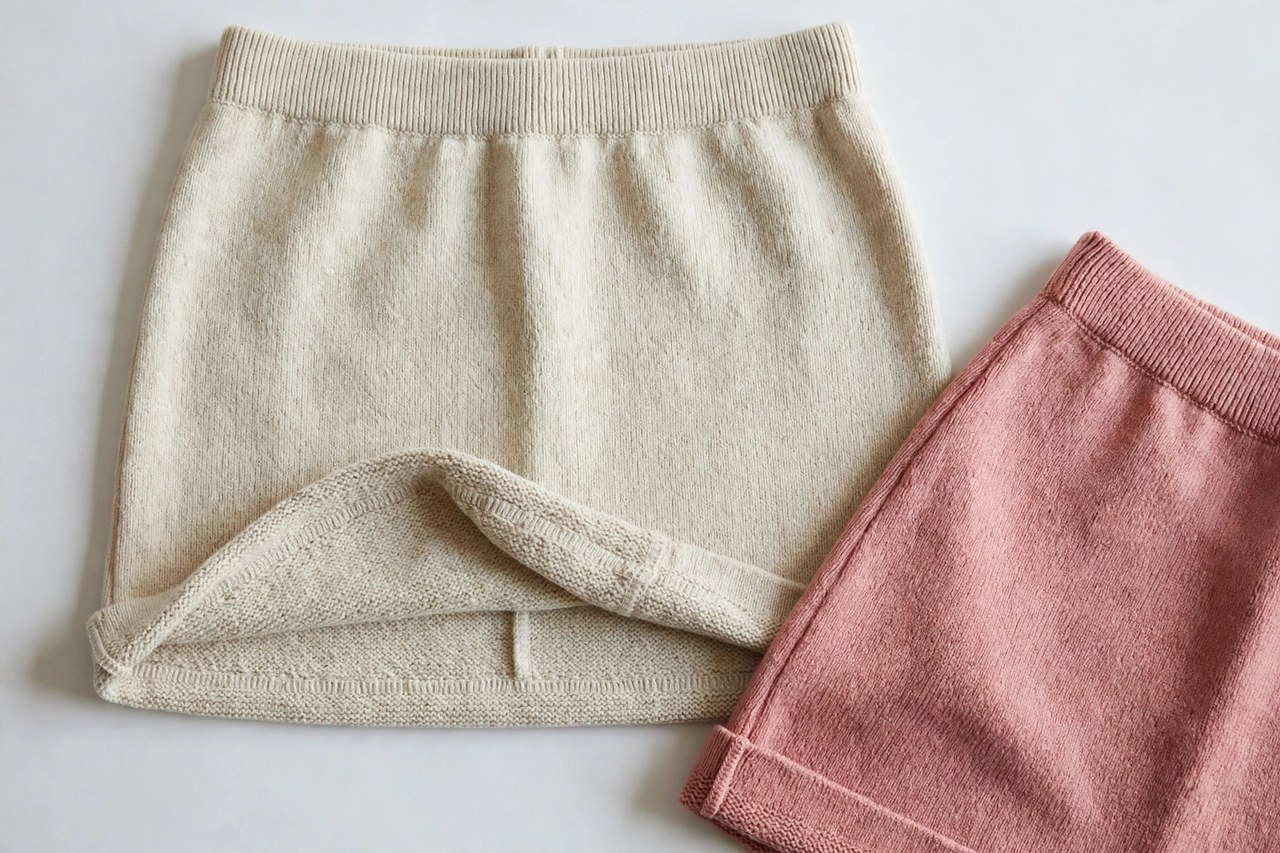
A short knit skirt is an above-the-knee skirt made from knitted fabric — jersey, ponte or rib knit — usually with an elastic waist and body-following fit. Knit construction changes everything about a skirt: no zip, no darts, fit through stretch. This page covers knit weights, recovery and opacity in the short form.
This guide covers short knit skirts in the order a careful buyer needs it: what the garment is made from, how it is constructed, how it should fit, how to choose it for real use, and how to care for it so it lasts. Apparel Search has published guides to women's clothing for decades, and this rebuilt page keeps the subject focused — measurable details, named materials and checks you can perform in a shop or on a parcel's arrival, rather than general fashion language.
Fabric and Construction
In a short skirt the fabric does more work than in a long one: there is less material to create drape or disguise construction, so weave, weight and finish decide the garment outright. In short knit skirts, judge first whether the fabric holds the intended cut — a pencil skirt needs body and a little recovery, an A-line needs enough stiffness to keep its flare, a pleated skirt needs a weave that takes and keeps a pressed fold, a fluid skirt needs genuine drape. Waistband construction is the second checkpoint: a faced or banded waist with a secure closure keeps the skirt at its designed length all day, while a weak elastic waist migrates and silently lengthens or shortens the skirt as you move.
Look inside before you judge the outside. A lining lets a short skirt slide over tights and underwear seams instead of catching, and it protects lighter fabrics from transparency; in unlined skirts, seam finishes should be clean and non-scratchy at the waist and hip. Zips should be concealed or smoothly set, hems level, and any pockets placed so they do not gap open at the hip — a common short-skirt fault, since pockets sit close to the waist's curve. Ponte and double knits hold shape and opacity; single jersey is lighter but shows more and stretches out faster at the seat. Hardware, topstitching and panel matching are not decoration on a garment this small; they are most of its visible quality.
Length, Rise and Sizing
Fit in short knit skirts starts with the waist: measure your natural waist and compare it to the size chart's waist figure, not the hip, because a short skirt that is loose at the waist will rotate and ride as you walk, while the hip usually has design ease built in. Rise decides where the waistband sits — high-rise short skirts lengthen the leg line and stay secure, low-rise versions sit on the hip and need a precise hip fit to stay put. Length terms are relative: mini, short and above-knee describe positions against your knee and thigh, so your height and proportions convert any stated inch measurement into its real effect.
Always test a short skirt sitting, climbing a step and bending, in the shoes you plan to wear with it. The skirt should allow a natural stride without the hem catching at the front, and the back hem should stay level when you sit rather than pulling short. Stretch fabrics forgive an afternoon of wear but can relax a full size by evening; rigid fabrics keep the morning's fit exactly, for better and for worse. Between sizes in a rigid fabric, take the larger and have the waist taken in if needed — a tailor can refine a waist far more easily than a hip that is too tight.
Choosing and Styling
Choose short knit skirts as the deliberate focal point of an outfit: the short length draws the eye, so the rest of the styling works best kept comparatively quiet — a simpler top, a shoe chosen for line rather than ornament, hosiery selected as part of the look rather than an afterthought. Proportion is the working tool: a volume top balances a slim skirt, a tucked-in or shorter top suits a fuller or pleated skirt, and a long coat or cardigan worn open frames the skirt without hiding it. For work settings, the tailored end of the family — longer-short lengths, structured fabrics, matte finishes — is the version that reads as intentional.
Season extends the skirt's range more than most garments: bare legs and sandals in summer, sheer hosiery in spring, opaque tights and boots through winter, with the fabric weight shifting to match. A wardrobe rarely needs many short skirts; it needs the right ones — a tailored neutral, a casual fabric version, and one with genuine character cover most lives. In practice, rank the checks above in the order your own use demands — frequency of wear first, then weather, washing facilities and budget — because that order differs by household, and it is the real reason two careful buyers can correctly choose differently from the same shelf. Buy for the tops and shoes already in your wardrobe, in a fabric whose care matches your laundry habits, and the skirt will be worn instead of admired.
Care and Storage
Care follows the fabric of short knit skirts: washable cottons, denims and knits go in a gentle cool wash, turned inside out to protect color and surface; tailored wool, silk and leather versions follow their specialist routines in this section's fabric guides. Short skirts crease characteristically at the sit line across the front, so hang them promptly after wear, smooth them by hand, and press or steam before the crease sets into the weave. Pleats want clips at the waistband rather than folding, and knits want folding rather than hanging, which stretches their length.
Store skirts by the waistband on clip hangers, or rolled in a drawer for knits, and check waistband closures and hem stitching each season — the waistband of a short skirt takes proportionally more strain than any other part. Treat stains by blotting with the agent the fabric allows, and keep dark skirts out of prolonged sunlight in storage to hold their depth of color. A short skirt has so little fabric that every inch shows its condition; the reward for that exposure is that ten minutes of care a season keeps the whole garment looking new.
Related Women's Guides
More to Explore on Apparel Search
Women’s Clothes Guide by Letter: Women's Apparel Directory N · Women's Clothes Directory O · Women's Clothing Directory P · Women's Apparel Directory Q · Women's Fashion Directory R · Women's Clothes Directory T
References & Further Reading
Looking for Women's Clothing Stores?
This guide helps you choose women's short knit skirts. To browse where to buy, visit our women's clothing store directory, where you can find retailers that carry them.