Polo Shirt
Clothing Definitions — definitions of garments and clothing terms from Apparel Search
Search Apparel Search
At a Glance
Definition: A polo shirt is a knitted, T-shaped shirt with a soft collar, a short placket of two or three buttons below the collar, side slits at the hem and an optional pocket — the shirt of tennis, polo and golf.
Also known as: Tennis shirt; golf shirt
Category: Clothing Definitions
Word Origin
The shirt was designed for tennis, but its commonest name is borrowed from polo, one of the sports that took it up: polo shirt, tennis shirt and golf shirt are three sports' names for a single garment, and which name a shop uses usually says more about its customers than about the shirt.
A polo shirt — also called a tennis shirt or a golf shirt — is a T-shaped shirt with a collar, two or three buttons down a short slit below the collar, two small slits at the bottom of either side, and an optional pocket. It was designed for tennis, adopted by polo and golf, and ended as one of the most widely worn shirt patterns in the world: sports dress, school uniform, work shirt and informal business dress in a single garment. This page explains the pattern, the piqué knit it is made from, and how one sports shirt collected three sports' names.
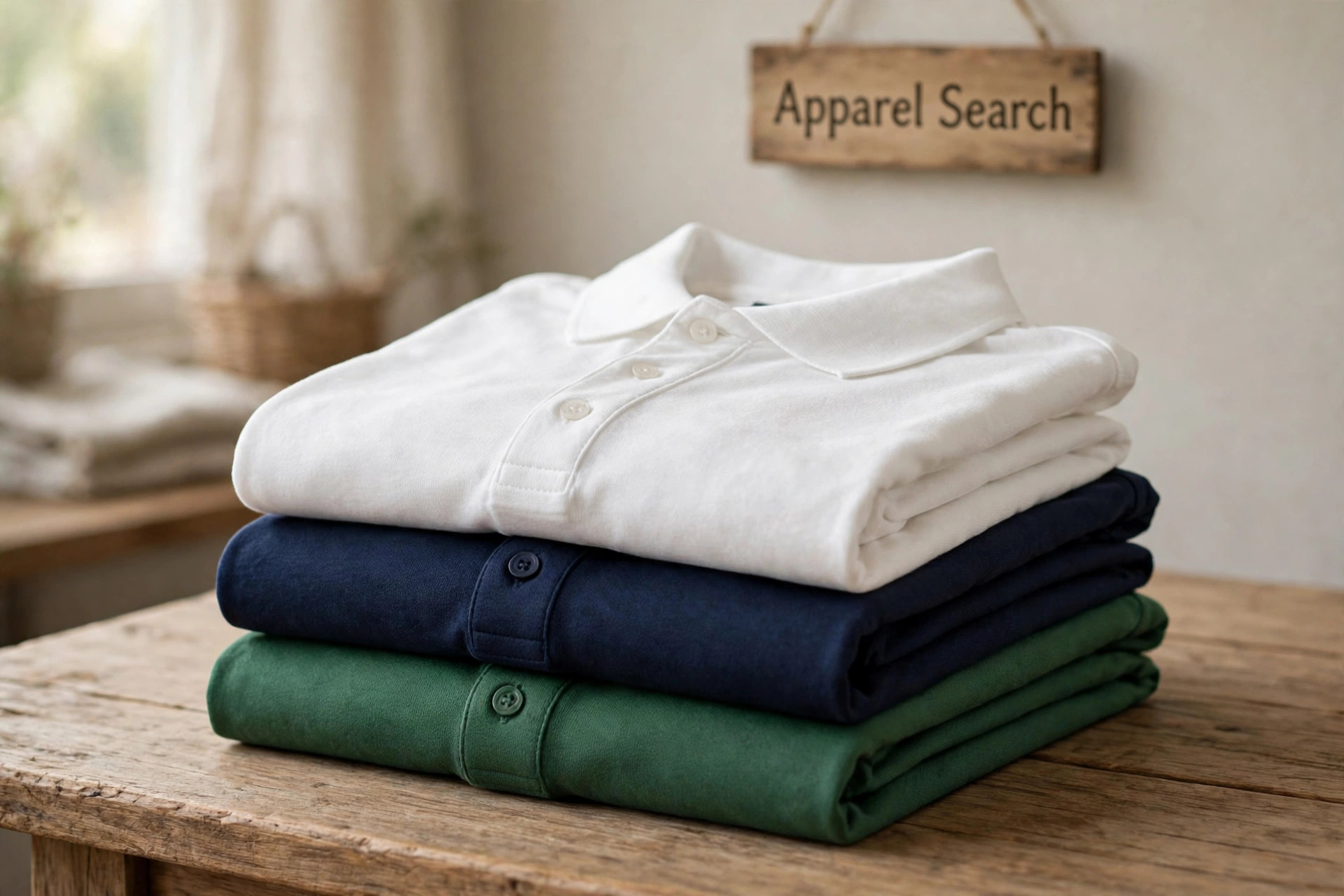
The Pattern: Collar, Placket and Tennis Tail
Every detail of the pattern does a job. The knitted collar frames the neck and takes an open, tie-less throat from sloppy to deliberate. The short placket below it — a slit closed by two or three buttons — lets the wearer adjust fit and ventilation at the throat; the shirt is most commonly worn with the top button undone only, sometimes over a T-shirt for warmth. The side slits at the hem stop the shirt binding when the wearer sits, bends or swings. And the knitted construction itself moves with the body in a way a woven shirt cannot, which is why the pattern began in sport.
Some versions are cut with a tennis tail: the back hem hangs a few centimetres lower than the front, so the shirt stays tucked in, or covers the waistband, when the player bends and reaches. Fit is deliberately easy through the body, and the shirt is sized by chest in ordinary clothing sizes. Colours follow the sports — wide horizontal stripes and solid colours generally; nature-associated shades such as dark blue, green, brown and orange in golf and outdoor use; brighter colours, and a great deal more white, in tennis, where all-white traditions shaped the palette.
Piqué and the Other Knits
The classic fabric is piqué cotton, a knit with a small raised geometric texture that makes it breathable, durable and resistant to rolling at the edges. Jersey cotton and pima cotton are the other common choices, jersey smoother and lighter, pima finer and softer. Shirts range in substance from little more than a T-shirt with buttons to thick, heavy versions made for hard wear.
The pattern's modern form is dated and named: the original 1929 design by the tennis player René Lacoste, whose specification included a thick piqué collar that the player would wear turned up to block the sun from the neck. The shirt he designed for the court was taken up by the other racket-and-field sports, and the names multiplied with the adoptions.
From Court and Course to Uniform and Office
As its names imply, the shirt is worn by tennis, polo and golf players, and by those whose work belongs to those sports — caddies, golf professionals and sports announcers. Its ruggedness makes it a favourite for outdoor work generally, among groundskeepers and construction workers among others. Schools took it up just as widely: in many schools with a uniform, especially junior schools, polo shirts are compulsory wear, and they serve for physical education in schools with and without uniforms alike — the school uniform page covers that wardrobe in full.
In the 1990s the tennis shirt became the standard informal business dress of the high-technology industry, the collar doing the formality work that a tie once did. In China it serves many younger government officials, sometimes made in silk, as standard business attire. Its heavier cousin, the rugby shirt, took the same collar-and-placket idea into a contact sport and a thicker cloth. Few garments have travelled further from their first purpose without changing their pattern.
The shirt's working life deserves its own note, because it explains the pattern's durability. For outdoor workers — groundskeepers, construction crews and others who work in the sun — the polo shirt offers a collar that protects the neck and can be turned up against it, a knit that tolerates hard wear and repeated washing, and a presentable surface that a plain T-shirt does not give. Caddies and golf professionals wear it as the dress of their workplace, and sports announcers wear it as the visible uniform of theirs. A garment that satisfies a tennis player, a greenskeeper and a television presenter with the same three buttons is a garment whose details were right the first time.
Wearing and Caring for a Knit Shirt
Care is knit care. Wash the shirt inside out to protect the colour and the piqué texture, reshape the collar while it is damp, and fold rather than hang heavy piqué, which stretches on a hanger. The collar is the part that ages first: a collar that will no longer lie flat, or that has lost its edge, dates the whole shirt, and turning it up — its original sun-blocking position — is still the quickest way to keep sun off the neck outdoors.
Not to Be Confused With
Three collared and uncollared neighbours. A polo shirt is a knitted shirt with a soft collar and a short buttoned placket, cut easy for sport. A rugby shirt is its heavier cousin: a thick, hard-wearing collared shirt, traditionally long-sleeved with rubber buttons that will not break or injure in a scrummage, made for a contact sport rather than a court. A T-shirt has no collar and no placket at all — a plain knitted pullover. If the shirt has a collar and buttons at the throat, it is not a T-shirt, whatever the shop calls it.
Common Questions
Why is the same shirt called a polo shirt, a tennis shirt and a golf shirt?
The names come from the sports the shirt is associated with. René Lacoste designed the shirt for tennis in 1929, and the same collared, placket-front shirt was taken up for polo and for golf, so all three sport names attach to one garment, differing mainly in colour and trim conventions.
What is piqué cotton in a polo shirt?
Piqué is a knitted cotton with a small raised geometric texture — the classic polo shirt fabric. The texture makes the cloth breathable and durable and helps the collar resist rolling. Lacoste's design specified a thick piqué collar that could be turned up to block the sun from the neck.
What is a tennis tail?
A tennis tail is a back hem cut to hang a few centimetres lower than the front of the shirt. The longer back stays tucked in, or covers the waistband, when the player bends and reaches — a practical detail from the shirt's court origin that many modern versions keep.