Tyrian Purple
Fabric Definitions — dye and colour definitions from Apparel Search
Search Apparel Search
At a Glance
Definition: Tyrian purple is a purple dye first made in the ancient city of Tyre from a secretion of marine molluscs such as Murex trunculus and Murex brandaris, so costly that it became the colour of Roman ceremonial rank.
Also known as: Royal purple
Pronunciation: TEER-ee-an
Category: Fabric Definitions
Word Origin
The dye is named for Tyre, the ancient city where it was first made, whose murex fisheries and dye works supplied the Roman world.
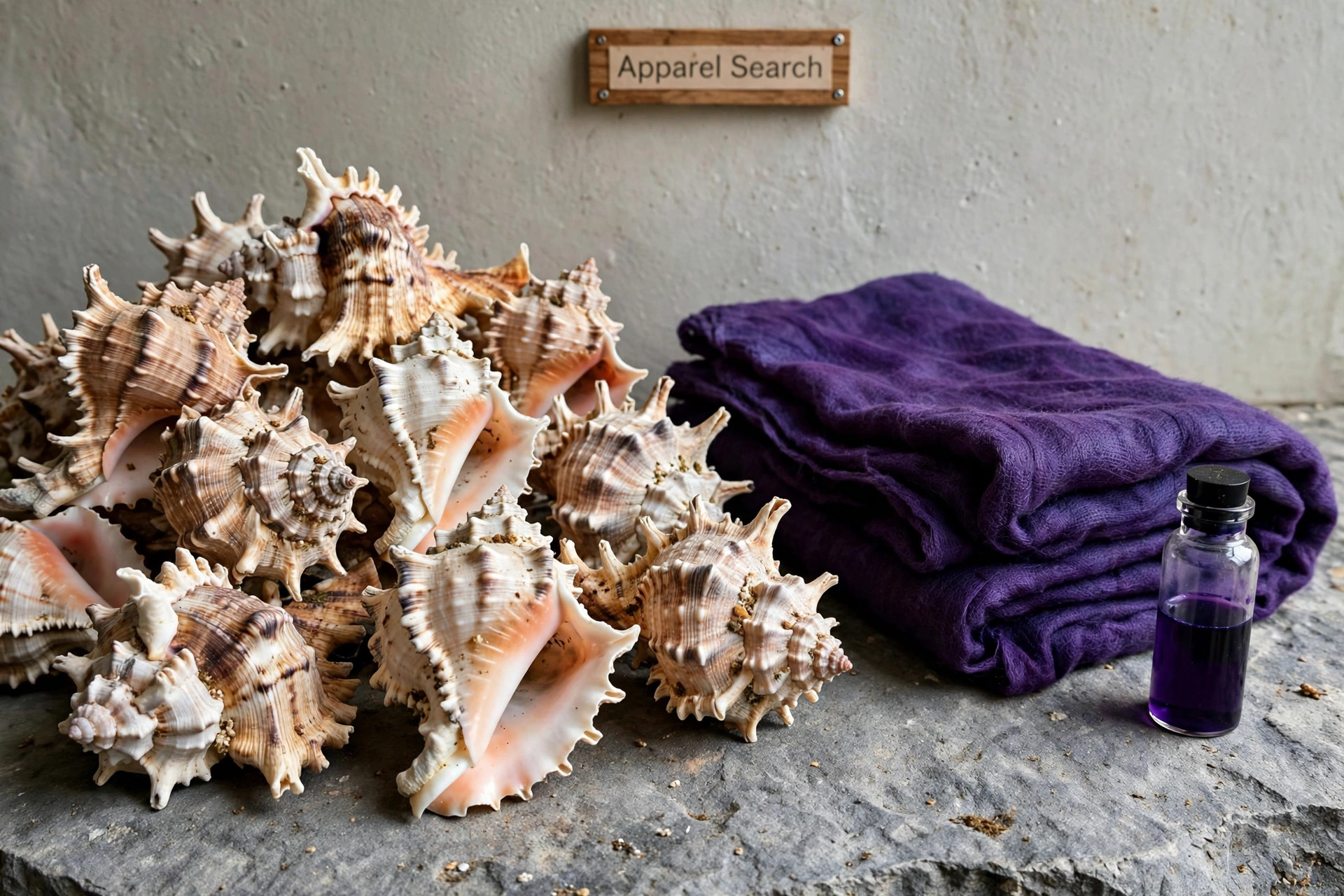
Tyrian purple is a purple dye first made in the ancient city of Tyre. It was made from a secretion of various marine molluscs, such as Murex trunculus and Murex brandaris, and the expensive dye was prized by Roman noblemen, who used it to colour ceremonial robes. It is the outstanding animal dye in the natural dye lists of the dye definition — and the costliest dye of the ancient world.
Older Than Tyre: The Minoan Evidence
Tyre gave the dye its name, but the evidence points to an earlier inventor. The archaeological discovery of substantial numbers of Murex shells on Crete suggests that the Minoans may have pioneered the extraction of royal purple centuries before the Tyrians; dating from colocated pottery suggests the dye may have been produced during the Middle Minoan period, in the 20th to 18th century BC. Whoever was first, the production geography was Mediterranean-wide: shell middens — mountains of broken murex shells — mark the production sites, and the fisheries that supplied Tyre, Sidon and Crete were an industry in their own right long before Rome made the colour a legal rank.
The Price of Purple
The economics of Tyrian purple were brutal. The dye gland of each murex snail yields a drop of secretion, which turns purple only on exposure to air and sunlight; producing a single gram of dye took thousands of snails, gathered, crushed and steeped in vats whose smell ancient writers complained about across whole districts of Tyre and Sidon. A pound of purple-dyed wool could cost more than a worker earned in years, and Roman law progressively reserved the deepest shades for the emperor alone. Scarcity, fastness and a rich blue-purple tone that no plant dye could match made Tyrian purple the ancient world's supreme luxury colour, and its name still carries that meaning.
A Brominated Indigo
The main chemical constituent of the dye was discovered by Paul Friedlander in 1909 to be 6,6-dibromoindigo, a substance that had previously been synthesised in 1903 but has never been synthesised commercially. Friedlander's identification settled a question that had stood for millennia: Tyrian purple is indigo chemistry with two bromine atoms, which is why its hue leans from indigo's blue toward crimson-purple. The bromine comes from the sea — the snails concentrate it from seawater — making the dye a marine counterpart to the plant vat dyes. Synthetic indigo arrived commercially in 1897, and synthetic substitutes soon supplied every purple the market needed at a fraction of the cost, so the synthesised dibromoindigo of 1903 was never produced commercially and the snail fisheries passed into archaeology. Modern dyers occasionally revive the extraction for historical work, one shell at a time.
Purple as a Rank, Not Just a Colour
Because the dye defined who was allowed to wear it, Tyrian purple shaped the language of status: 'born to the purple' for imperial children, purple robes and borders as legal ranks, and the survival of purple as the ceremonial colour of bishops, monarchs and universities long after the dye itself vanished. Few colorants have left so deep a mark on culture relative to the tonnage ever produced — a fabric colour that outlived the industry, the empire and the molluscs that made it. For the industry that once traded in such colours, see the printing and dyeing industry directory.
Common Questions
What is Tyrian purple made from?
Tyrian purple was made from a secretion of marine molluscs — sea snails such as Murex trunculus and Murex brandaris. Enormous numbers of shells were needed for a small amount of dye, which is why it was so expensive.
What is the chemistry of Tyrian purple?
Its main chemical constituent was discovered by Paul Friedlander in 1909 to be 6,6-dibromoindigo — a brominated relative of indigo. The substance had previously been synthesised in 1903, but it has never been synthesised commercially.
Who wore Tyrian purple?
Roman noblemen used it to colour ceremonial robes, and its cost and legal restrictions made it a badge of rank — the origin of purple as the colour of royalty and empire.