Flannel
Fabric Definitions — fabric and textile definitions from Apparel Search
Search Apparel Search
At a Glance
Definition: Flannel is a soft, warm woven fabric, usually made from wool, a wool and cotton blend, or wool with synthetic fibre, used for cold-weather clothing and bedsheets.
Category: Fabric Definitions
Flannel is a fabric made into clothing and bedsheets, and the word does double duty: it names the cloth, and it is often used directly for the garments made from it, as in a flannel shirt. It is usually woven from wool alone, from wool blended with cotton, or from wool blended with synthetic fibre. What all versions share is the quality the fabric is known for — warmth — which is why flannel clothing belongs to cold-weather climates.
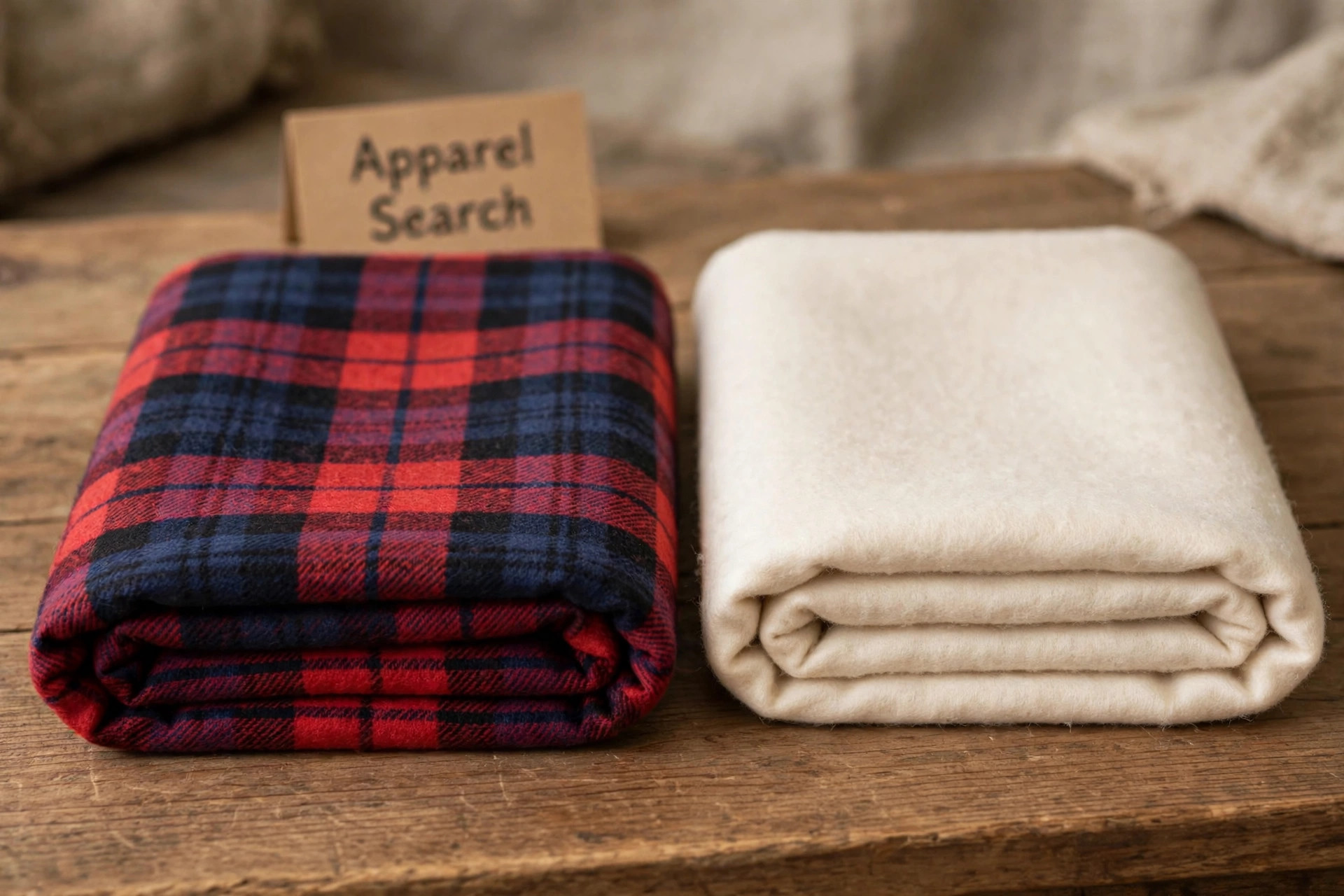
The Brushed Surface Is the Definition
What separates flannel from other plain-weave and twill cloths is a finishing step that happens after weaving. The woven cloth is brushed — passed over rotating brushes or teasels that lift the ends of the surface fibres into a soft, fuzzy layer called nap. That single step creates the fabric's whole character: the nap feels soft and warm to the touch, blurs the weave so patterns read softly, and insulates without adding much weight, giving flannel its slightly matte, cosy surface. The cloth can be brushed on one side or both; bedsheet flannel is typically brushed on both faces for maximum warmth, while shirting flannel may be lighter.
The cloth underneath is usually a plain weave or a simple twill, woven from loosely spun yarns chosen because they brush well. Tight, hard yarns would resist the brushes and yield only a thin, scratchy nap, so a good flannel starts with yarn spun to be raised.

Shirts, Sheets and Pyjamas
The uses follow directly from the properties. Flannel shirts — most recognisably in plaid and tartan-style patterns — are cold-climate work and casual wear: they insulate, tolerate hard use, and stay comfortable through longer stretches between washes than smooth shirting does. Flannel bedsheets replace smooth sheeting such as percale in winter, because a smooth cotton sheet feels cold on first contact while a napped flannel sheet feels warm at once. Pyjamas and nightwear trade on the same instant-warmth effect.
Care is simple but consequential. Flannel washes well, yet repeated harsh washing and high heat wear the nap down, and the fabric gradually returns toward the plain cloth underneath — an old flannel shirt that has lost its softness has usually lost its nap, not its weave. Cotton flannel can also shrink noticeably on its first washing, which makers allow for when cutting. None of this depends on a particular fibre, which is why wool, wool-cotton and wool-synthetic flannels sit side by side in the definition: flannel is a finish and a feel that several fibres can deliver.
From Work Cloth to Grunge
For much of its history, flannel was thought of as the fabric of woodsmen, lumberjacks and farmers — warm, durable and inexpensive work cloth. Its second association came from the Pacific Northwest of the United States, especially Seattle, Washington, where wearing flannel was common enough to link the same plaid shirts to grunge music. Grunge musicians, members of Nirvana among them, often wore flannel clothing, and for a short time in the early 1990s flannel was treated by some as a fashion statement — or, in some cases, an anti-fashion statement.
Common Questions
Why is flannel warm?
Because of its nap. Flannel is woven loosely enough and then brushed so its surface fibres rise into a soft layer that traps still air in and above the cloth, and trapped air is the insulation. That is why the fabric feels warm against the skin immediately, unlike a smooth cold sheet, and why it holds heat in cold-weather clothing and bedding.
Is flannel a fibre or a fabric?
A fabric. Flannel names a construction and a finish, not a fibre: it is usually wool, wool blended with cotton, or wool blended with synthetic fibre, and modern flannel is also made in all-cotton versions for shirts and bedsheets. Two flannels can share no fibre at all and still both be flannel if the weave and brushed softness match.
Why is flannel associated with lumberjacks and grunge?
For much of its history it was the working cloth of woodsmen, lumberjacks and farmers — warm, durable and inexpensive. Its adoption in the Pacific Northwest of the United States, especially Seattle, linked the same plaid shirts to grunge music in the early 1990s, when musicians such as members of Nirvana wore them and flannel briefly became a fashion, or anti-fashion, statement.