Glengarry Bonnet
Hat & Headwear Definitions — hats, caps, helmets and headwear terms from Apparel Search
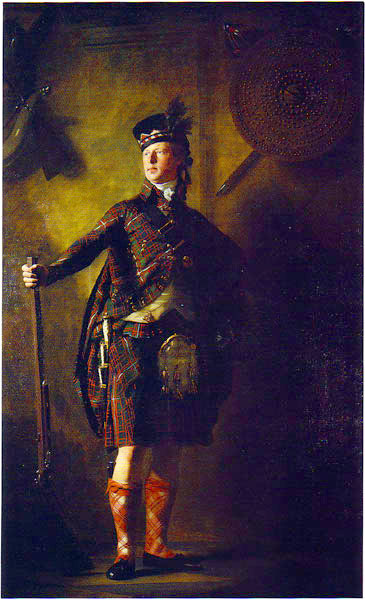
A Glengarry is a boat-shaped cap without a peak, made of thick-milled woollen material with a toorie or bobble on top and ribbons hanging down behind, and capable of being folded flat. Invented by Alasdair Ranaldson MacDonell of Glengarry, who wears it in a well-known portrait, it became part of the uniform of a number of Scottish regiments and is now worn by all Scottish infantry regiments as an alternative to the tam o'shanter.
| The above article is licensed under the GNU Free Documentation License. From Wikipedia, the free encyclopedia https://en.wikipedia.org/wiki/glengarry_bonnet 6/12/05 |
Photos
A Boat-Shaped Cap That Folds Flat
The Glengarry is defined first by its silhouette. It is boat-shaped, long and narrow rather than round, and it has no peak at the front. That absence of a peak matters in use, because nothing projects over the eyes and nothing stiff sticks out to be knocked, bent or broken in handling. The cap is made of thick-milled woollen material, a dense wool suited to a military cap that must keep its form through daily wear, parade wear and storage. On top sits a toorie, described as a bobble, a small finishing detail that gives the otherwise plain military cap a single point of ornament at its highest place. Behind, ribbons hang down, completing a profile that can be recognised from front, side or back. Taken together, boat shape, peakless front, toorie and trailing ribbons make a combination no other Scottish military cap shares in quite the same arrangement.
A second practical quality follows from the soft construction: the Glengarry is capable of being folded flat. For soldiers, a cap that folds flat can be carried, stored and transported with far less trouble than a stiff hat that needs its shape protected. It can be put away in kit without a box or a mould, and brought out and shaped on the head when required. That convenience helps explain how a cap invented by one man, Alasdair Ranaldson MacDonell of Glengarry, could move from personal dress into regimental uniform. An item intended for many men in the field and on parade benefits from being robust, simple to issue and simple to stow, and thick-milled wool that folds flat meets all three needs while still presenting a smart, uniform appearance when worn.
From Scottish Regiments to the Whole British Army
The Glengarry became part of the uniform of a number of Scottish regiments, but not in a single identical form. Regiments differed in whether or not the cap had a diced band around above the brim, and in the colours used. Those variations are important for identification, because two Glengarries can share the same boat shape and differ in the band and colouring that link each cap to its own regiment. In parade and in photographs, that kind of small, consistent difference is how uniform dress distinguishes one corps from another while keeping a shared Scottish character across all of them. The cap therefore works at two levels at once: as common Scottish infantry headgear, and as a regimental marker in its details.
Its reach later widened well beyond Scotland. For a period in the late 19th century it was worn by all British soldiers, a remarkable spread for a cap of specifically Scottish origin. Its influence continued into the next century in altered form: a cap described in a 1937 amendment to the Dress Regulations for the Army as similar in shape to the Glengarry became the Universal Pattern Field Service Cap of the British Army in World War II. The Glengarry name and shape thus stand behind a later general service cap as well as behind the Scottish original. In modern Scottish service the original remains in place. It is worn by all of the Scottish infantry regiments as an alternative to the tam o'shanter, particularly in parade dress, when it is always worn, and by pipers. That pairing with pipers is fitting for a cap so closely tied to Scottish military identity, since pipers present the regiment in its most traditional form, and the folded-flat woollen cap with its toorie and ribbons remains the headgear chosen for that presentation.
Common Questions
Who invented the Glengarry?
The Glengarry was invented by Alasdair Ranaldson MacDonell of Glengarry, who wears the cap in a portrait. The boat-shaped, peakless design is associated with his name.
What are the parts of a Glengarry?
A Glengarry is made of thick-milled woollen material, has no peak, carries a toorie or bobble on top, and has ribbons hanging down behind. It can be folded flat when not worn.
Who wears the Glengarry today?
It is now worn by all of the Scottish infantry regiments as an alternative to the tam o'shanter, particularly in parade dress, when it is always worn, and by pipers.