Blouse Buyer Job Description
Buying women's blouses and tops where fabric, sleeve and neckline choices carry the range
A blouse buyer selects the women's blouses and woven tops a store will sell — from crisp cotton shirts and silk blouses to printed, embellished and occasion styles. Blouses are a high-turnover, detail-sensitive category: the difference between a bestseller and a markdown can be a sleeve length, a neckline depth, a fabric that creases in transit, or a print scale that photographs well but wears badly. The blouse buyer therefore works at an unusually granular level of product judgement while still carrying full commercial responsibility for the department's sales, margin and stock. This page explains the role's duties, the product knowledge it requires, and the routes into it.
More Buying Job Descriptions by Letter:
What a Blouse Buyer Does
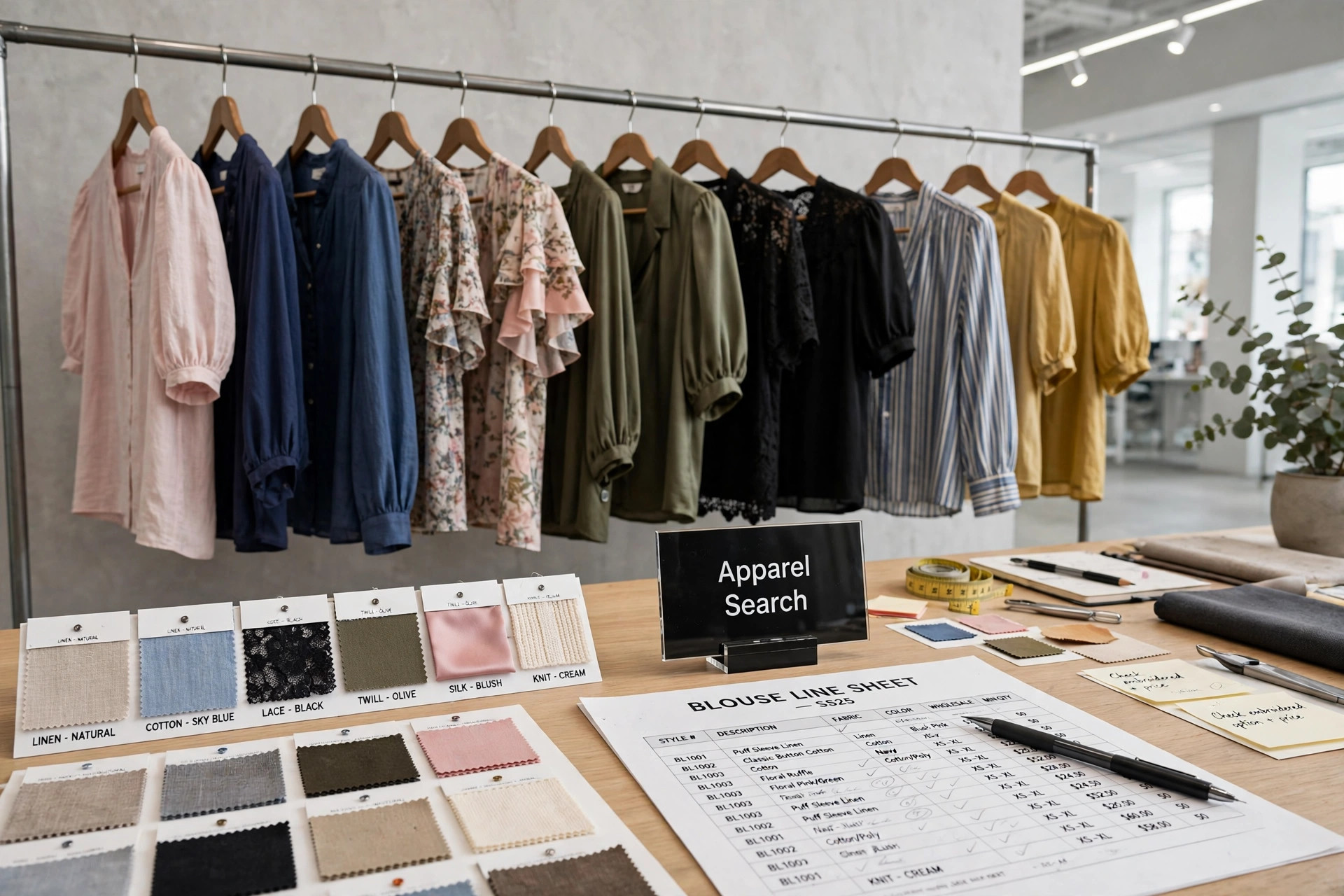
The blouse buyer builds each season's range around how customers actually wear blouses: with tailored trousers and skirts for work, with jeans for weekends, and as the softening piece under suits and knitwear. Range planning starts with last season's results analysed by fabric, sleeve, neckline, colour and price point, then moves to vendor appointments where the buyer edits dozens of candidate styles down to a balanced assortment — the right mixture of dependable core blouses that sell every season and fashion pieces that give the department its newness.
Samples are assessed on the body and in the hand: drape and opacity of the fabric, button quality and spacing, collar construction, cuff and placket finishing, and whether the garment survives washing without twisting or shrinking out of shape. The buyer negotiates costs against target margins, confirms delivery windows with vendors, and places orders with size and colour ratios drawn from the department's own history. In season, the buyer reads weekly sales at style level, repeats winners in new colours where the fabric position allows, and manages markdowns so seasonal prints clear before they date.
Fabric and Detail: The Product Knowledge at the Centre of the Job
More than most apparel categories, blouses are a fabric business. The same silhouette succeeds in a fluid viscose, fails in a stiff polyester, and becomes a premium piece in silk — at three different prices and three different care profiles. The blouse buyer must know how the main blouse fabrics behave: how cotton poplin presses and creases, how chiffon and georgette need lining or camisole consideration, how satin shows every construction flaw, and what each fabric does to the achievable price point and margin. Fabric decisions are therefore made first and costed precisely, not treated as a finishing detail.
Detail literacy is the second specialism. Necklines (shirt collars, bow and tie necks, V, scoop and cowl), sleeves (set-in, raglan, puff, bell, three-quarter and sleeveless), closures, darts and shaping, and print scale and placement all change who the blouse suits and what it can be worn with. The experienced blouse buyer can look at a sample and predict its customer, its partner garments and its likely return reasons — skills built by fitting and wearing knowledge, not by spreadsheets, and the reason this desk is rarely given to a buyer without tops experience.
Skills and Abilities the Role Requires
Commercially, the blouse buyer needs the standard buying toolkit in full: open-to-buy management, margin and markdown maths, size-ratio planning, and negotiation with a vendor base that ranges from domestic shirt makers to overseas volume producers. Because blouses are bought in breadth — many styles, moderate depth — the buyer must be disciplined about editing; a range of forty adequate blouses underperforms a range of twenty-five well-chosen ones, and saying no at appointments is a core skill.
Trend judgement matters, but it is trend judgement applied to wearable detail rather than runway extremes: which sleeve volume customers will actually wear to work, which print families are rising, when a neckline has peaked. The buyer also works closely with the skirt, trouser and knitwear buyers, because blouses are bought as partners to those ranges — colour and fabric stories must agree across departments or the outfit the customer came for does not exist on the floor.
Qualifications, Training and Career Path
Blouse buyers typically progress from assistant buyer roles in womenswear — often in tops, shirts or related soft separates — after learning range planning, costing and in-season trading on live departments. Fashion buying or fashion business qualifications provide a recognised entry route into those assistant roles, and employers for the blouse desk itself look above all for demonstrated product knowledge of fabrics and garment construction, which candidates usually evidence through their buying history rather than certificates.
From blouse buyer, the path runs to senior buyer in womenswear, to buying responsibility for broader soft separates or a whole tops division, and on to divisional merchandise management. The fabric and detail expertise also transfers well into product development roles with blouse and shirting brands, and into own-label development, where the same judgement about cloth, construction and price is used to create ranges rather than select them.
Common Questions
Why do blouse buyers focus so much on fabric?
A blouse silhouette succeeds or fails largely on its cloth: drape, opacity, creasing and care needs all change with the fabric, and so do the achievable price and margin. Fabric is therefore chosen and costed first, before detail decisions.
What is the difference between core and fashion blouses in a range?
Core blouses are proven styles — classic shirts and simple shells in repeat colours — that sell every season and carry dependable volume. Fashion blouses carry the season's new sleeves, prints and necklines. A balanced range needs both, in proportions set by sales history.
How does a blouse buyer work with other departments?
Closely. Blouses are bought to be worn with specific trousers, skirts and knitwear, so the blouse buyer coordinates colour, fabric and delivery timing with those buyers so complete outfits reach the floor together.