Dress Shirt Buyer Job Description
Buying men's dress shirts by collar, cuff, fabric and fit — a category of precise standards
A dress shirt buyer selects the formal and semi-formal shirts a menswear department sells — a category where the product looks simple and is anything but. Dress shirts are specified like equipment: collar style and construction, cuff type, fabric weave and finish, fit block, and a two-dimensional size system based on neck size and sleeve length. Customers are exacting and loyal, often rebuying the same specification for years, and they notice immediately when a collar roll changes or a fabric's easy-iron finish degrades. The dress shirt buyer therefore combines menswear buying skills with unusually precise product specification and continuity management. This page explains the role's duties, its technical knowledge, and its place in a buying career.
More Buying Job Descriptions by Letter:
What a Dress Shirt Buyer Does
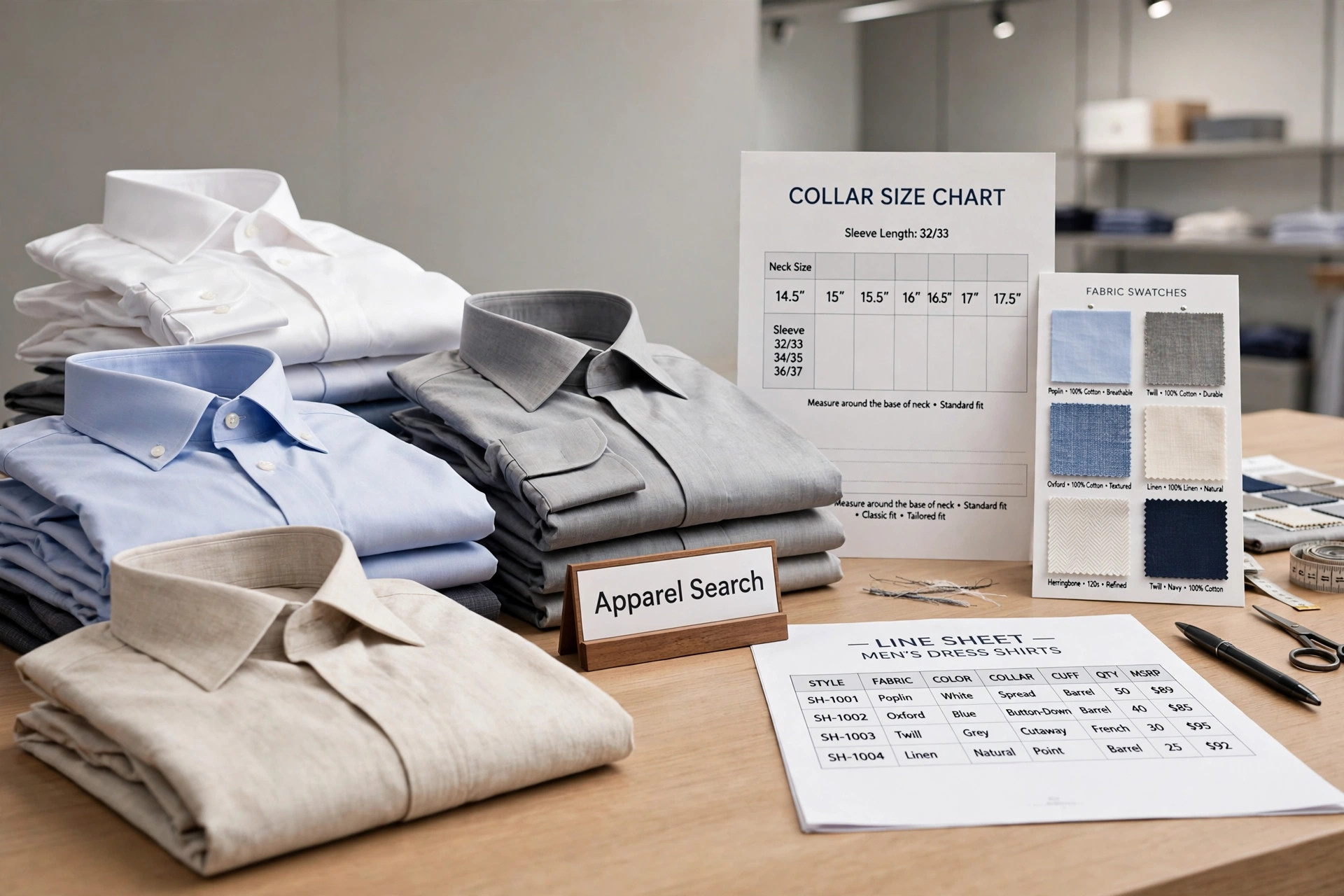
The buyer plans the shirt department as a specification matrix: which collar styles (spread, point, button-down and their variants), which cuff formats (single or double cuff), which fits (classic, tailored, slim), and which fabric families — poplin, twill, herringbone, pinpoint and oxford weaves, in white, blue and a controlled set of stripes, checks and seasonal colours. Against that matrix, the buyer reviews vendor ranges and own-label developments, tests samples for collar construction, button quality, stitching and fabric performance after washing, and places orders in the neck-and-sleeve size combinations each fit actually sells.
Continuity is the commercial heartbeat of the category. Core shirts — the white and blue staples a department is judged on — must never break stock in popular sizes, because the customer who finds his specification missing buys it elsewhere and may not return. The buyer therefore manages replenishment and vendor capacity for core lines with particular care, while introducing seasonal colours and cloths in controlled depth around them. In season, performance is read at specification level: which collars, fits and cloths are gaining, which size combinations are stranding stock, and where the matrix has gaps customers are asking for.
Collar, Cloth and Fit: The Technical Knowledge Behind the Desk
Collar construction is the dress shirt buyer's signature expertise. Interlining quality and fusing decide whether a collar sits cleanly, keeps its roll with a tie, and survives laundering without bubbling or edge wear — and these qualities cannot be judged from a photograph, only from handled, washed samples. The buyer must also know how collar shapes suit different uses and customers, from formal spread collars to the softer button-down, and how each pairs with the department's neckwear and tailoring.
Fabric and sizing knowledge complete the specialism. Weaves and yarn counts set the shirt's handle, opacity, crease behaviour and price; finishes such as easy-iron treatments vary widely in durability and must be verified, not assumed from a label. Sizing runs on two measurements at once — neck and sleeve — multiplied across fits, which produces a large size matrix in which stock can hide in the wrong combinations. Managing that matrix, so depth sits in the combinations customers actually wear, is where the role's analytical and product skills meet.
Skills and Abilities the Role Requires
Precision is the first requirement: this is a buying desk where specifications are contractual in effect, and small construction changes have visible consequences the customer will detect. The buyer needs strong analytical habits for size-matrix data, the patience for rigorous sample and wash testing, and the commercial discipline to protect continuity lines while still refreshing the offer. Negotiation here is often with long-term specialist shirt makers, where quality consistency and capacity for core programmes matter as much as price.
The role also requires coordination with the tailoring and neckwear buyers, since shirts are bought to be worn with specific suits and ties — collar and cloth stories must agree across the formal department — and with garment technologists who police construction standards in production. A buyer who understands how shirts are made, from pattern to fusing to finishing, holds better conversations with all of them and catches problems at sample stage, when they are still cheap to fix.
Qualifications, Training and Career Path
Dress shirt buyers typically progress from assistant buyer roles in menswear, particularly formalwear, tailoring or shirting itself, having learned range planning and costing on live departments. Fashion buying or business qualifications provide the standard entry into those assistant roles. For the shirt desk, employers look for demonstrated specification and quality judgement — experience of fit and construction approval counts heavily, because the category's standards are technical and its customers unforgiving.
From dress shirt buyer, progression runs to senior menswear buyer, responsibility for formalwear or a full menswear division, and on to divisional merchandise management. The specification expertise also transfers to the brand side: shirt makers and formalwear brands employ product managers and wholesale account managers whose job is presenting specification-led ranges to retail buyers — a conversation a former dress shirt buyer knows from the other side of the table.
Common Questions
Why are dress shirts sized by neck and sleeve length?
A dress shirt must fit at the collar — where a tie sits — as precisely as a jacket fits at the shoulder. Neck size sets the collar fit and sleeve length sets the cuff position, so the two measurements together, in several fits, form the size system the buyer must plan stock around.
What do dress shirt buyers test on samples?
Collar construction and interlining behaviour, fabric handle, opacity and creasing, button and stitching quality, and how the shirt performs after repeated washing — especially whether collars bubble, seams pucker or easy-iron finishes fade.
Why is continuity so important in dress shirt buying?
Dress shirt customers rebuy the same specification — collar, fit, cloth — for years. If a core shirt breaks stock in a popular size combination, that customer buys it elsewhere, and the department may lose a long-term repeat purchaser over one missing size.