Tailored Clothing Buyer Job Description
Buying suits, blazers, sports coats and tailored trousers — cloth, canvas and construction
A tailored clothing buyer selects the suits, sports coats, blazers and tailored trousers a store sells. Tailoring is the most construction-led category in menswear and classic womenswear: the customer is buying how a garment is made — its cloth, its internal canvas, its drape and its fit — as much as how it looks on the rail. Commitments are longer and unit costs far higher than in casual clothing, alterations and fitting services sit alongside the product, and a proven fit block can serve customers faithfully for a decade. This page explains what the tailored clothing buyer does, the cloth and construction knowledge the role demands, and how buyers qualify for the desk.
More Buying Job Descriptions by Letter:
What a Tailored Clothing Buyer Does
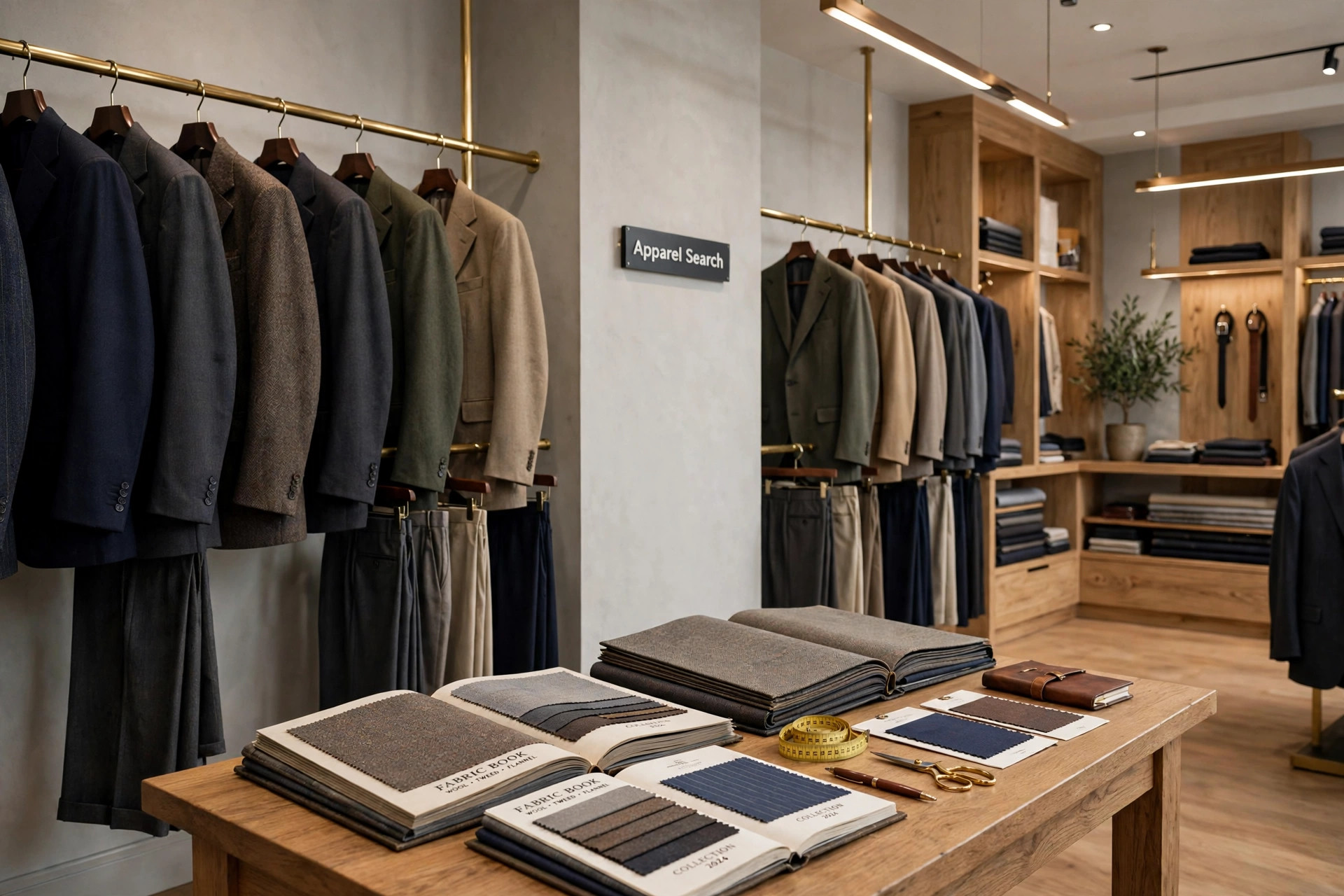
The tailored clothing buyer plans the tailoring range around occasions and price architecture: business suiting, occasion and wedding tailoring, smart blazers and sports coats, and the tailored trousers that connect them. Each season's plan is built from sales history by cloth, fit, size and price tier, and from the store's alteration and fitting feedback, which tells the buyer precisely where the current blocks succeed and fail on real bodies. Vendor appointments are spent on cloth books as much as garment rails — selecting suiting fabrics by weight, weave and composition, then specifying the models those cloths will be made into.
Sample stage is exacting. The buyer fits tailored samples on the department's blocks and fit models, checks shoulder expression, chest drape, button stance, lapel roll and trouser break, and interrogates construction: fused, half-canvas or full-canvas chest pieces, lining quality, button and trim standards, and the seam allowances that make alteration possible. Orders carry the category's complex size architecture — chest sizes crossed with short, regular and long lengths, trouser waists crossed with leg lengths — and deliveries are phased against the business and occasion calendars. In season, trading is measured and service-led: depth is protected in core cloths and sizes, and markdown decisions respect the long selling life good tailoring has.
Cloth, Canvas and Fit Blocks
Cloth literacy is this buyer's foundation. Suiting fabrics are specified by fibre and blend — pure wool, wool with mohair, silk or linen, and wool-rich blends — by weight for season, and by weave and finish, from smooth worsteds to flannels and hopsacks. The buyer must predict how a cloth will drape, crease, recover and shine with wear, because a suit is judged after a hundred wearings, not on delivery day. Super numbers and fineness claims are read critically: finer cloth feels luxurious but can wear faster, and matching cloth durability to the garment's intended use is a professional judgement customers rely on without ever seeing it made.
Construction knowledge is the second pillar. What sits inside a jacket — canvas, interlining, shoulder padding, sleeve and body lining — decides its shape and lifespan, and each step from fused to full-canvas construction changes cost substantially. The buyer sets the construction standard for each price tier and defends it in negotiation, because cheapening internals is invisible on the rail and obvious within a season of wear. Underpinning everything are the fit blocks: the proven chest, shoulder and waist proportions from which the range is cut. Tailoring customers are the most block-loyal in apparel, alterations data keeps those blocks honest, and the buyer treats any block change as a range decision with years of consequences.
Skills and Abilities the Role Requires
The tailored clothing buyer combines a craftsman's product eye with a merchant's discipline. Numeracy covers range planning across a wide size-and-length matrix, open-to-buy control on high unit costs, and margin management where cloth price movements flow straight into garment cost. Patience is a commercial skill here: tailoring programmes are committed early, cloth is bought ahead, and the buyer who chases weekly fashion noise destabilises the steady availability the category's customers expect.
Communication is unusually service-oriented. The buyer works with store tailoring specialists and alterations teams whose fitting-room evidence — which sizes run out, which blocks get altered most, which cloths come back with complaints — is the best product intelligence in the business. Vendor relationships tend to be long and technical, built with mills and makers over years, and negotiation focuses on cloth, construction and capacity rather than on headline price alone. An eye trained on cloth books, sample garments and customers' actual suits, rather than on trend reports, is what the desk ultimately runs on.
Qualifications, Training and Career Path
Tailored clothing buyers usually progress from assistant buyer roles within menswear or tailoring departments, where the size systems, cloth vocabulary and vendor base are learned on live ranges. Retail experience in suiting — especially measuring, fitting and alterations work — is prized preparation, because it teaches how tailored garments succeed and fail on real customers. Fashion buying or textile qualifications support entry at assistant level, but promotion to the tailoring desk is earned on demonstrated cloth and construction judgement.
The path from tailored clothing buyer runs to senior menswear buying and divisional merchandise management, and the specialism is equally valued on the brand side, where tailoring labels need buyers and product managers who understand their construction language. Experienced tailoring buyers also move into made-to-measure and bespoke-adjacent programmes, a growing area where cloth knowledge and fitting discipline are the entire offer. It is a desk where expertise compounds slowly and visibly: a buyer who has specified cloth through several seasons has evidence of judgement that few other categories provide so clearly.
Common Questions
What counts as tailored clothing?
Suits, sports coats, blazers and tailored trousers — structured garments whose fit and internal construction define them. Tailored clothing buyers select those ranges, judging cloth, canvas construction and fit blocks as well as style.
What is the difference between fused and canvas construction in a suit?
A fused jacket has its chest interlining glued to the cloth; a canvas construction uses stitched horsehair or synthetic canvas that shapes the chest and moves with the body, lasting longer and draping better at higher cost. Tailored clothing buyers set which construction each price tier carries.
How do you become a tailored clothing buyer?
Usually by progressing from assistant buyer roles in menswear or tailoring, often with suiting retail, fitting or alterations experience behind you. Employers look for demonstrated cloth and construction knowledge, because tailoring customers judge quality by make as much as by appearance.