Fashion Artist Job Description
Drawing fashion for a living — illustration, croquis and artwork that turn garment ideas into images buyers and customers can judge
A fashion artist is a working illustrator whose subject is clothing. Where a designer invents a garment, the artist renders it — in expressive croquis that capture how a dress will move, in precise flat drawings that show exactly how it is made, and in finished illustration for lookbooks, presentations, packaging and media. Fashion houses, design studios and publishers employ artists because a strong drawing communicates drape, proportion and mood faster and more evocatively than a photograph of a garment that does not yet exist. This page explains what fashion artists actually produce day to day, the media they work in, and how an illustration career in fashion is built.
More Design Job Descriptions by Letter:
What a Fashion Artist Does
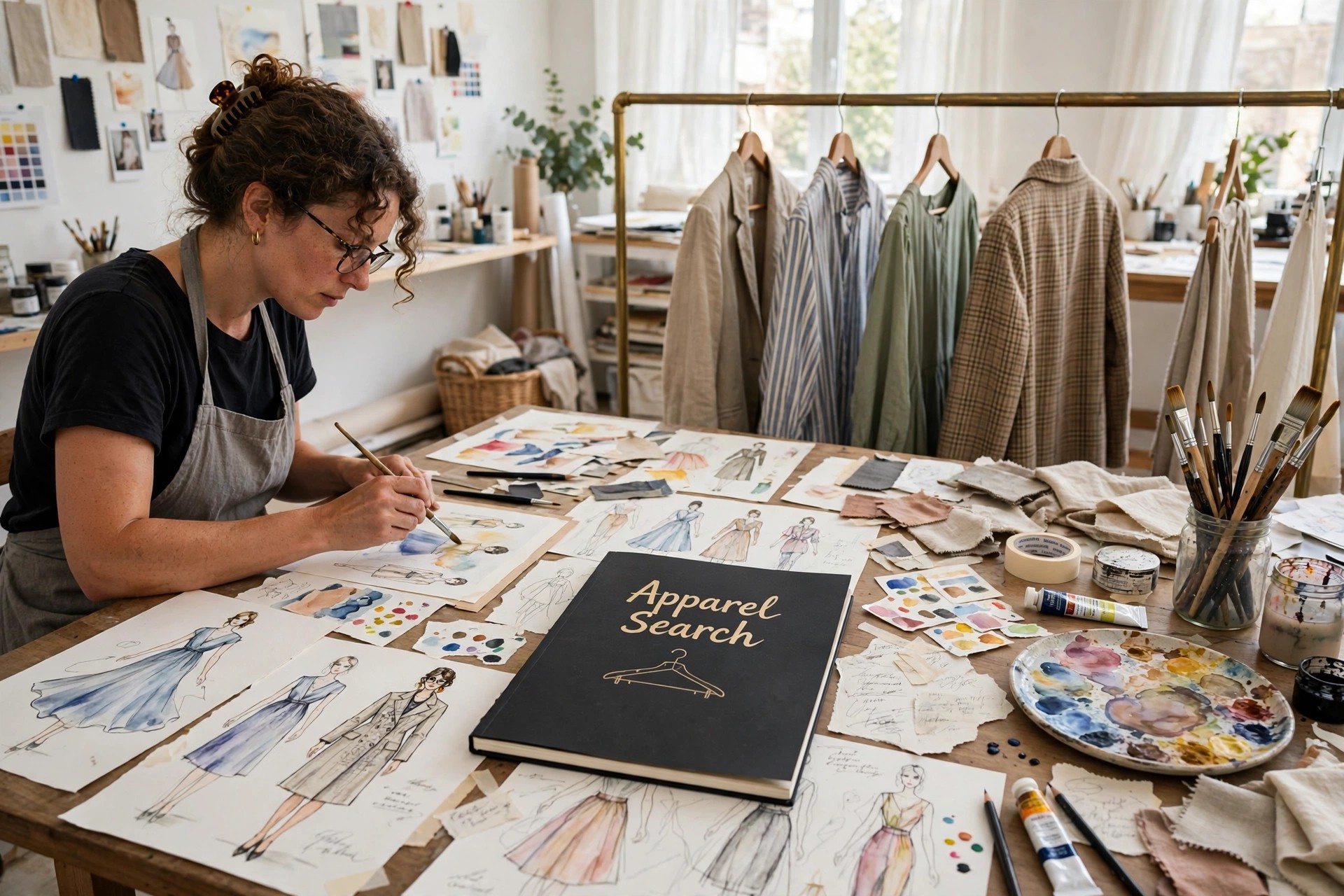
The working week divides between exploratory drawing and finished artwork. In the exploratory phase the artist sketches alongside designers as ideas form: quick croquis — the elongated fashion figure — dressed in proposed silhouettes, variations of a neckline or sleeve tried in minutes on paper, colour stories tested in marker or watercolour before fabric is committed. These drawings are thinking tools, and speed matters more than polish; a designer who can see six versions of a coat before lunch develops the range faster than one waiting for samples. The artist keeps the figure, the garment and the attitude in balance, because a croquis that flatters a weak design misleads everyone who approves it.
Finished artwork is the other half. Presentation boards for buyers and licensees, illustrations for lookbooks and advertising, artwork for packaging, store graphics and social media, and accurate technical flats that show seams, fastenings and construction for production teams all come from the artist's desk. Each commission carries a brief, a deadline and an approver, and the artist manages versions carefully — a sleeve changed at the buyer's request must change on every board it appears on. Freelance artists juggle several clients' briefs at once; staff artists work inside one house's handwriting, season after season.
Media, Technique and the Fashion Figure
Traditional media remain the foundation. Pencil, marker, gouache, watercolour and ink each render fabric differently — marker for the flat colour of a presentation board, watercolour for fluid drape, gouache where opaque, poster-like colour is wanted — and an employable artist controls several. Fabric rendering is the specialist skill: chiffon, denim, leather, sequins and knit must each read instantly as themselves in a drawing, through weight, highlight, texture marks and the way folds break. Figure drawing underpins all of it, because fashion illustration distorts anatomy deliberately, and only someone who knows the real proportions can stretch them convincingly.
Digital tools now carry much of the production load. Artists draw and paint in raster and vector illustration software, build repeat-ready artwork files, recolour drawings instantly for range presentations, and prepare print-ready files to a printer's specification. The strongest fashion artists move between hand and screen without a visible seam: a hand-drawn croquis scanned, cleaned and coloured digitally keeps the life of the original line while gaining the flexibility clients expect. Whichever the medium, the test is the same — the drawing must make someone want the garment, and must tell the truth about it.
Skills and Abilities the Role Requires
Drawing fluency is the entry ticket, judged entirely by portfolio: figure work, fabric rendering and a recognisable personal hand that still bends to a client's brief. Speed is the commercial skill — fashion calendars punish slow artwork, and the artist who produces strong first sketches in the meeting itself is worth more than a perfectionist who delivers late. Visual memory helps enormously: artists who have looked hard at garments, at how cloth hangs and catches light, draw convincingly from imagination when no sample exists yet, which is most of the time in early range development.
Professional skills complete the picture. Taking a brief accurately, asking the questions that prevent redraws, presenting work persuasively to designers and buyers, accepting direction on artwork that felt finished, and filing versions so a change made in March can be found in June — these decide whether talent becomes a career. Freelancers add quoting, scheduling and copyright awareness, since illustration is licensed for defined uses and an artist who understands usage rights protects both the work's value and the client's position.
Qualifications, Training and Career Path
Most fashion artists train in fashion illustration, fashion design, graphic design or fine art, but hiring is portfolio-led to a degree unusual even in fashion: a degree opens the door, the drawings decide. Students build employable portfolios by drawing garments constantly, learning the digital packages studios use, and taking any live brief available — student shows, local boutiques, college publications — because commissioned work under deadline teaches what exercises cannot. Assisting an established illustrator or joining a studio as a junior artist are the common first footholds.
Careers develop along two routes. Staff artists progress to senior artist and, in large houses, to leading a small art team whose handwriting defines the brand's presentations. Freelance artists build a client list across houses, publishers and agencies, with editorial and advertising commissions carrying the highest profile. Many artists combine fashion illustration with teaching, prints and book work. It is a role where reputation is literally visible: every published drawing advertises its maker to the next client.
Common Questions
How is a fashion artist different from a fashion designer?
The designer invents the garment — its silhouette, fabric and construction. The fashion artist renders garments and ideas as drawings: expressive croquis during design development, presentation artwork for buyers, and finished illustration for lookbooks and media. The roles collaborate constantly, and many artists trained as designers, but the artist's product is the image, not the clothing.
What media does a fashion artist work in?
Traditionally pencil, marker, watercolour, gouache and ink, each suited to rendering different fabrics, and digitally in illustration software for recolouring, presentation files and print-ready artwork. Most working artists combine hand drawing for life and speed with digital finishing for flexibility.
How do you become a fashion artist?
By drawing: training in fashion illustration, design or fine art helps, but appointments are decided by portfolio. Build figure and fabric-rendering skill, learn the standard digital tools, take live briefs wherever they appear, and assist established artists or join a studio in a junior role to learn production pace.