Branded Clothing Designer Job Description
Designing clothing that carries a name — ranges built inside a brand's identity, codes and customer loyalty
A branded clothing designer designs garments for a named brand — a label whose identity, customer and signature codes exist before any single season is drawn. That one fact changes the design job fundamentally. The unbranded or private-label designer chases whatever the market wants next; the branded designer must make clothing that is new enough to sell this season and recognisable enough that a customer across a shop floor knows whose rail it is. Logos, signature fabrics, recurring details and a defined customer are the designer's raw materials as much as cloth. This page explains how branded design works, and the particular discipline of designing inside an identity.
More Design Job Descriptions by Letter:
What a Branded Clothing Designer Does
The season begins with the brand, not with a blank page. The designer studies what the label stands for — its price position, its customer's life, its archive of signature pieces — and the commercial evidence of what sold under the name last season, then develops the new range to extend that story: core branded staples refreshed, new styles introduced in the brand's language, seasonal fashion pieces translated into versions only this label would make. Range plans are built with merchandisers so the collection balances logo-driven volume sellers against quieter pieces that carry the brand's quality claim.
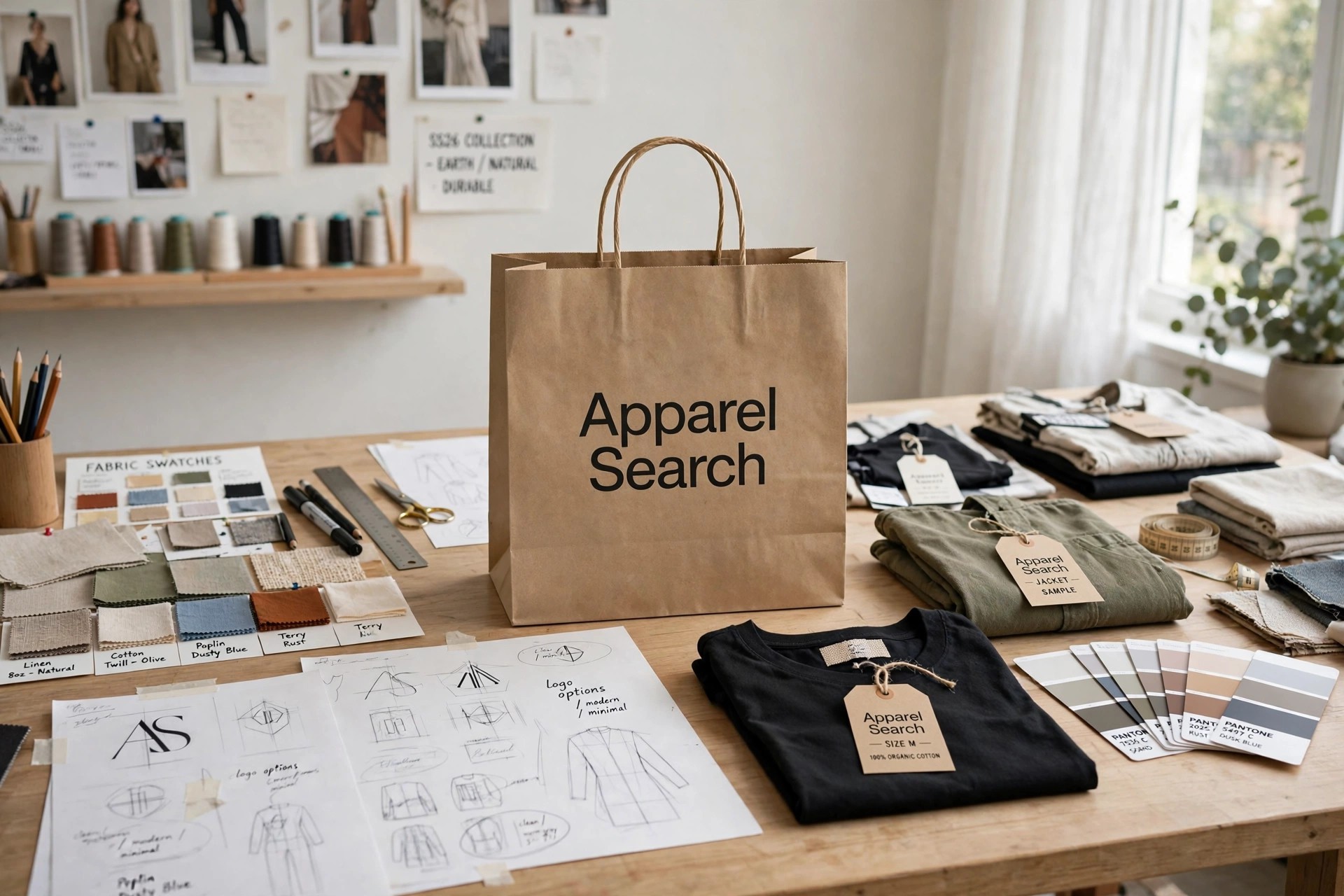
Development follows standard design practice — sketches, tech packs, fabric and trim selection, fittings and sample rounds — with an extra layer of brand control at every step. Branding applications are designed, not appended: embroidery scale and placement, print and jacquard logos, branded buttons, zips, linings and labels are all specified and approved against brand guidelines, often by a brand or licensing guardian as well as the design director. A branded designer's samples are checked twice — once as garments, once as carriers of the name.
Brand Codes, Logos and the Newness Balance
Every durable brand owns codes: a check, a stripe, a colour, a hardware shape, a fit, a fabric hand — the details customers use to recognise and repurchase. The branded designer's craft is working those codes hard without exhausting them: scaling a signature print, moving the logo, re-cutting the signature jacket in the season's fabric, finding the version of a trend the brand can honestly own. Design too close to last season and the range stagnates; design too far from the codes and the customer cannot find the brand they came for, while counterfeiters and copyists happily fill the recognisable ground abandoned.
The commercial stakes of that balance are unusually visible, because branded ranges live on repeat purchase and full-price sell-through rather than on one-season novelty. The designer reads sales by code and category — which signatures still earn, which are tiring, where a new code might be planted — and plans the range's ladder from entry logo pieces that recruit young customers up to the premium garments that justify the name's price. Licensing adds a further arena: branded designers may develop or approve licensed categories made by partner companies, guarding the codes in products their own studio did not draw.
Skills and Abilities the Role Requires
Brand literacy is the distinguishing skill: the ability to absorb a label's history and customer until designing inside it becomes instinct rather than constraint, while still bringing the outside fashion knowledge that keeps the brand current. Strong designers chafe productively against the codes — they know exactly which guideline they are bending and why. Portfolio evidence for these roles therefore shows range work for a defined identity, not only free concept collections.
The supporting skills mirror any senior design desk — sketching and CAD, tech-pack precision, fabric and trim knowledge, fitting experience, costing discipline — plus the stakeholder skills branded environments demand. Brand, licensing, marketing and retail teams all hold legitimate views on what carries the name, and the designer presents, negotiates and sometimes defends the range across those audiences. Sensitivity to trademark and logo usage rules is a genuine working requirement, not a legal nicety: a misapplied mark on a production garment is an expensive, public error.
Qualifications, Training and Career Path
Branded clothing designers are usually experienced hires: a fashion design degree, assistant and associate designer years, and a portfolio demonstrating commercial ranges, ideally including work for a recognisable label or a tightly defined house style. Employers interview for brand fit as much as for talent, and designers prepare by knowing the label's archive, stores and customer before the meeting. Mid-career moves between brands are common, and each move tests whether the designer's hand can adapt to a new identity without losing strength.
Progression runs to senior designer and design director within the brand, to head-of-design roles across licensed categories, or into brand-side creative leadership where product and identity strategy merge. Some branded designers step sideways into private-label or retailer design for contrast; many build whole careers inside famous names, becoming the institutional memory of what the brand is. It is among the most commercially accountable design roles, because every garment goes into the world carrying a name that must still mean something next season.
Common Questions
What makes branded clothing design different from other design work?
The identity comes first. A branded designer creates new ranges inside an existing name — its signature codes, logo applications, price position and loyal customer — balancing seasonal newness against instant recognisability, with brand approval applied to garments and branding details alike.
What are brand codes in clothing design?
The recurring, recognisable elements customers identify a label by: a signature check or stripe, a logo treatment, characteristic hardware, fabrics, colours or fits. The branded designer's craft is refreshing those codes each season — new scales, placements and fabrics — without abandoning or exhausting them.
How do you get a branded clothing designer job?
Through the standard design ladder — degree, assistant and associate roles — with a portfolio showing commercial range work for a defined identity. Employers hire for brand fit alongside talent, so knowing the label's archive, customer and codes before interview is essential preparation.