Girls Clothing Designer Job Description
Designing girls' garments as products — fit, fabric, construction and safety standards across girls' size ranges
A girls clothing designer designs garments for the girls' market — dresses, skirts, tops, trousers, outerwear and seasonal sets sold in girls' size ranges. The work is product design in the full professional sense: choosing fabrics that survive playground wear and repeated washing, grading fit across fast-changing size bands, and styling ranges that parents judge on durability, value and appropriateness while wearers judge on colour, comfort and detail. This page describes the role purely as a garment-design job — the ranges, the technical standards and the career route.
More Design Job Descriptions by Letter:
What a Girls Clothing Designer Does
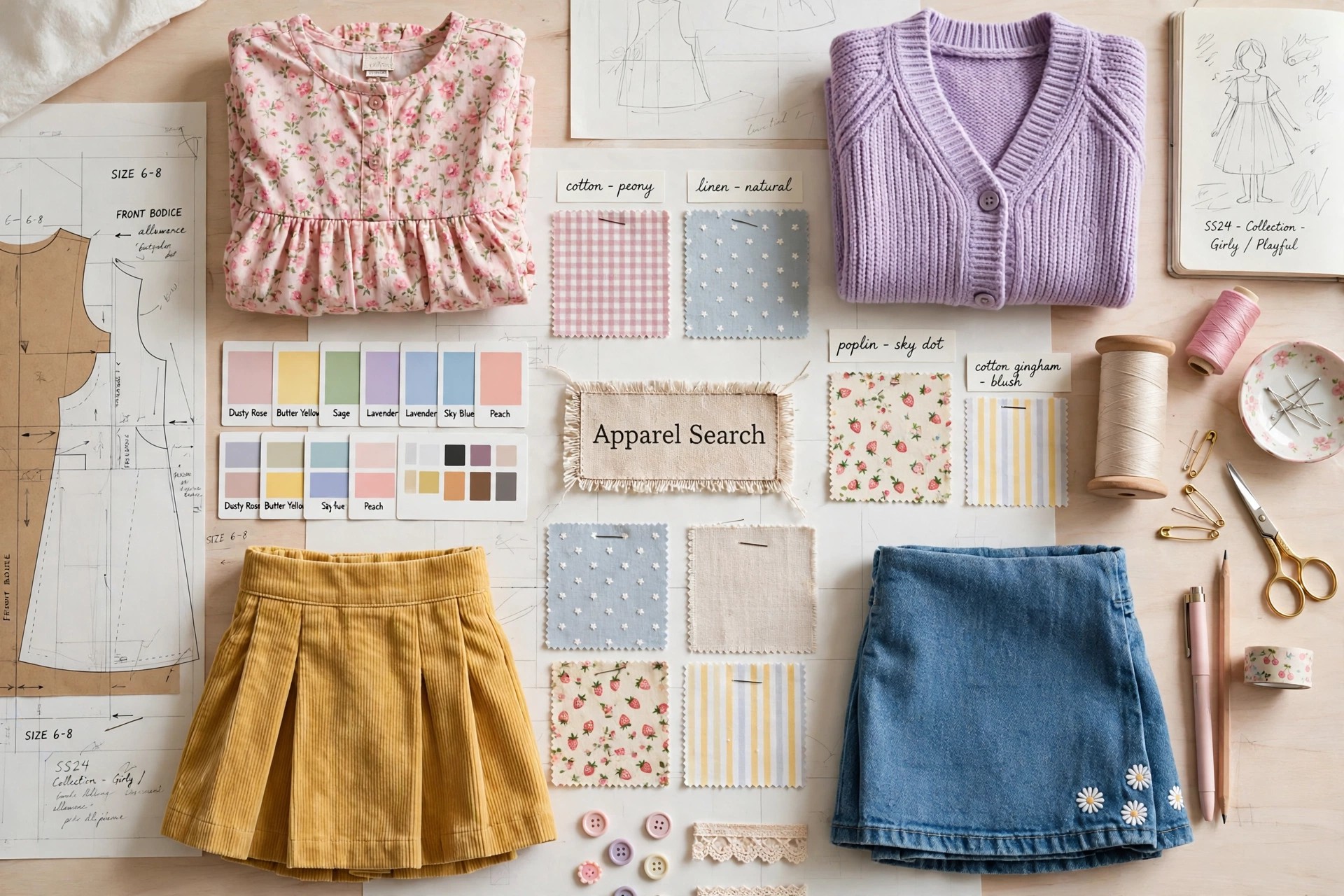
Each season the designer builds a girls' range from a brief set with merchandisers: the size bands to cover, the price points to hit, the occasions the range serves — school, everyday play, parties and seasonal events. Styles are sketched and developed as products: a dress is specified by its fabric, bodice construction, sleeve, fastening type and length per size, not simply drawn. Colour and print stories are planned across the range so separates coordinate, and carryover bestsellers are refreshed in new fabrics while new styles are tested in small groups first.
Development runs through samples and fittings on size-appropriate fit forms and fit sessions conducted to industry safeguarding practice, with corrections recorded in the tech pack after every round. The designer checks that patterns grade sensibly from the smallest to the largest size in the band — a style that works at one size can distort at another — and reviews pre-production samples against the approved standard for seam quality, fastening security and finish before bulk production is released.
Fabric, Durability and Safety Standards
Fabric choice in girls' clothing is an engineering decision as much as an aesthetic one. Garments are washed frequently and worn hard, so designers favour fabrics and constructions that hold colour and shape: cotton and cotton blends with proven wash performance, reinforced seams at stress points, secure stitching on buttons and trims, and closures sized for reliable fastening. Print and embellishment methods are chosen for wash durability, and every fabric is assessed against the cost target, because girls' ranges are sold at keen prices and replaced as wearers grow.
Safety and compliance standards shape design details directly. Drawstrings and cords on children's garments are governed by strict safety rules in major markets, so necklines, hoods and waists are designed to those specifications or designed without cords at all. Flammability requirements apply particularly to nightwear categories, small parts and attachments must meet pull and durability expectations, and fibre-content and care labelling must be accurate on every garment. The designer works with garment technologists and compliance colleagues so these requirements are designed in from the first sketch, not corrected at the end.
Skills and Abilities the Role Requires
The core skills are those of any garment designer — sketching and CAD flats, tech-pack specification, fabric knowledge, pattern and grading awareness, costing discipline — applied with a specialist understanding of girls' sizing. Knowing how proportions change across the size bands, which fits parents return and which they rebuy, and how school and seasonal calendars drive demand is the category knowledge employers hire for. Range judgement matters too: balancing dresses against separates, basics against occasion pieces, across several size bands at once.
Commercial awareness is close behind. Girls' clothing is a high-volume, price-sensitive market where a small costing error repeats across thousands of units, and where sell-through data by size and colour arrives fast and is expected to change the next range. Designers who read that data well — spotting the size band that sells out, the print that carries a whole story — progress quickly. Organisation across many styles, sizes and sample rounds, and clear communication with factories and technologists, complete the professional skill set.
Qualifications, Training and Career Path
Girls clothing designers usually train in fashion design, with childrenswear modules or placements where available, and enter through assistant designer posts in childrenswear companies, supermarket and high-street clothing teams, or specialist girls' brands. Portfolios for these roles should show developed product ranges — flats, specifications and size-aware design — rather than concept-only work, and any experience of grading, fit or production strengthens an application considerably.
Progression runs to designer and senior designer within childrenswear, then to design management across children's categories, with girls', boys' and baby ranges often sitting in one department. Some designers move between childrenswear and womenswear over a career, but many specialise permanently: the sizing knowledge, safety standards and market rhythms of children's clothing form a distinct professional expertise that employers value and reward.
Common Questions
What does a girls clothing designer design?
Garments sold in girls' size ranges: dresses, skirts, tops, trousers, outerwear, nightwear and seasonal sets. Each style is designed as a product — fabric, construction, fastenings and fit specified for every size in the band, and checked against children's clothing safety and labelling standards.
Why do safety standards matter so much in girls' clothing design?
Children's garments are regulated in ways adult clothing is not: rules govern drawstrings and cords, flammability (especially nightwear), attachment security and labelling. Designers build those requirements into styles from the first sketch and work with garment technologists to keep every size compliant.
How do you become a girls clothing designer?
Train in fashion design, ideally with childrenswear study or placements, and enter through assistant designer posts in childrenswear teams. Build a portfolio of developed, size-aware product ranges, and learn grading, fit and the category's safety standards — that specialist knowledge is what the role hires on.