Outerwear Designer Job Description
Designing coats and jackets as weather protection — insulation, weatherproofing, technical shells and construction
An outerwear designer designs the garments that protect the wearer from the weather: coats, jackets, parkas, rainwear and technical shells. It is fashion design with an engineering burden no other ready-to-wear category carries in the same measure — an outerwear garment must shed rain, trap warmth, block wind, move with the body and survive seasons of hard use, and it must do all of that at a price, in a size range, looking like something a customer wants to wear every day. This page describes the outerwear designer's work across the whole category: the performance fabrics, the construction, the testing and the career route.
More Design Job Descriptions by Letter:
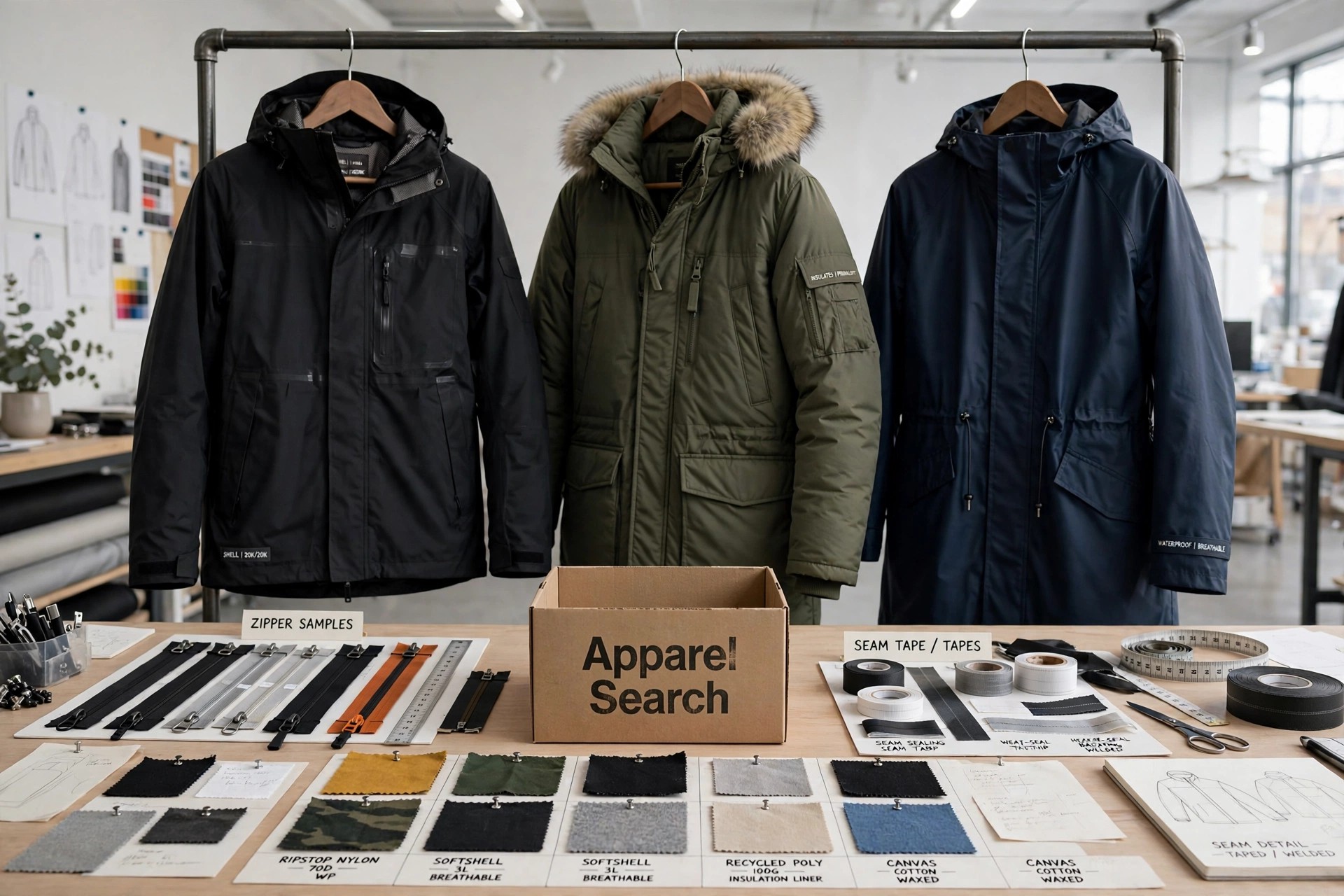
What an Outerwear Designer Does
The season starts with the range architecture: which coat and jacket categories the brand will offer — insulated parkas, lightweight shells, rain jackets, wool coats, transitional jackets — at which prices and for which climates and customers, planned with merchandisers against previous seasons' evidence. The designer researches silhouettes and technical references, sketches the line, and develops each style into a full technical specification: shell fabric, insulation type and weight, lining, seam construction, closures, pockets, hood and cuff details, stated precisely enough for a sample room to build from.
Samples and testing fill the middle of the season. Prototype coats are reviewed worn and in motion — reach, sit, drive, carry a bag — because outerwear fails in movement before it fails on a hanger. The designer checks zip function under load, hood fit over the face, pocket access with gloved hands, and the hang and balance of the garment when wet-weather fabrics are heavy. Corrections go into the tech pack round by round until the pre-production sample performs as specified, and only then is bulk production released.
Insulation, Weatherproofing and Technical Fabrics
Performance fabric knowledge is the outerwear designer's specialist capital. Shell fabrics are chosen by their coating or membrane, their water resistance and breathability ratings and their hand and weight; seams on waterproof styles are taped or sealed so the garment's protection is not lost at its stitch lines. Insulation divides between down, judged by fill power and fill weight, and synthetic fills, judged by warmth-to-weight, behaviour when damp and cost — and the designer matches fill to climate and price rather than treating warmth as a slogan.
Every performance choice is also a construction choice. Heavier fabrics demand stronger seam allowances and hardware; laminated shells restrict which linings and interlinings can be used; a three-layer technical jacket and a city wool coat are both outerwear but share almost no construction logic. The designer works with fabric mills, garment technologists and testing arrangements so claims made for a garment — waterproof, insulated, windproof — rest on specified materials and test results the brand can stand behind, and so care labels tell the wearer how to keep the performance alive in washing.
Skills and Abilities the Role Requires
The foundation is complete garment design craft — sketching and CAD flats, tech-pack specification, pattern and fit awareness, costing discipline — raised by the category's technical layer: fluency in performance fabrics and insulation, closure and hardware engineering, and the judgement to balance protection, weight, bulk and price in a single garment. A coat that is warm but unwearable, or beautiful but useless in rain, is a design failure the outerwear specialist is hired to avoid.
Work happens across disciplines and suppliers. Outerwear is often made by specialist factories whose construction strengths the designer learns and designs toward; development involves mill technicians, insulation suppliers and testing feedback as much as the sample room. Organisation matters too: outerwear has long development lead times because fabrics and trims are ordered early, so the designer who keeps a style's specification history immaculate protects the whole calendar. Commercial range judgement — which categories carry volume, which technical stories justify their price — completes the profile.
Qualifications, Training and Career Path
Outerwear designers usually train in fashion design, with performance or technical apparel study where available, and enter through assistant designer posts in outerwear companies, outdoor and sport brands, or the coat departments of general clothing brands. Portfolios that persuade in this category show developed technical product — specifications, fabric and insulation choices explained, garments that were actually made and tested — alongside the sketching every design portfolio needs.
Progression runs to designer and senior designer owning a coat or jacket category, then to design leadership across outerwear and related technical categories. The expertise transfers naturally toward outdoor, ski and performance sportswear design, where the same fabric and insulation science applies at higher intensity, and experienced outerwear designers are also recruited by private-label manufacturers whose customers need exactly this construction knowledge. It is a specialism where technical depth compounds: every season's testing teaches something the next range uses.
Common Questions
What makes outerwear design different from other fashion design?
The garment must perform against weather. Alongside silhouette and styling, the designer specifies insulation, weatherproof fabrics and seam sealing, closure engineering and durability, and tests samples worn and in motion — a performance burden other ready-to-wear categories carry far more lightly.
What fabrics and insulation should an outerwear designer know?
Coated and membrane shell fabrics and their water-resistance and breathability behaviour, seam taping, down judged by fill power and weight, and synthetic insulations judged by warmth, damp performance and cost — matched to the garment's climate, use and price.
How do you become an outerwear designer?
Train in fashion design, ideally with technical or performance apparel study, build a portfolio of developed and made outerwear with specifications explained, and enter through assistant designer posts in outerwear, outdoor or coat departments, where fabric and testing knowledge is learned on live ranges.