Men's Outerwear Designer Job Description
Men's coats and jackets — fit, construction and fabrics for a market that buys performance and longevity
A men's outerwear designer designs coats and jackets for the men's market: parkas, overcoats, field and utility jackets, technical shells, rain coats and the insulated jackets men wear daily through winter. The category has its own design logic. Men's outerwear is bought comparatively slowly and kept for years, fit is judged on shoulder, chest and movement rather than silhouette novelty, and construction quality — seams, hardware, fabric weight — is read by the customer as the product's honesty. This page describes the men's outerwear designer's work: the fit standards, the construction and the career path.
More Design Job Descriptions by Letter:
What a Men's Outerwear Designer Does
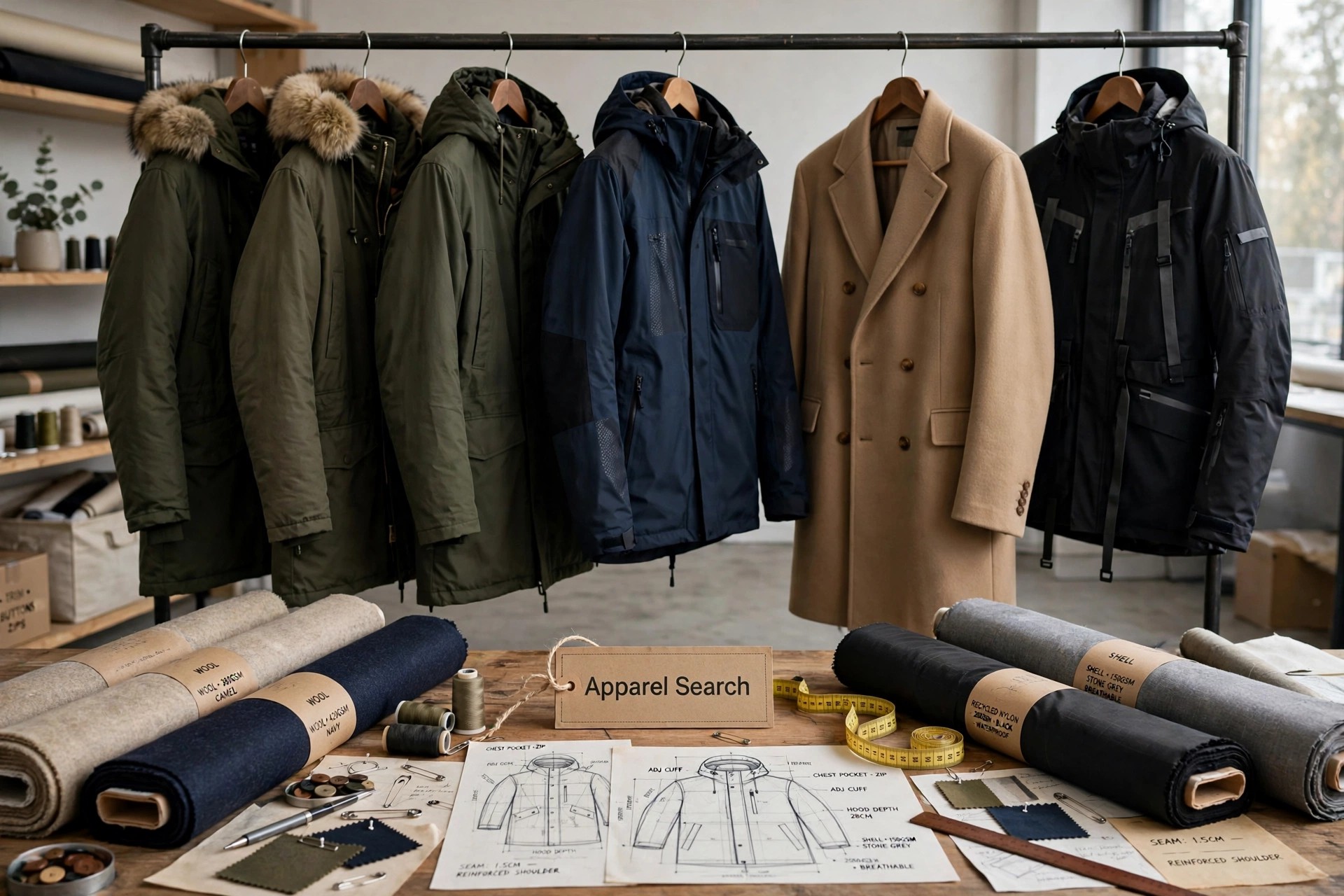
The designer builds the men's coat range from a brief divided by function: the smart overcoat, the everyday insulated jacket, the waterproof, the transitional layer. Each style is developed with the category's priorities in order — fit across the men's size range first, then fabric, insulation and construction, then the styling details that distinguish this season's version. Technical drawings specify the practical architecture men notice: pocket number, size and placement, internal pockets, storm closures, adjustable cuffs and hems, and linings built to slide over knitwear and tailoring alike.
Fit development is the calendar's centre of gravity. Samples are assessed for shoulder balance, chest ease, sleeve pitch and length, and the room to layer underneath, with corrections graded carefully through the size range so a style that fits the sample size still fits at the range's extremes. The designer reviews hardware and construction samples with a user's suspicion — zips operated one-handed, snaps that hold, drawcord adjusters that stay set — and signs off pre-production samples only when the garment works as equipment, not just as an image.
Fit, Construction and Fabric Standards
Men's fit knowledge is this specialism's distinguishing expertise. The designer works with the category's fit blocks and grading rules, understanding how chest, shoulder and arm measurements relate, how much ease each coat function needs, and where men return garments: tight across the back, short in the sleeve, restrictive when driving or reaching. Tall and extended sizing, where the brand offers it, must be designed and graded properly rather than lengthened as an afterthought, and fit evidence from returns data is treated as a design document.
Construction and fabric standards follow the longevity the market expects. Designers specify cloth by weight and performance — wool and wool-blend overcoating, coated cottons, technical nylons and membranes — with abrasion and weather behaviour matched to the garment's use, and they set seam, stitching and reinforcement standards at the points men's coats actually fail: pocket corners, underarm, centre-back vent, zip bases. Hardware is chosen for service life and repairability where the price allows, because a men's coat is expected to be serviceable across seasons, and design decisions that make a zip or button replaceable extend the garment's working life.
Skills and Abilities the Role Requires
Strong pattern and fit literacy heads the list — the ability to read a sample's faults from measurements and movement, and to write corrections a pattern cutter can execute without ambiguity. Alongside it sits materials judgement: an instinct, built by handling cloth and finished garments for years, for which fabric weight and finish a given coat function demands, and what a price point can honestly carry.
The commercial skills are those of a considered market. Men's outerwear ranges are planned in depth rather than breadth — fewer styles, larger commitments, longer selling lives — so costing accuracy and continuity judgement matter: knowing which proven style to carry forward, which fabric upgrade justifies a price move, and which trend to admit in a colour or detail rather than a silhouette. Supplier and factory relationships, often with specialist coat makers, reward designers who communicate construction expectations precisely and inspect against them fairly.
Qualifications, Training and Career Path
Men's outerwear designers typically train in fashion design or menswear design and enter through assistant posts in menswear teams, coat and jacket departments, outdoor brands or tailoring-influenced labels. A portfolio that works in this market shows fit and construction thinking — developed styles, measurement-aware specifications, made garments — and any pattern-cutting or garment-technology grounding is valued more highly here than in faster categories.
Progression runs to designer and senior designer owning the men's coat and jacket range, then toward design leadership across menswear outerwear and technical categories. The expertise is a bridge in both directions: toward outdoor and performance design, where the same construction science intensifies, and toward tailored outerwear and premium coat-making, where cloth and construction carry the brand. Men's outerwear rewards accumulated craft, and experienced specialists are seldom short of employers.
Common Questions
What does a men's outerwear designer design?
Men's parkas, overcoats, insulated jackets, technical shells, rain coats and utility jackets — specified for fit across the men's size range, practical pocketing and closures, durable fabrics and construction intended to serve for several seasons.
Why is fit so central in men's outerwear design?
Men's coats are judged on shoulder, chest and freedom of movement, and are returned when they bind across the back or run short in the sleeve. The designer develops fit on proper blocks, grades it carefully through the size range and uses returns evidence as design input.
How do you become a men's outerwear designer?
Train in fashion or menswear design, build portfolio work showing fit and construction thinking on developed styles, and enter through assistant designer posts in menswear or outerwear teams. Pattern and garment-technology knowledge is a distinct advantage in this category.