Senior Technical Designer Job Description
Leading fit and specification — owning a category's tech packs, fit standards and construction quality from first sample to production
A senior technical designer leads the technical side of garment development for a category: fit, specification and construction. Technical designers translate a designer's sketch into a tech pack a factory can build — measurements, construction details, materials and tolerances — and then judge every sample against that pack until the garment is right. The senior desk carries the authority in that process: setting fit standards and blocks, resolving the hard fitting problems, approving or rejecting samples, and mentoring the technical designers below. Where a design fails in production, the cause is very often a technical decision made or missed at this desk. This page explains the senior technical role.
More Design Job Descriptions by Letter:
What a Senior Technical Designer Does
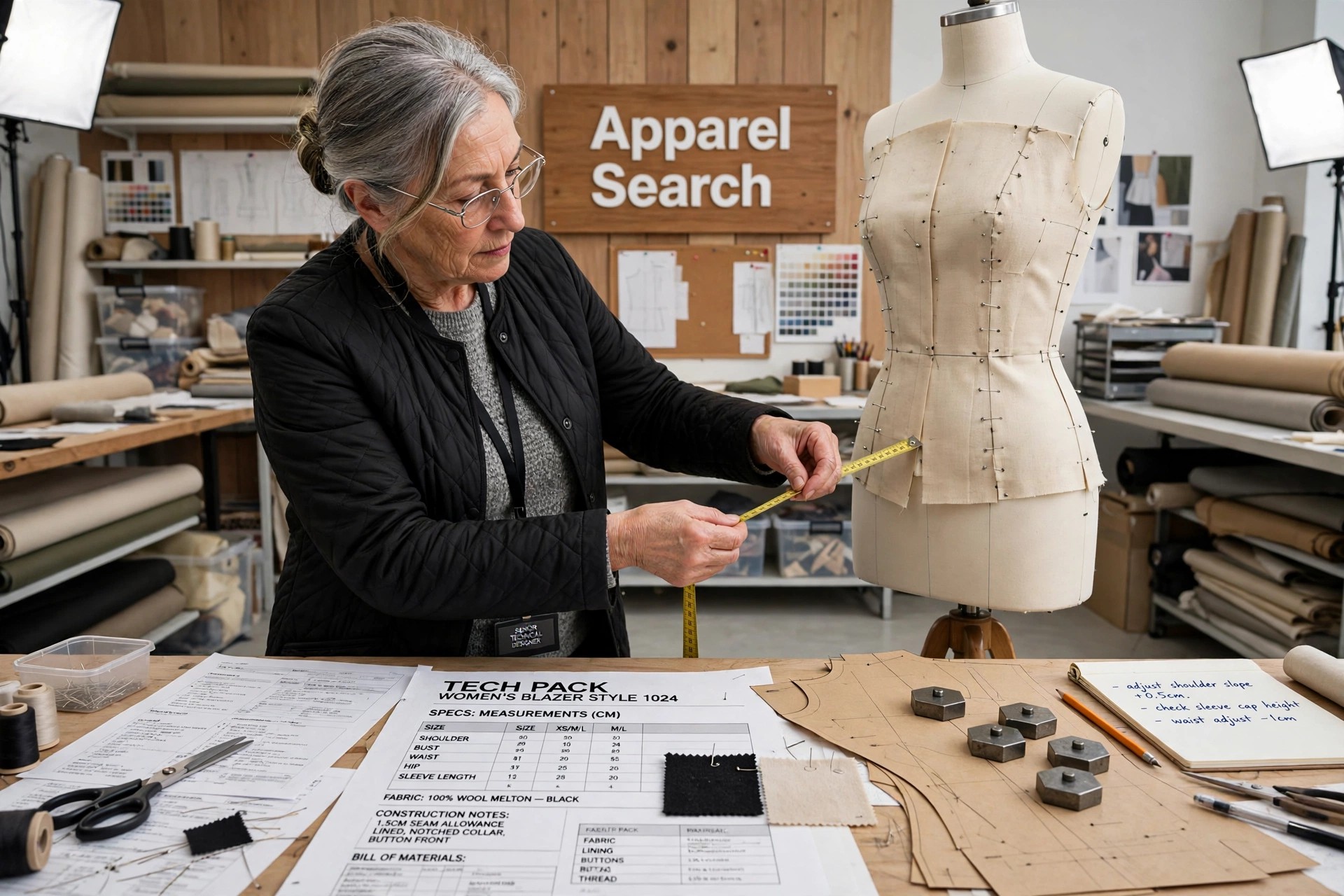
The senior technical designer owns the tech pack standard for their category: what a complete specification contains, how points of measurement are defined and taken, which tolerances are acceptable on which measurements, and how construction is described so that factories on different continents build the same garment. They write and review packs for the category's most complex or important styles themselves, check the packs of the team, and keep the measurement libraries, grade rules and block patterns current as fits evolve — because a grade rule error does not spoil one garment, it spoils a whole size range in production.
Fit leadership is the visible half of the role. The senior technical designer runs or leads fit sessions on live models and forms, diagnoses why a garment pulls, twists, collapses or grows — separating pattern faults from fabric behaviour and from factory execution — and directs the correction in language pattern cutters and factories can act on precisely. They approve fit and pre-production samples, set the standard for production by signing the reference sample, and handle escalations: the style that will not fit right, the factory dispute about a tolerance, the quality failure whose root cause must be found before the next bulk is cut.
Blocks, Grading and Technical Standards
Fit consistency across a whole category rests on blocks — the proven base patterns from which styles are developed — and the senior technical designer is their custodian. Blocks are reviewed against sales returns and fit feedback, adjusted deliberately rather than casually, and protected from silent drift as different hands amend them season by season. Grading — the rule set by which the approved fit is stepped up and down the size range — sits under the same custody, with particular care at the ends of the range, where poor grading shows first and where customers are least forgiving.
The work environment joins sample room, office and factory floor. Fit days are spent on their feet around the fit model; desk days go to packs, measurement charts and video fittings with overseas factories, where a correction must be communicated in photographs, overlays and unambiguous numbers because the sample cannot be pinned in person. Senior technical designers travel to factories for production starts and problem styles, and work shoulder to shoulder with designers — guarding the design intent while refusing the construction that cannot survive production — and with quality teams, whose factory findings feed back into the next season's specifications. It is a role of applied authority: decisions are technical, but their consequences are commercial and immediate.
Skills and Abilities the Role Requires
Pattern and fit mastery comes first and cannot be faked: garment construction in depth, pattern-cutting literacy, fabric behaviour across fibres and structures, and the diagnostic eye that reads a wrinkle as evidence. On that foundation sits specification excellence — measurements, diagrams, construction sequencing and tolerances written so clearly that a skilled stranger builds the intended garment first time — together with fluency in the category's CAD, pattern and product lifecycle systems, including 3D fit tools where the company uses them.
The senior layer adds judgement and teaching. Knowing when a fit is commercially right rather than theoretically perfect, when to hold a factory to a tolerance and when the tolerance itself was wrong, and how to develop a junior technical designer's eye by fitting alongside them — these are the contributions that distinguish the senior desk. Communication under disagreement is constant: designers, buyers and factories may all want different things from the same sample, and the senior technical designer's decision, explained in evidence, is what the room follows. Their reputation is built sample by sample, and factories learn quickly which technical designers' comments repay close reading.
Qualifications, Training and Career Path
Senior technical designers are promoted from technical designer posts, typically after years across categories and factories, usually with qualifications in garment technology, fashion design technology or pattern cutting behind them. Many have worked as pattern cutters, sample machinists or garment technologists along the way, and that making experience shows in the quality of their corrections. Employers appointing at this level examine sample work: candidates may be asked to critique a tech pack, diagnose a fitting garment, or write the correction comments for a problem sample, and those exercises decide appointments.
Progression runs to technical design management — leading the technical team for a division or a whole company — and into head of quality or product technology roles where fit standards meet production assurance. Specialist routes include fit consultancy, block and grading development, and 3D digital product creation leadership. In an industry that sells fit as surely as it sells fashion, the senior technical designer guards the promise the customer actually experiences when the garment arrives — which makes this desk one of the most consequential in the building.
Common Questions
How is a senior technical designer different from a technical designer?
By authority and scope: the senior desk sets the category's tech pack, block, grading and tolerance standards, leads the hardest fittings, approves samples, resolves factory technical disputes, and mentors the technical designers whose packs and comments they review.
Does a senior technical designer need pattern-cutting experience?
Pattern literacy is essential, and most senior technical designers have cut patterns, made samples or worked as garment technologists earlier in their careers. Their corrections are trusted by pattern rooms and factories precisely because they are written by someone who has made garments.
How do you become a senior technical designer?
Qualify in garment technology, design technology or pattern cutting, build years of technical designer experience across categories and factories, and develop a record of accurate packs, sound fit diagnosis and clear factory communication that earns promotion to the standards-owning desk.