Hair Stylist Job Description
Hair for the camera and the runway — styling for fashion shoots, shows, salons and retail beauty services
A hair stylist in the fashion industry creates the hair that completes a look. The same profession works in three settings that overlap constantly: the salon, where clients pay for cuts, colour and styling; the photo studio and the runway, where stylists build hair looks to a brief for shoots, shows and campaigns; and retail beauty services, where department stores and cosmetics counters employ stylists for demonstrations, consultations and events. Fashion adds direction to the craft — a stylist here does not only please the person in the chair, but serves a garment, a collection, a photograph or a brand.
More Miscellaneous Job Descriptions by Letter:
What a Fashion Hair Stylist Does
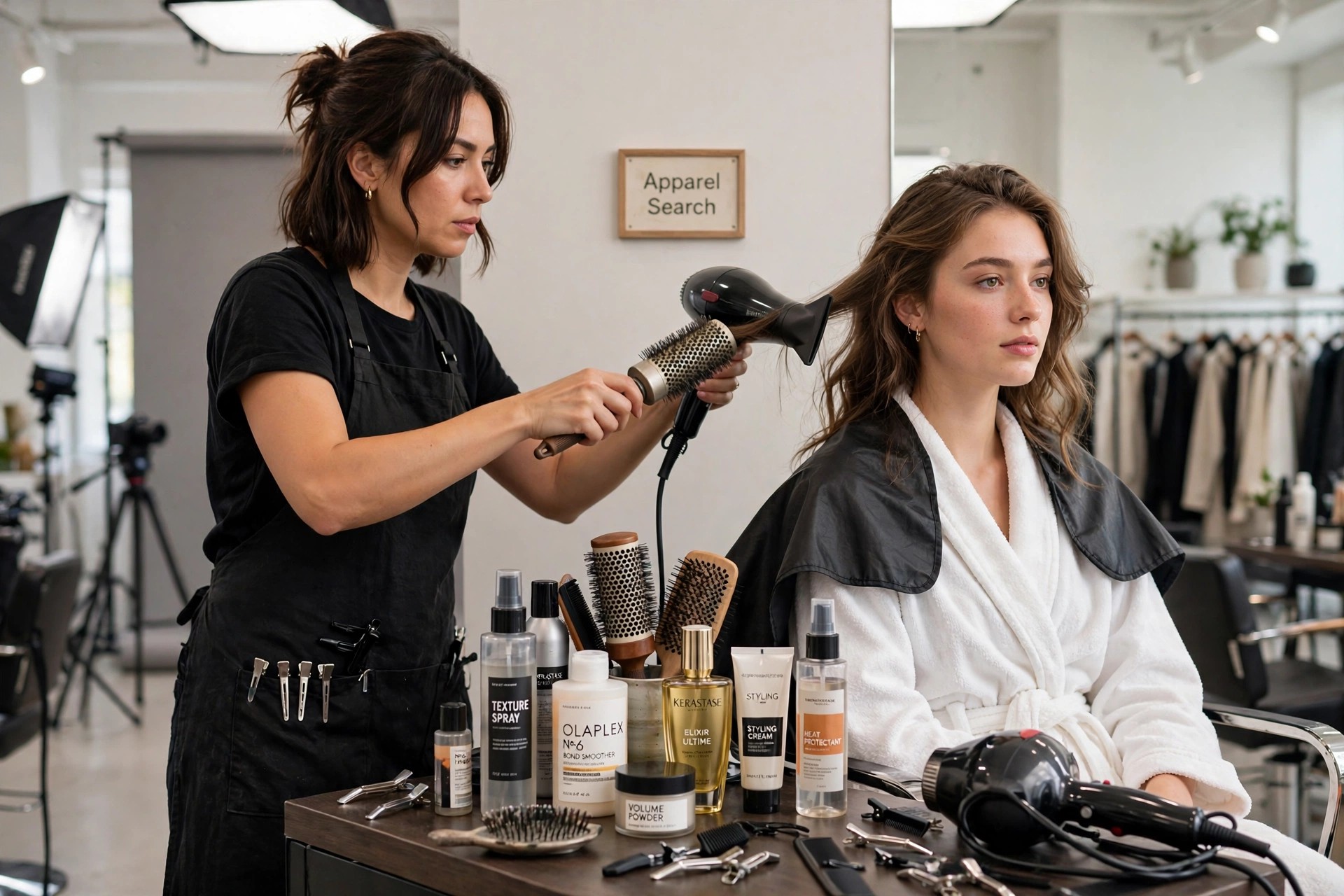
The core craft is hair itself: cutting, colouring, blow-drying, setting, braiding, extensions and up-styling, performed on every hair type and texture a casting or a clientele can present. Stylists consult first — reading the client's features, the model's casting, the garment's neckline and the creative brief — then choose techniques and products to match. Consultations also carry the honest professional work: judging what hair can safely achieve, patch-testing colour, and telling a client plainly when a pictured result would damage their hair or fail on their texture.
Around the chair sits the working apparatus of styling. Stylists prepare and maintain a professional kit — scissors, clippers, dryers, irons, brushes, pins and a tested range of styling products — sanitise tools and workstations between clients, manage appointment books and shoot call-times, and restock products before a busy day rather than during it. In salons they also sell the service forward: advising on home care, recommending retail products the salon stocks, and rebooking clients so a style is maintained rather than abandoned.
Shoots, Shows and Retail Services
Session work — shoots and shows — is the fashion heart of the role. A stylist on a photo shoot works to the art director's and photographer's brief: mood boards and references are translated into hair that reads correctly under studio light and on camera, then maintained take by take as models change garments, with continuity kept so matching shots match. Runway work is the same discipline at production speed: one look, reproduced identically on every model in the cast, changed in minutes backstage if the designer calls for a second look, with assistants prepping hair in a choreographed line.
Retail and salon services bring a different rhythm. Department-store beauty departments, salon concessions and brand boutiques employ stylists for booked appointments, walk-in styling for events, and product demonstrations that teach customers to recreate a look at home. The commercial measure is visible here — rebookings, retail product sales and repeat clients — where a shoot stylist is measured on images delivered. Many fashion stylists work across all three settings in a single week, assisting a senior stylist on a campaign, holding salon days, and styling a store event at the weekend.
Skills and Abilities the Role Requires
Technical range is the entry requirement: a stylist who can only reproduce one fashionable cut cannot serve a shoot casting or a full salon column. Speed under observation matters equally — styling is performed in public, on schedule, while a photographer waits or a client watches in the mirror — together with the hand skills of finishing: the difference between styled and merely done hair is in the last five minutes of detail work. Product knowledge underpins both, because choosing the right preparation and hold for a hair type, a humid show venue or a long shoot day is chemistry applied by experience.
People skills carry the profession's reputation. Stylists read briefs and clients quickly, take direction from creative leads without surrendering professional judgement about what hair will do, and keep a calm station when a look must be rebuilt minutes before a show. Reliability is a creative currency in itself: bookers, photographers and salon managers rehire the stylist who arrives early, kit complete, ready to work — session careers in particular are built almost entirely on repeat bookings earned this way.
Qualifications, Training and Career Path
Professional stylists train at cosmetology or hairdressing schools, completing a programme in cutting, colour, chemical services, sanitation and salon practice, and in most jurisdictions they must hold the state cosmetology or hairdressing licence their workplace requires before they may serve paying clients. Apprenticeship routes run alongside school: junior stylists sweep, shampoo, assist and observe in a working salon while training, which many employers consider the stronger preparation because the craft is learned on real heads under real time pressure.
Careers branch by setting. Salon stylists build a column and progress to senior stylist, colour specialist, salon manager or ownership. Session stylists assist established names, then sign with agencies, building portfolios toward editorial, campaign and runway-lead work, including directing hair teams for designers at fashion weeks. Retail stylists move into brand education and training roles, teaching other stylists a product line. Across all branches, a portfolio of photographed work and a book of returning clients or bookers are the credentials that advance the career.
Common Questions
What does a hair stylist do in the fashion industry?
They cut, colour and style hair to serve fashion work: salon clients, photo shoots, runway shows and retail beauty services — translating a brief or a client's wishes into hair that suits the person, the garment and the camera, using professional tools and products.
Do fashion hair stylists need a licence?
In most places, yes for paid salon and client work: stylists complete cosmetology or hairdressing training and hold the licence their state or country requires. Session assisting is often a route in, but licensed training remains the profession's foundation.
How do hair stylists get fashion shoot and runway work?
By assisting established session stylists, building a portfolio of photographed work, and earning agency representation and repeat bookings. Reliability, a complete kit and consistent finishing under time pressure are what bookers rehire.