Human Resources Job Description
The people function of a clothing company — hiring, training, policies and the workplace itself
Human resources is the function that manages a fashion company's relationship with its people. An apparel business may employ designers and buyers at head office, machinists and warehouse staff in production and distribution, and hundreds of sales associates across stores — and human resources recruits them, contracts them, trains them, pays them correctly, and handles the policies, problems and paperwork of working life for all of them. HR staff in this industry range from assistants and recruiters to HR managers and directors who sit with senior leadership on workforce planning.
More Miscellaneous Job Descriptions by Letter:
Hiring, Onboarding and the Employment Record
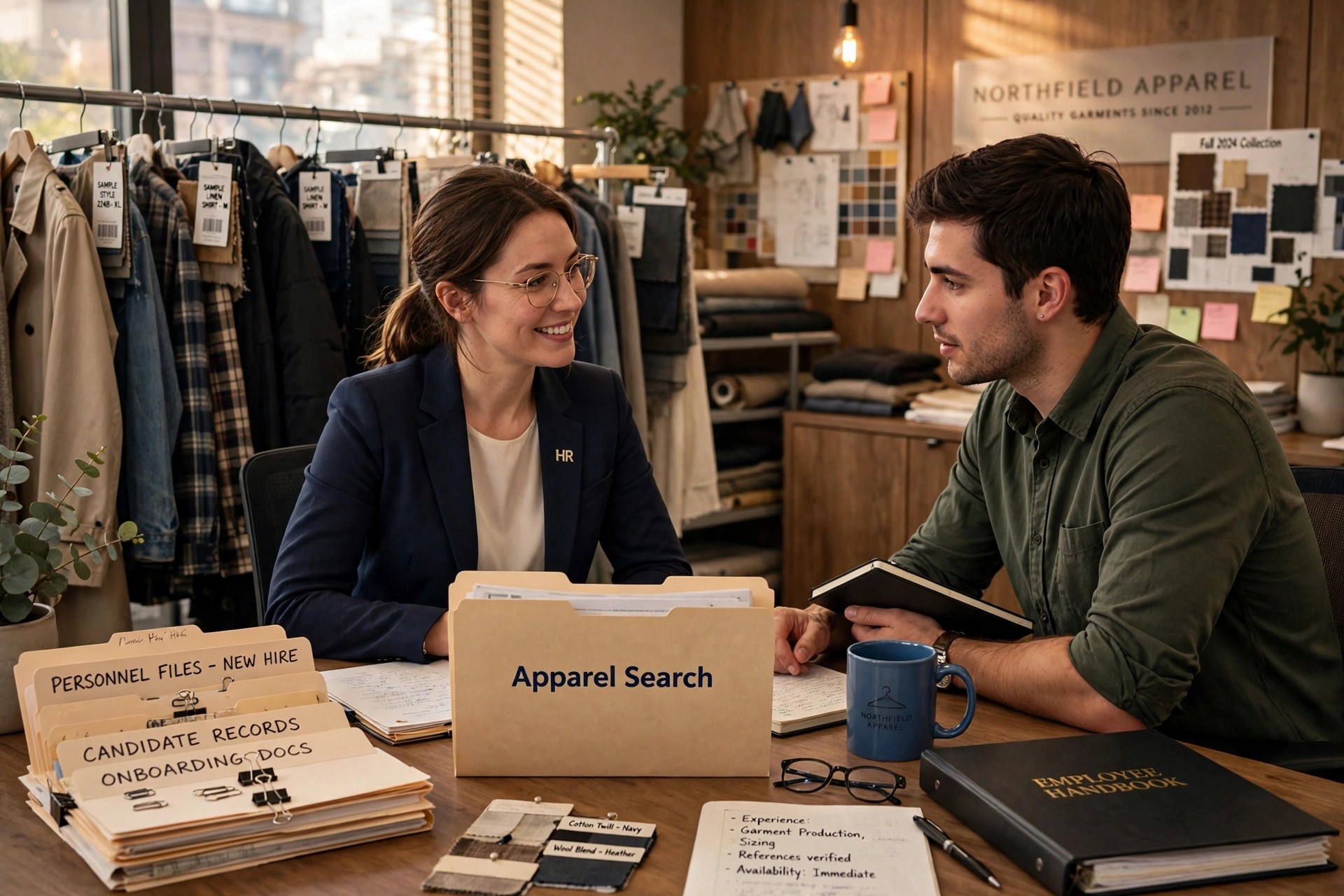
Recruitment is HR's most visible work. HR professionals write and post job descriptions, screen applications, coordinate interviews with hiring managers, check references and right-to-work documents, and issue contracts and offer letters. In fashion the demand is sharply seasonal — stores hire heavily before peak trading, warehouses before the holiday dispatch surge, and sample rooms before collection deadlines — so HR runs hiring cycles at volume without letting standards slip, often working with employment agencies for temporary and specialist staff.
Employment does not end at the offer. HR onboards each starter: induction into the company's policies and systems, introductions, training scheduling, probation reviews and the personnel record that follows the employee through promotions, transfers and pay changes until they leave. Accurate records are unglamorous and essential — contracts, hours, absence, training certificates and disciplinary notes must be complete and lawfully kept, because almost every later HR process, from a payroll query to a legal dispute, is settled by what the record shows.
Pay, Benefits, Training and Employee Relations
HR administers the machinery of reward. Working with payroll and finance, the department maintains pay structures, processes changes, enrols staff in benefit and pension schemes, tracks holiday and leave, and answers the individual questions — a wrong payslip, a parental-leave entitlement, a changed bank detail — that employees bring to the desk. In retail-heavy fashion businesses HR also manages the fairness questions: scheduling practices, overtime, commission and uniform policies that affect store staff daily.
Training and relations complete the remit. HR coordinates induction and compliance training, skills programmes from selling skills to management development, and the appraisals through which performance is reviewed and progression decided. When relationships break down — grievances, conduct issues, persistent absence, restructuring or redundancy — HR runs the process: advising managers, hearing cases fairly, documenting outcomes and keeping the company inside employment law and its own stated policies, consistently for a warehouse operative and a head-office director alike.
Skills and Abilities the Role Requires
Discretion and accuracy are the foundation pair: HR handles salaries, health information and personal difficulties, and a single careless disclosure destroys the trust the whole function depends on. Legal literacy follows closely — contracts, working-time rules, discrimination and dismissal law, health and safety duties — not at a lawyer's depth, but enough to know what a manager may not do and when specialist advice is required. Fashion HR adds operational range, because one policy set must honestly cover a design studio, a distribution centre and a shop floor.
The interpersonal skills are the job's daily texture. HR professionals interview and assess strangers, deliver unwelcome decisions humanely, mediate between employees and managers who both believe HR is theirs, and write policies and letters that will be read closely by people looking for loopholes or reassurance. Organisation carries the volume: hundreds of records, deadlines and cases moving at once, each of which is the most important matter in the building to the person it concerns.
Qualifications, Training and Career Path
Entry routes include human-resources, business or psychology degrees, professional HR qualifications earned by study and examination while working, and internal moves from administration, recruitment coordination or store management into HR assistant posts. Employers in larger fashion groups expect progressive professional certification as roles grow more senior, together with demonstrated casework experience; smaller companies often hire one versatile HR officer whose breadth substitutes for a department.
Progression runs from HR assistant and recruiter through HR advisor and business-partner roles — aligned to a division such as retail or supply chain — to HR manager and director of human resources, where the work becomes workforce strategy: organisational design, succession, pay philosophy and culture. Specialists branch into recruitment leadership, learning and development, compensation and benefits, or employee relations. Every step trades on the same capital: a reputation for fairness, confidentiality and judgement that the business has learned to trust.
Common Questions
What does human resources do in a clothing company?
HR manages the people side of the business: recruiting and onboarding staff, contracts and personnel records, pay and benefits administration, training and appraisals, employee relations and grievances, and keeping the company's employment practices lawful and consistent.
Is HR in fashion different from HR elsewhere?
The function is the same, but the workforce is unusually varied — design studios, factories, warehouses and store networks under one employer — and hiring is strongly seasonal, so fashion HR must run high-volume seasonal recruitment alongside head-office professional hiring.
How do you get into human resources?
Common routes are a relevant degree or professional HR qualification, or starting as an HR assistant or recruitment coordinator and earning qualifications while working. Accuracy, discretion and employment-law knowledge are developed and certified as the career progresses.