Operations Coordinator Job Description
Keeping a fashion company's daily operations on schedule — orders, deliveries, vendors and information, coordinated in one place
An operations coordinator is the person who keeps a fashion company's moving parts moving together. In an industry where a late fabric delivery can idle a factory, a missed ship date can empty a store rail, and a season lasts a matter of weeks, someone must watch every schedule at once — production, orders, deliveries, appointments and information — and intervene while a small slip is still small. The coordinator is that watch-keeper: not the executive who sets the strategy, and not the specialist who does each task, but the organiser who makes sure the specialists, suppliers and dates line up, every day.
More Miscellaneous Job Descriptions by Letter:
What an Operations Coordinator Does
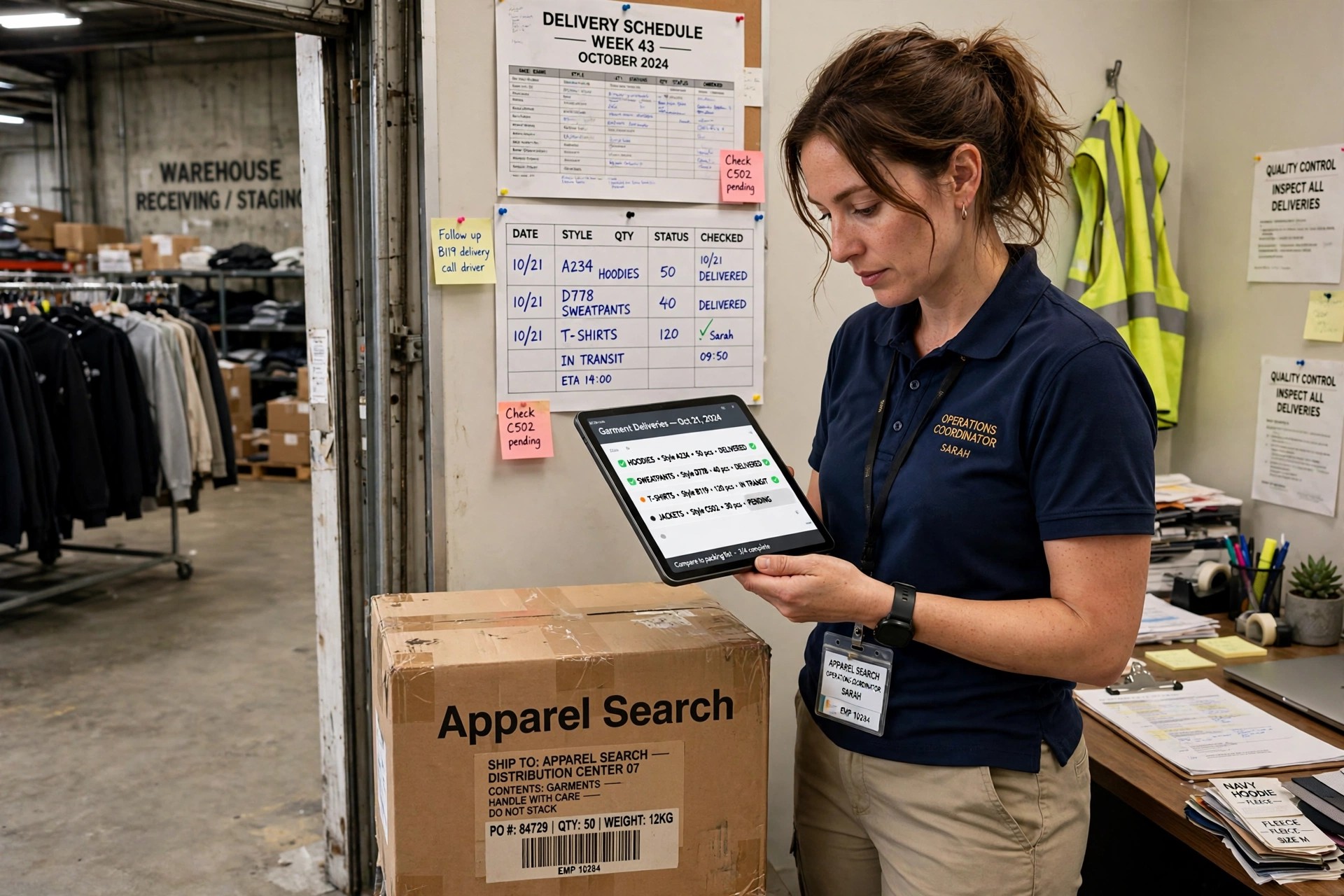
The core of the job is tracking and scheduling. The coordinator maintains the operational calendar — production milestones, order deadlines, delivery appointments, shipments between warehouse and stores — and checks each commitment against reality daily: confirming with factories and vendors what has actually been made, with carriers what has actually shipped, and with sales and store teams what is actually needed and when. Purchase orders, delivery notes and status reports are chased, filed and updated so that the information everyone else works from is current rather than hoped for.
Coordination also means communication. The coordinator is a first point of contact between departments that otherwise talk past each other: buying learns from the coordinator that a delivery will land a week late, the warehouse learns that a priority order must move first, and a vendor learns exactly which documents a shipment needs before it will be accepted. Meetings are scheduled and minuted, action lists are kept and followed up, and routine problems — a missing carton, a wrong appointment, a duplicated order — are solved directly at coordinator level before they become somebody else's crisis.
The Fashion Operations Calendar
Fashion operations run on a seasonal clock that gives this role its particular pressure. Samples, production runs, quality checks, freight and store launches are all dated backwards from selling seasons that cannot move: a coordinator's spring is spent expediting autumn production while winter goods are still shipping. Trade shows, photo shoots, warehouse sales and stock counts add fixed points of their own, and promotional calendars in retail operations add more. Knowing which dates are truly immovable, and protecting them by moving everything flexible around them, is the coordinator's central judgement.
Volume makes accuracy matter as much as speed. A clothing operation handles thousands of stock-keeping units distinguished only by style, colour and size, spread across suppliers in several countries and time zones. The coordinator's records — order trackers, delivery schedules, vendor contacts, cost and freight details — are the map the whole operation navigates by, and an error in that map repeats itself in every decision taken from it. Careful coordinators build checks into their own systems, because they know the business will trust whatever the tracker says.
Skills and Abilities the Role Requires
Organisation is the headline skill, but of a specific kind: holding many parallel timelines in view, prioritising by consequence rather than by whoever shouted last, and keeping records so clear that a colleague can pick up any thread cold. Communication follows closely — brief, exact, and in writing when a date or a number matters — because the coordinator's product is other people's certainty. Diplomacy matters too: expediting a supplier or a sister department works better with goodwill than with volume, and coordinators who keep goodwill get called back with early warnings.
Technical skills are the ordinary professional toolkit used well: spreadsheets and shared trackers, order and inventory systems, email and calendar discipline, and enough numeracy to spot a wrong quantity, price or date at a glance. Fashion knowledge grows on the job — garment terms, fabric and trim lead times, how production and freight actually behave — and it is what turns a general administrator into an operations coordinator whose warnings managers act on. Composure under deadline pressure completes the profile; the role exists precisely for the weeks when everything arrives at once.
Qualifications, Training and Career Path
Operations coordinators are usually educated to further-education or degree level, often in business, logistics, fashion management or a related field, but the role is also a proven entry point for experienced administrators, dispatchers, customer-service staff and retail supervisors moving head-office-ward. Employers weight demonstrated organisational reliability — clean records, met deadlines, systems learned quickly — at least as heavily as certificates, and train company-specific software and procedures on the job.
The career path leads naturally upward and outward. Coordinators progress to senior coordinator and operations manager roles as they take on budgets, staff and whole departments; sideways into logistics, supply-chain and production coordination, where the same tracking discipline runs factories and freight; or into project coordination as change programmes need organisers. Because the coordinator sees the whole operation rather than one corner of it, the role is one of the best educations in how a fashion business actually works — and employers know that when they promote from it.
Common Questions
What does an operations coordinator do?
An operations coordinator schedules and tracks a fashion company's daily operations — production milestones, orders, deliveries and appointments — coordinates vendors, warehouses and departments, and keeps the records and reports everyone else plans from.
What is the difference between an operations coordinator and an operations manager?
Scope and authority. A coordinator organises and tracks work within systems and schedules set by others; a manager owns those systems, holds budget and staff responsibility, and answers for the operation's results.
How do you become an operations coordinator?
Through strong administrative experience — order processing, dispatch, customer service or retail supervision — or a business, logistics or fashion-management qualification, plus proven organisation, communication and systems skills. Company procedures are trained on the job.