Inventory Coordinator Job Description
The day-to-day keeper of the stock record — counts, movements and discrepancies resolved while they are still small
Every plan in a fashion business quietly assumes the stock record is true — that the system count of a style in a store matches the garments actually on its shelves. The inventory coordinator is the person who makes that assumption hold. Coordinators maintain the day-to-day accuracy of inventory records across stores, warehouses and systems: scheduling and running counts, processing the transfers, receipts and adjustments that move stock on paper as it moves in fact, and chasing down the discrepancies that appear whenever thousands of garments are handled by hundreds of hands. It is unglamorous, exact work on which buying, planning and selling all silently depend.
More Planning Job Descriptions by Letter:
Maintaining the Stock Record Day to Day
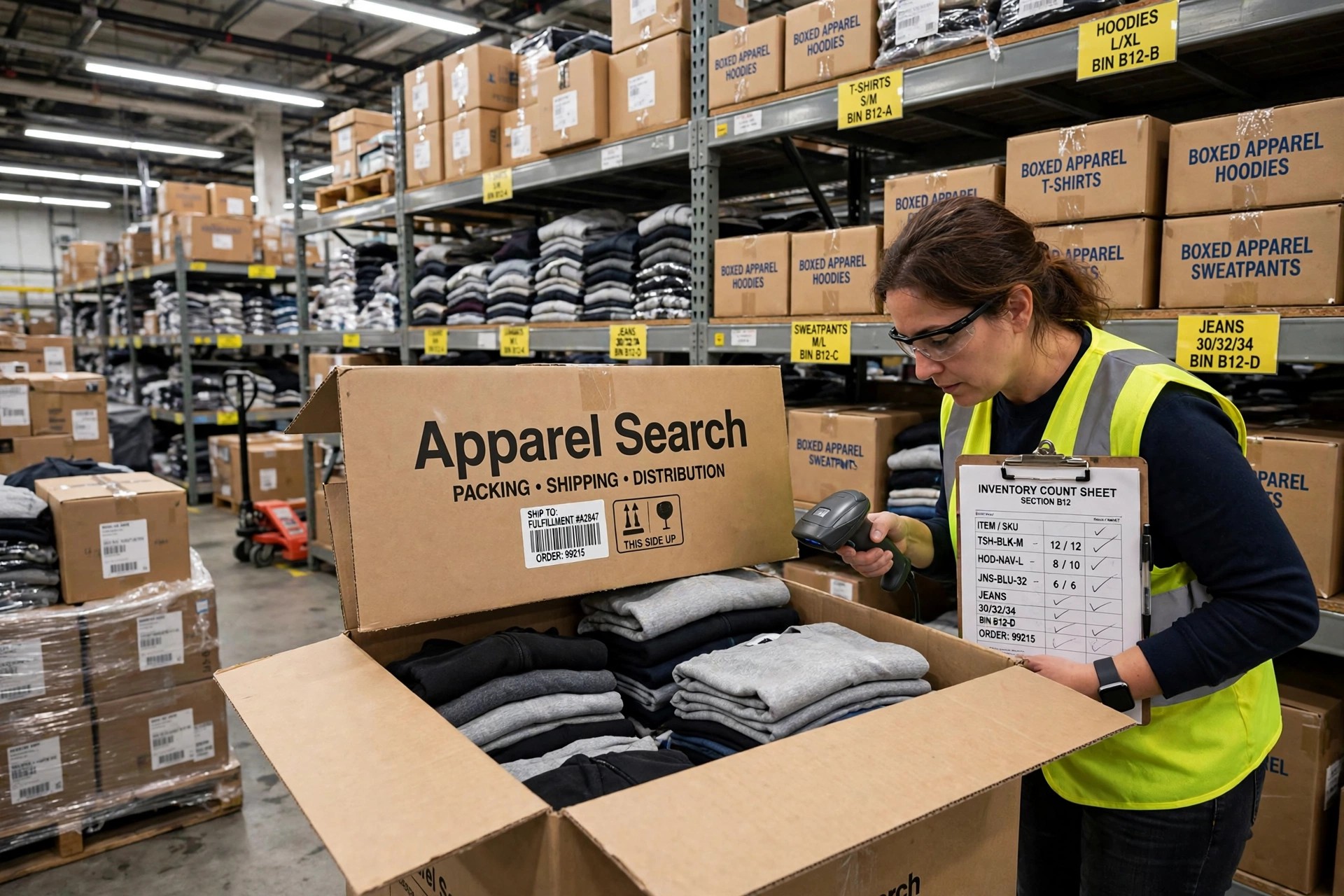
The coordinator's working day follows the movement of goods. Deliveries are checked against their paperwork and any count differences are corrected in the system the same day, not filed for later. Transfers between stores, returns to the distribution center, damaged-stock write-offs and price-change re-ticketing all pass through records the coordinator keeps complete and in sequence, because a movement that happened physically but not in the system creates a phantom — stock a planner believes exists in one place while it sells, or fails to sell, in another. In multi-store retailers this traffic is constant, and the coordinator is its traffic controller.
Counts are the record's audit trail. The coordinator organizes cycle counts — small, regular counts of selected departments or lines, scheduled so the whole range is verified across the year — and supports the full stocktakes that close a season or a financial year. Counting is organized work: areas frozen or clearly bounded while they are counted, counters briefed on sizes and similar styles that invite error, second counts on surprising results. The point is not the count itself but what it reveals, and a coordinator who treats counting as mere box-ticking misses the role's real value.
Investigating and Resolving Discrepancies
Where the record and the shelf disagree, the coordinator investigates before anyone adjusts. A shortage in one size of a dress might be a receiving error at the distribution center, a transfer keyed to the wrong store, a return scanned against the wrong style, a mis-pick that sent the units somewhere they will surface next week — or genuine loss, which the record should show honestly rather than hide. Each cause has a different fix and a different lesson, and the coordinator's craft is telling them apart from the paperwork trail: delivery notes, transfer logs, sales and return records, and the memories of the staff who handled the stock.
Recurring discrepancies are the real prize. When the same store, the same department or the same process produces variances week after week, the coordinator escalates the pattern with evidence — a receiving routine that needs retraining, a stockroom layout that invites mixing, a system step staff are skipping under pressure. Fixed at the source, accuracy improves everywhere at once; treated as isolated accidents, the same losses repeat all season. Coordinators also prepare the variance and shrinkage reporting that managers and loss-prevention teams review, and their credibility rests on reporting bad numbers as faithfully as good ones.
Skills and Abilities the Role Requires
Accuracy under routine is the defining skill: the tenth delivery checked with the same care as the first, data entered exactly, sequences kept complete when the day gets busy. It pairs with a detective's patience — discrepancies rarely announce their cause, and the coordinator follows a variance through four systems and three people's recollections without either forcing a conclusion or letting the trail go cold. Numeracy is constant but practical: counts, percentages, variance values and the judgment to know which differences are material and which are noise within a busy operation's tolerance.
The role is also a coordination job in the plain sense. Store teams, warehouse staff, planners and finance all touch inventory, and the coordinator chases their paperwork, schedules their counts and explains the procedures — often to colleagues who experience stock accuracy as somebody else's problem until their best size shows as available and is not. Tact, clarity and persistence do that persuading. Physical familiarity with stock handling helps as well: coordinators regularly work in stockrooms and warehouses, count on ladders and among rails, and understand the handling realities behind the records they keep.
Qualifications, Training and Career Path
Inventory coordinators commonly come from stockroom, warehouse, store operations or sales-floor roles, and employers typically look for a secondary-school education, proven accuracy with counts and systems, and experience with stock or inventory software rather than formal qualifications. Training covers the company's inventory system, its transfer and returns procedures, counting methods and adjustment controls — who may authorize a write-off, and to what value, is a control the coordinator both uses and guards. Forklift or equipment licenses matter only in warehouse-based posts.
From coordination, careers branch in several sound directions: into inventory control and stock management roles owning accuracy for a whole chain or channel, into allocation and replenishment support where the record feeds ordering decisions, into distribution-center supervision, or toward loss prevention and audit work for coordinators whose discrepancy investigations showed a talent for it. The role's graduates carry one habit every fashion operation values and few teach as well: respect for the difference between what the system says and what is actually there, and the discipline to close that gap daily.
Common Questions
What does an inventory coordinator do each day?
They keep stock records accurate: processing receipts, transfers, returns and adjustments in sequence, organizing cycle counts and stocktakes, and investigating discrepancies between system counts and physical stock until each one is explained.
How is an inventory coordinator different from a forecast analyst?
Time and task. Coordinators work on today's record — what the business holds now and whether the record is true. Forecast analysts project future demand or future stock levels. Coordinators' accurate records are the raw material every forecast depends on.
What experience leads into inventory coordination?
Usually stockroom, warehouse, store operations or sales-floor work, with proven counting accuracy and stock-system experience. Employers train their own inventory software and procedures; formal qualifications are rarely required.
More to Explore
References & Further Reading
More Job Description Categories
- Buying Job Descriptions
- Design Job Descriptions
- Marketing & PR Job Descriptions
- Miscellaneous Job Descriptions
- Planning & Allocation Job Descriptions (current)
- Production & Sourcing Job Descriptions
- Sales & Selling Job Descriptions
- Transportation & Warehouse Job Descriptions