Alterations Job Description
Fitting, pinning and sewing garments so they fit the person who bought them — the hands-on alteration trade
Almost no garment fits its buyer perfectly off the rail, and the alterations worker is the person who closes that gap. Alterations is the hands-on trade of adjusting finished clothing to the individual body: hems raised, waists taken in, sleeves shortened, seams let out, zips replaced and garments repaired or restyled so they can be worn well instead of returned or abandoned. The work is done in department stores, clothing retailers, bridal shops, dry cleaners, tailoring shops and theatre costume departments, and it combines sewing skill with the judgment of fit — seeing, on a standing customer, exactly where a garment pulls, sags or twists, and knowing which seam will fix it.
More Production Job Descriptions by Letter:
Fitting Customers and Marking the Work
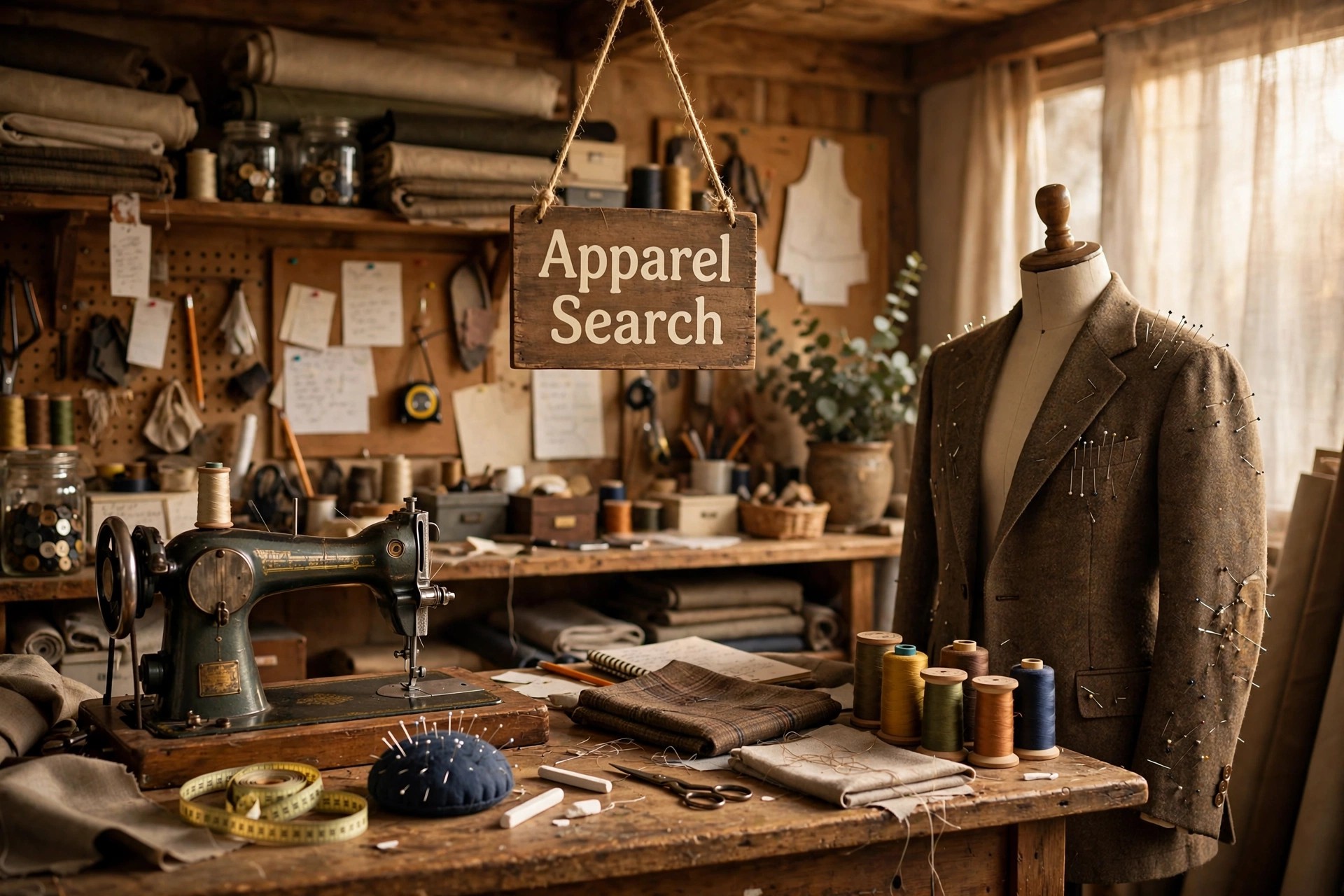
Most alteration jobs begin in the fitting room. The worker or fitter studies the garment on the customer, checks how it sits at the shoulder, waist, seat and hem, and pins or chalks the adjustments while the customer stands naturally, wears the right shoes and moves a little — a hem pinned while someone stands unnaturally straight will hang wrong in real life. Good fitting is a conversation as much as a measurement: how does the customer like a trouser break, how much ease do they want, is this suit for sitting at a desk all day? The answers change the pins, and an experienced fitter learns to ask before cutting rather than apologise after.
Each pinned garment then becomes a work ticket: what is to be done, by when, and for how much. Alterations departments run on promises — a suit needed for a wedding on Saturday, a uniform needed for a first shift on Monday — so marking must be unambiguous enough that another sewer can pick the garment up and do exactly what was pinned. The fitter also judges honestly what cannot be done: a jacket cannot gain two sizes, a patterned fabric cannot be let out where no seam allowance exists, and saying so at the fitting, kindly and clearly, is part of the trade's craft.
Sewing, Repairing and Finishing the Garment
At the machine and the iron, the alterations worker carries out the marked work. The staple jobs recur daily: hemming trousers, skirts and dresses; taking in or letting out waistbands and side seams; shortening or lengthening sleeves; tapering legs and bodies; replacing zips, buttons and linings; patching, darning and re-stitching failed seams. Each sounds simple and each has its depths — a blind hem that must not show, a checked fabric whose pattern must still match after the seam moves, a lined jacket whose inside must be opened and closed without trace. Hand sewing finishes what machines cannot: buttons, hems on delicate cloth, the final tacking and pressing that make an altered garment look bought that way, not adjusted.
The worker unpicks as carefully as they sew. Opening a finished garment without damaging it — seam rippers, patience, knowledge of how it was constructed — is a skill in itself, and pressing is treated as part of the sewing, not an afterthought: seams are pressed as they are made, and the finished garment is steamed or pressed into its final shape before it is checked against the ticket and returned to the rail. Rush work is prioritised by promised date, and the worker keeps several garments at different stages moving at once without ever mixing their tickets or their pins.
Skills and Abilities the Work Requires
Machine sewing fluency is the foundation: straight, even stitching at speed, control of different fabrics from denim to chiffon, and confident use of industrial or domestic machines, overlockers and pressing equipment. On top of it sits construction knowledge — how garments are made, where seam allowances hide, how a pattern piece behaves when a seam moves — because alteration is reverse engineering as much as sewing. Hand-sewing neatness, accurate measuring, and an eye for fit and proportion complete the technical set.
The people skills are half the job. Customers stand in fitting rooms feeling vulnerable about their bodies and their expensive purchases; the alterations worker who explains plainly, pins decisively and never comments beyond the garment earns the trust that brings repeat business. Patience with rush deadlines, honesty about what is possible, and the steadiness to redo a hem that is not right — rather than send it out nearly right — define the trade's professional standard.
Training, Qualifications and Career Path
Alterations is learned mainly by doing. Many workers start as sewing machinists, tailor's assistants or trainees in a shop, building speed and construction knowledge garment by garment; others arrive from fashion or textiles courses with machine skills already formed. Formal qualifications exist in tailoring and garment technology but employers in alterations shops typically test the sewing itself — a trial hem, a zip replacement — and value a portfolio of handled work over certificates. Knowledge grows by fabric and garment type: the worker who can be trusted with a lined suit or a beaded dress has usually served years on trousers and hems first.
The career path leads in three directions. Craft depth leads toward specialist work — bridal and formal wear, bespoke tailoring support, costume alteration — described on the Alterations Specialist page. Responsibility leads toward running the department, the subject of the Alterations Manager page. And independence is a well-worn route: experienced alterations workers open their own shops or in-store concessions, where the fitting-room reputation they built becomes the business. It remains one of fashion's most portable trades — every town with clothing shops needs someone who can make clothes fit.
Common Questions
What does an alterations worker actually do all day?
Fits and pins garments on customers, then carries out the marked work: hemming, taking in and letting out seams, shortening sleeves, replacing zips and buttons, repairs and restyling, finishing each garment with pressing and a check against its work ticket.
What is the difference between alterations and tailoring?
Tailoring usually means making or substantially constructing garments, often bespoke. Alterations adjusts finished garments to fit their wearer. The crafts overlap heavily — alterations workers use tailoring skills daily — but the starting point is an existing garment.
How do you get into alterations work?
Usually by starting in a shop as a trainee, machinist or tailor's assistant and building skill garment by garment. Employers typically test practical sewing — hems, zips, seams — rather than requiring formal qualifications.
More to Explore
References & Further Reading
More Job Description Categories
- Buying Job Descriptions
- Design Job Descriptions
- Marketing & PR Job Descriptions
- Miscellaneous Job Descriptions
- Planning & Allocation Job Descriptions
- Production & Sourcing Job Descriptions (current)
- Sales & Selling Job Descriptions
- Transportation & Warehouse Job Descriptions