Alterations Manager Job Description
Running the alterations department — workflow, quality, staff and the promises made in the fitting room
An alterations department makes dozens of small promises a day — this dress by Thursday, that suit by Saturday morning — and the alterations manager is the person who keeps them all. The manager runs the department or shop as an operation: work is booked in, assigned to fitters and sewers, priced, quality-checked and returned on time, while staff are hired, trained and scheduled and difficult customers are handled with good grace. Most alterations managers come up from the sewing table themselves, and the role keeps one foot there — the manager who can still judge a fitting, cover a rush job or unpick a mistake leads a team that respects the judgment behind the schedule.
More Production Job Descriptions by Letter:
Scheduling Work and Keeping Promises
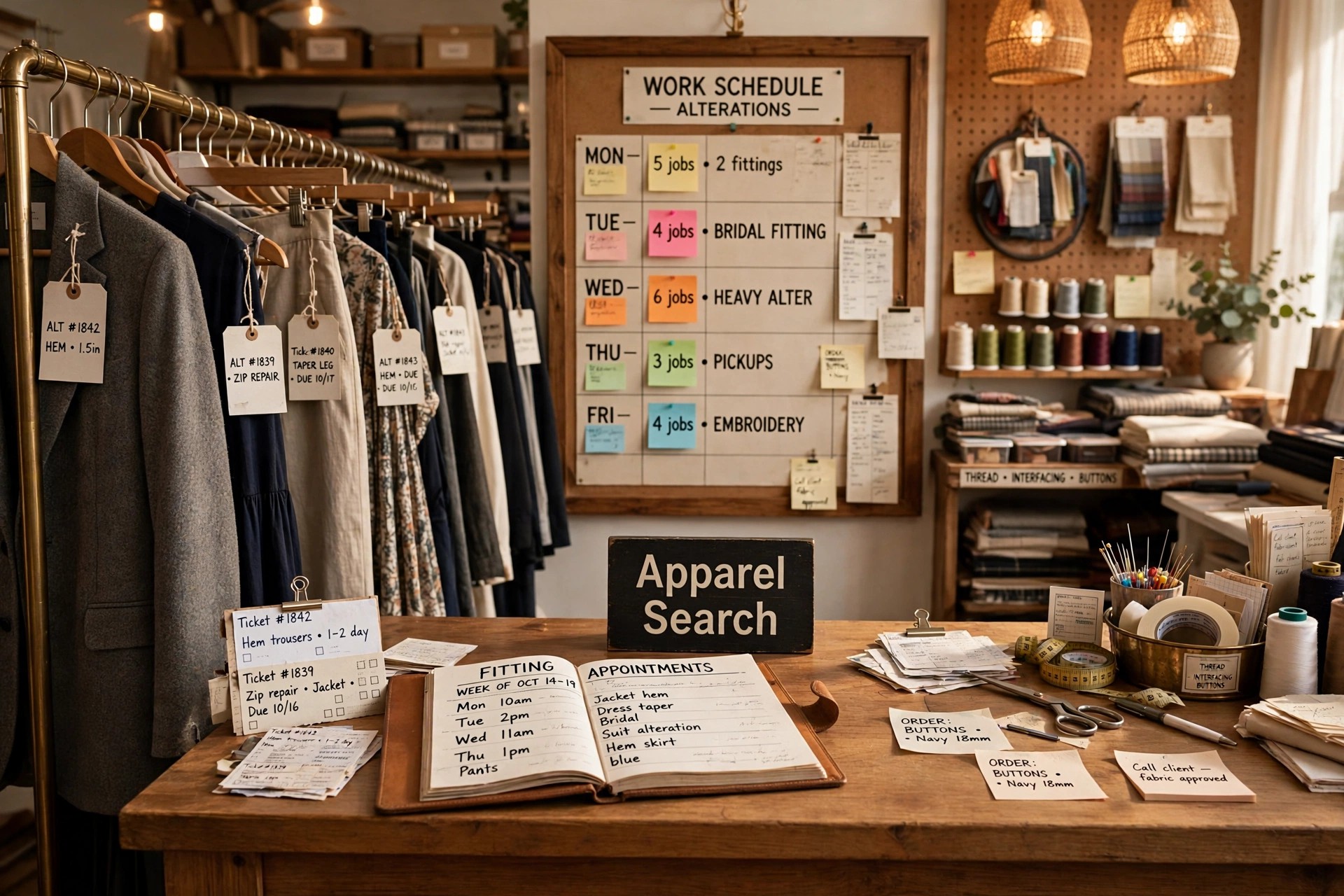
The manager's central tool is the work schedule, and its currency is the promised date. Every garment entering the department carries a ticket and a deadline agreed with the customer, and the manager sequences the whole rail against those deadlines: ordinary work in its turn, rush work priced and slotted honestly, wedding parties and uniform contracts planned as blocks rather than surprises. Capacity is finite — a department has so many skilled hands and machine hours — so the manager controls the intake, telling the sales floor or the customer plainly when a date cannot be met rather than letting the rail silently overfill. The fitting diary is managed alongside, so customers are pinned at times the department can actually serve.
When the plan breaks — a sewer off sick, a machine down, a garment that turns out to need twice the work estimated — the manager re-plans in the open: work reassigned, customers called before their date rather than after it, overtime or help from another location arranged where the business allows. Stores and bridal salons judge their alterations department less on never having problems than on never letting a problem reach the customer unannounced, and that communication discipline is set by the manager.
Quality, Pricing and the Customer
Nothing leaves the department unjudged. The manager sets the quality standard — seams finished, hems even, pressing crisp, the garment checked against its ticket — and inspects finished work, sending back what falls short while there is still time to redo it. Recurring faults are traced to their cause: a machine setting, a misunderstanding at the fitting, a ticket written too vaguely. Pricing sits with the manager too: standard price lists applied consistently, unusual work quoted individually and agreed before it starts, and remake or refund decisions made when the department gets something wrong. How those decisions are handled decides whether an unhappy customer becomes a story told against the shop or for it.
The manager is also the department's face for its hardest conversations: the garment that cannot be altered as hoped, the vintage dress too fragile to restyle, the expectation set wrongly at the first fitting. Handled early and honestly, most customers accept reality from someone who clearly knows the craft; handled late or evasively, the same facts become complaints. In larger stores the manager also reports the department's numbers — volume, turnaround, rework, revenue against staffing cost — and argues the case for equipment, space or another pair of hands with evidence rather than complaint.
Leading and Training the Team
Alterations teams mix generations and skill levels: master tailors, fast machinists, trainees who can hem but not yet fit. The manager assigns work to stretch people safely — the trainee gets the supervised version of the next skill up — and builds the training that turns sewers into fitters and fitters into all-rounders. Hiring is craft hiring: the manager sets and judges the sewing tests, checks how a candidate fits a garment on a person rather than only at the table, and weighs attitude toward customers as heavily as stitch quality, because the department's reputation is made in the fitting room.
Day to day, leadership is mostly atmosphere. Alterations rooms run on goodwill under deadline pressure, and the manager sets the tone: calm when the rail is full, fair with the unpleasant jobs, quick to credit good work, and protective of the standard when speed tempts shortcuts. Materials and equipment fall under the same care — thread, zips, interfacing and machine maintenance stocked and serviced before their absence stops the room.
Qualifications and Career Path
Alterations managers are almost always experienced alterations workers first: employers expect years at the machine and in the fitting room, broad garment knowledge across menswear, womenswear and ideally formal wear, and a record of reliability under deadline. Formal qualifications in tailoring, garment technology or retail management can support an application, but the decisive evidence is craft credibility plus the organisational record — running a rail, training others, handling customers — built in senior or supervisory posts. Larger retailers may also look for experience with departmental budgets and reporting.
From department management, careers lead toward multi-site or regional alterations management in retail groups, toward managing flagship or bridal operations where alterations is a major revenue line, or toward ownership: the manager who knows the workflow, the pricing and the customers is well placed to open an independent shop or take an in-store concession. Some move into store management itself, carrying the operational discipline with them. It is the natural summit of the alterations trade for those whose talent is organising the craft as much as practising it.
Common Questions
What does an alterations manager do?
Runs the alterations department as an operation: scheduling work against promised dates, assigning jobs to fitters and sewers, controlling quality and pricing, handling difficult customer issues, and hiring and training the team.
Does an alterations manager still sew?
Usually yes, when needed — covering rush work or demonstrating a technique — but the main job is organising other people's sewing. Craft credibility matters: teams are led by managers whose own fitting and sewing judgment they trust.
How do you become an alterations manager?
By working up through alterations itself: years of machine and fitting-room experience, then senior or supervisory responsibility for workflow, quality and training. Employers test craft knowledge and organisational reliability rather than formal qualifications.
More to Explore
References & Further Reading
More Job Description Categories
- Buying Job Descriptions
- Design Job Descriptions
- Marketing & PR Job Descriptions
- Miscellaneous Job Descriptions
- Planning & Allocation Job Descriptions
- Production & Sourcing Job Descriptions (current)
- Sales & Selling Job Descriptions
- Transportation & Warehouse Job Descriptions