Alterations Specialist Job Description
The expert end of the alterations trade — complex, delicate and high-stakes garments altered by hand and eye
Some garments cannot be handed to a general alterations bench. A bridal gown with a boned bodice, hand-appliquéd lace and a beaded hem; a structured evening dress that must come down two sizes without losing its line; a vintage suit to be restyled for a new wearer — these go to the alterations specialist. The specialist is defined by craft depth, not by rank: this is the expert practitioner whose work is the difficult, delicate and high-value end of the trade, where the garment is often irreplaceable, the occasion immovable, and the margin for error effectively zero. Specialists work in bridal salons, formal-wear departments, high-end tailoring shops and costume workrooms, and their reputation travels by word of mouth.
More Production Job Descriptions by Letter:
Complex Garments: Bridal, Formal and Structured Work
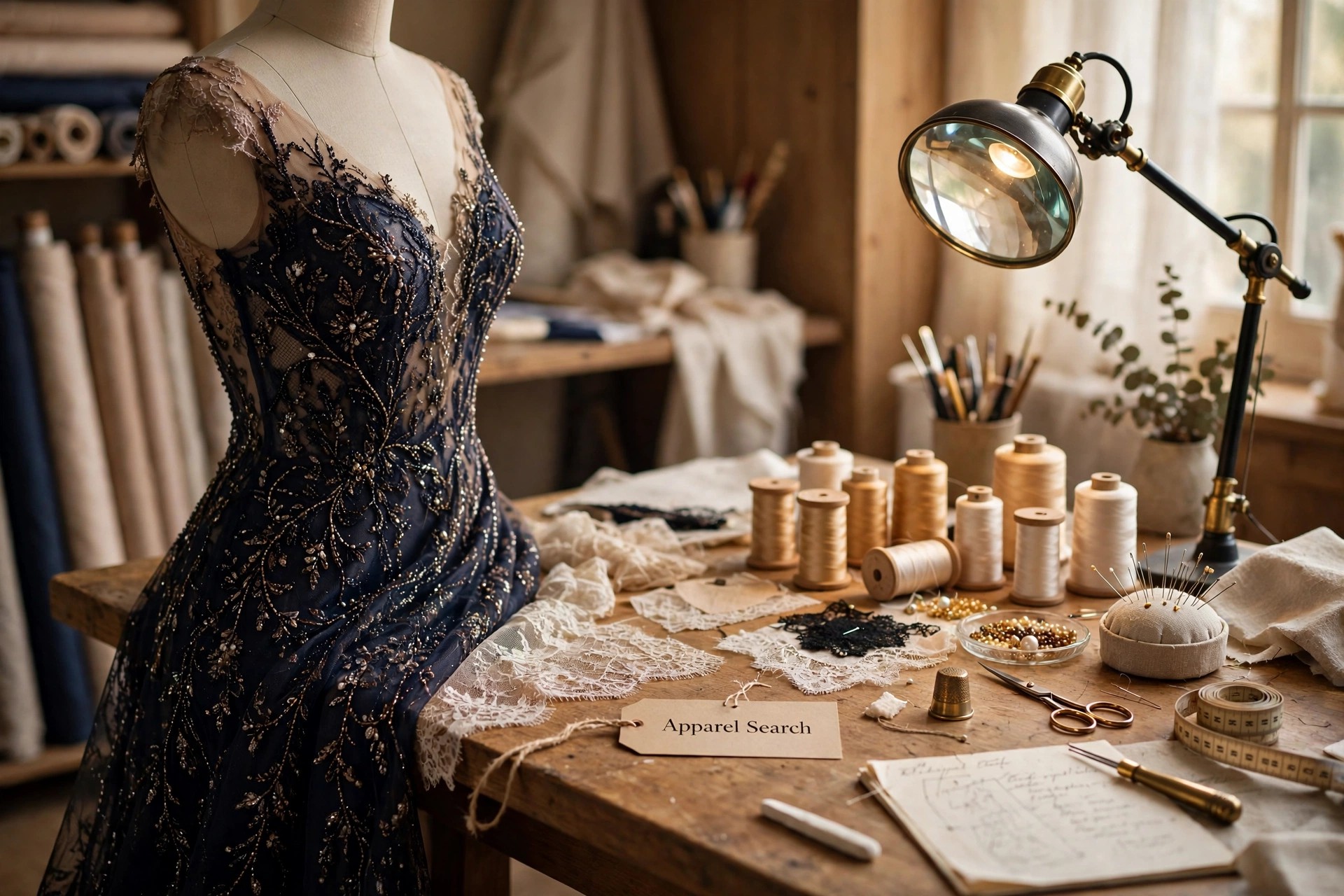
Bridal alteration is the specialist's signature work, and it shows why specialism exists. A wedding gown is not one garment but a structure: layers of skirt, net and lining, a bodice stiffened with boning, closures engineered to hold through a day of movement, and decoration — lace motifs, beading, sequins — that must be unpicked, moved and re-applied by hand when a seam changes. Taking in such a gown means re-engineering its support, not just removing width; shortening it may mean removing and reattaching an entire lace edge. The specialist reads that construction the way an engineer reads a bridge, and plans the alteration in stages across several fittings as the gown approaches its final shape.
The same depth applies across formal and structured work: evening dresses in silk that shows every needle mark, tailored jackets whose fronts are built with canvas and pad stitching, garments to be resized by more than a size, restyled from an older cut, or restored from vintage condition. Each begins with an honest assessment — what the garment's construction allows, what it forbids, what the result will cost in time — and the specialist's authority to say a thing can be done is trusted precisely because they also say, early, when it cannot.
Delicate Fabrics and Hand Techniques
Specialist work is distinguished by its materials. Chiffon that snags on a rough fingertip, lace that must be cut motif by motif rather than through a seam, beaded fabric that cannot go under a standard presser foot, silk velvet, satin that bruises, heirloom cloth weakened by age — these demand hand techniques that general production sewing rarely teaches: hand-rolled hems, appliqué re-application, invisible mending, hand padding and easing, and the patient use of fine needles, silk thread and tissue supports. Much specialist alteration is done slowly, by hand, under good light, sometimes with magnification, and the rate of work is set by the garment rather than the clock.
Fittings for specialist work are correspondingly exact. A bridal customer is fitted in stages — structure first, then length with the actual shoes, then final details — and the specialist reads posture, movement and the customer's own anxieties into the pins. Between fittings the work is documented: measurements, decisions and promises recorded so precisely that the gown's final fitting is a confirmation, not a negotiation. When the garment is collected, the specialist's last task is instruction — how to fasten, bustle, carry and store a garment whose construction they now know better than anyone.
How the Specialist Differs from the Wider Trade
Against the general alterations page in this category, the difference is the work's complexity ceiling. A general alterations worker handles the full everyday range — hems, seams, zips, repairs — quickly and well. The specialist is called when the garment's value, construction or delicacy puts the job beyond that range, and charges accordingly. Against the Alterations Manager, the difference is direction of seniority: the manager's expertise is organising a department and its people, while the specialist's is practised at the bench and the fitting room. A specialist may work entirely alone, supervise nobody, and still be the most senior craftsperson in the building.
Employers and salons use specialists where failure is most expensive: flagship bridal, couture and formal departments, sample and showroom alterations for important clients, and costume work for productions whose garments must survive both the stage and the camera. The specialist's judgment is also a sales asset — customers booking a four-figure gown alteration are buying confidence, and the calm, precise explanation of what will happen to their garment is part of the service being sold.
Training, Qualifications and Career Path
Nobody starts as a specialist. The route runs through years of general alterations and tailoring work, accumulating exactly the experience the specialism draws on: garment construction in depth, formal-wear and bridal work taken on progressively under a senior specialist's eye, and a personal record of difficult garments completed well. Training is typically apprenticeship-style within a salon or workroom, sometimes supported by courses in tailoring, couture sewing or costume. Employers and salons judge specialists by trial work and reputation — photographs of completed gowns, references from bridal houses, the ability to assess an unseen garment accurately in a first fitting.
The career path rewards depth over breadth. Specialists become the named expert of a bridal group or department store, build an independent practice serving several salons, or take their skills into theatre, film and television costume departments where complex alteration and restoration are constant. Some teach — masterclasses and apprenticeships in bridal alteration are a recognised later-career line — and some combine specialist bench work with managing the formal-wear side of a business. What does not change is the basis of the career: a reputation, earned garment by garment, for being the person trusted with the dress that cannot be replaced.
Common Questions
What makes an alterations specialist different from a general alterations worker?
The complexity of the garments. Specialists take the work beyond the everyday range: bridal gowns with boned bodices and lace, structured formal wear, delicate fabrics, multi-size resizing and restyling — work where hand technique and construction knowledge decide what is possible.
Is an alterations specialist senior to an alterations manager?
They are different kinds of seniority. The manager runs a department — workflow, staff, quality and customers. The specialist's seniority is craft depth at the bench. A specialist may supervise nobody and still be the most expert person in the building.
How long does it take to become an alterations specialist?
Years of general alterations and tailoring work first, then progressive bridal and formal-wear experience under senior specialists. Employers judge by trial work and reputation rather than certificates; there is no shortcut around the accumulated garment experience.
More to Explore
References & Further Reading
More Job Description Categories
- Buying Job Descriptions
- Design Job Descriptions
- Marketing & PR Job Descriptions
- Miscellaneous Job Descriptions
- Planning & Allocation Job Descriptions
- Production & Sourcing Job Descriptions (current)
- Sales & Selling Job Descriptions
- Transportation & Warehouse Job Descriptions