Apparel Contract Manager Job Description
Managing the agreements behind garment production — contractors, terms, delivery and compliance
Most clothing brands do not sew their own garments. Production is placed with factories and contractors — cut-make-trim shops, full-package manufacturers, specialist makers — and every one of those relationships runs on an agreement: what will be made, to what standard, at what price, by what date, and what happens when something slips. The apparel contract manager owns those agreements. Sitting between the brand's production and sourcing teams and its manufacturing partners, the contract manager negotiates terms, administers contracts through the production season, monitors performance against them, and handles the documentation and disputes that arise when commercial reality tests the paper. It is a commercial, legal-literate role at the heart of how clothing actually gets made.
More Production Job Descriptions by Letter:
Negotiating and Setting Up Production Agreements
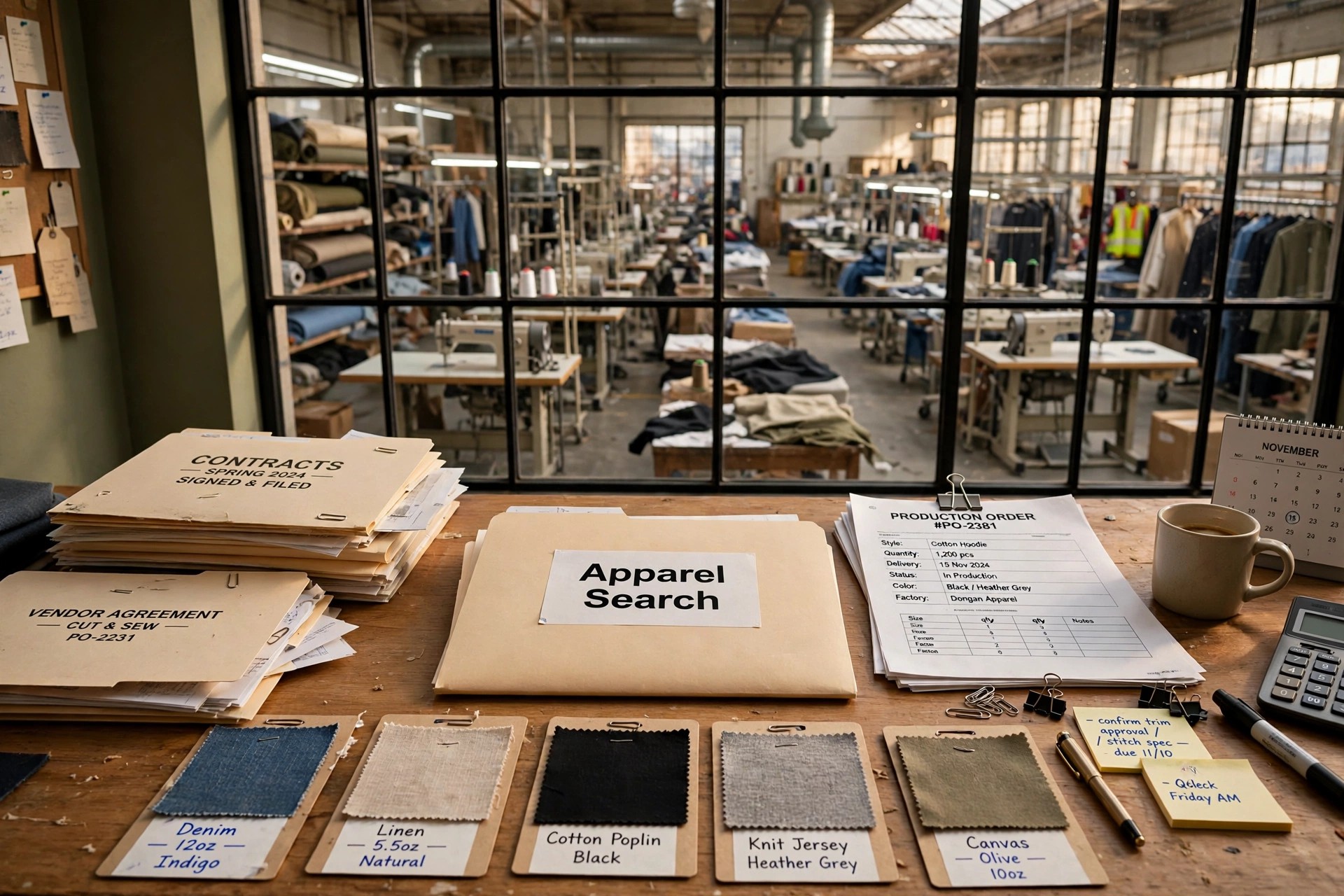
The contract manager's work begins before a single garment is cut. Working with production, sourcing and technical teams, the manager turns a production decision into a workable agreement with a factory or contractor: quantities and styles covered, the price basis — cut-make-trim or full package, what materials each side supplies — delivery schedule and shipment terms, quality standards and inspection rights, payment terms, and the provisions for delay, defect and cancellation. Each clause is a future argument settled in advance, and the experienced manager negotiates hardest on the points experience says will be tested: late delivery in peak season, quality failures found at final inspection, and liability for materials the brand supplied.
Negotiation in apparel is relationship work as much as paper work. Factories run on thin margins and seasonal peaks, and a contract a factory cannot profit from will fail in production however it is written. The manager therefore prices and structures agreements the business can actually perform — realistic lead times, volumes matched to the factory's real capacity, terms the contractor's own cash flow can carry — while protecting the brand's position on the points that matter. Approved contracts are then documented, signed and filed in a form production teams can work from, not buried in legal language they will never read.
Administering Contracts Through the Season
Once production starts, the contract manager administers what was agreed. Orders are issued against contracts, changes are documented as amendments rather than corridor promises — a style dropped, a quantity increased, a delivery split — and the paper trail is kept current, because in a dispute the side with the documents usually wins. The manager tracks the commercial position continuously: committed spend against budget, payments due and made, claims and chargebacks recorded, and the contract's own milestones — sample approvals, material deliveries, inspection bookings — watched alongside the production team's operational tracking.
Performance monitoring gives the role its forward value. The manager reviews how each contractor actually performed against the agreement: on-time delivery, inspection pass rates, responsiveness on problems, accuracy of documentation and packing. That record feeds contractor evaluation and the next season's placement decisions — which factories earn more volume, which are put on notice, which relationships should end. Handled well, contract administration quietly raises the standard of the whole supply base, because factories learn the agreements are real and the scorekeeping is fair.
Compliance, Risk and Disputes
Modern apparel contracts carry obligations beyond price and dates, and the contract manager polices them. Social and labour compliance, factory audit requirements, product safety and labelling law, restricted substances, intellectual property protection for designs and logos, and subcontracting prohibitions — the brand must be able to show its garments were made where and how the contract says. The manager coordinates with compliance and quality teams so audit results, corrective actions and documentation join up with the commercial record, and so a factory failing its obligations meets consequences the contract actually provides for.
Disputes are the role's examination. A late shipment threatens a retailer's delivery window; a quality failure surfaces after goods are in store; a contractor claims extra cost the brand never authorised. The contract manager establishes the facts from the documents, applies the agreement's terms, and negotiates the commercial settlement — expedited freight at the responsible party's cost, a price reduction, a remake, a terminated relationship — aiming for the outcome that protects the brand without destroying a supply partner over a first failure. Judgment about when to enforce and when to absorb is the difference between contract management and mere contract filing.
Skills, Qualifications and Career Path
The role needs commercial literacy first: costing structures, Incoterms and shipping basics, payment instruments, and enough contract law to draft, read and negotiate agreements confidently with legal support. Industry knowledge is equally essential — garment production processes, lead times, factory economics — because terms that ignore how clothing is made cannot be administered. Employers typically look for a degree in business, supply chain, law or fashion management, or equivalent experience from production coordination, sourcing or buying operations, plus a record of negotiation. Detail discipline is non-negotiable: the role's value lives in documents that are complete, current and findable.
Contract managers progress to senior contract and commercial management, head of sourcing or production roles where contractor strategy itself is set, or sideways into vendor management and supply chain leadership. The experience also transfers toward procurement in other industries, though apparel's seasonal, offshore, relationship-driven contracting is a specialism of its own. For people who like the garment business's commercial engine room — money, paper and factories rather than design or retail — it is one of the most influential seats in production.
Common Questions
What does an apparel contract manager do?
Negotiates and administers the production agreements between a clothing brand and its factories and contractors: prices, quantities, delivery schedules, quality standards, payment terms and compliance obligations, then monitors performance and handles claims and disputes.
Is this a legal job?
It is a commercial role with a legal edge. Contract managers draft and negotiate agreements and apply their terms daily, usually with legal department support on major issues. The core skills are commercial judgment, documentation discipline and knowledge of garment production.
What background leads into apparel contract management?
Typically production coordination, sourcing, buying operations or supply chain roles, often with a business, supply chain, law or fashion management degree. Employers want proven negotiation experience and exact document habits.
More to Explore
References & Further Reading
More Job Description Categories
- Buying Job Descriptions
- Design Job Descriptions
- Marketing & PR Job Descriptions
- Miscellaneous Job Descriptions
- Planning & Allocation Job Descriptions
- Production & Sourcing Job Descriptions (current)
- Sales & Selling Job Descriptions
- Transportation & Warehouse Job Descriptions