Apparel Pattern Maker Job Description
Turning a design sketch into the flat pattern pieces every garment is cut from
Every garment begins as a shape on paper before it exists as cloth, and the apparel pattern maker is the craftsperson who creates that shape. Working from a designer's sketch, a photograph or a specification sheet, the pattern maker drafts or drapes the flat pieces — bodice, sleeve, collar, pocket, lining — that, sewn together, become a three-dimensional garment on a body. It is one of the most skilled bench trades in production: a few millimetres gained or lost at a seam decides whether a jacket hangs cleanly or pulls, whether trousers sit at the waist or slide, and whether a style can be manufactured consistently in thousands.
More Production Job Descriptions by Letter:
Drafting, Draping and Building the First Pattern
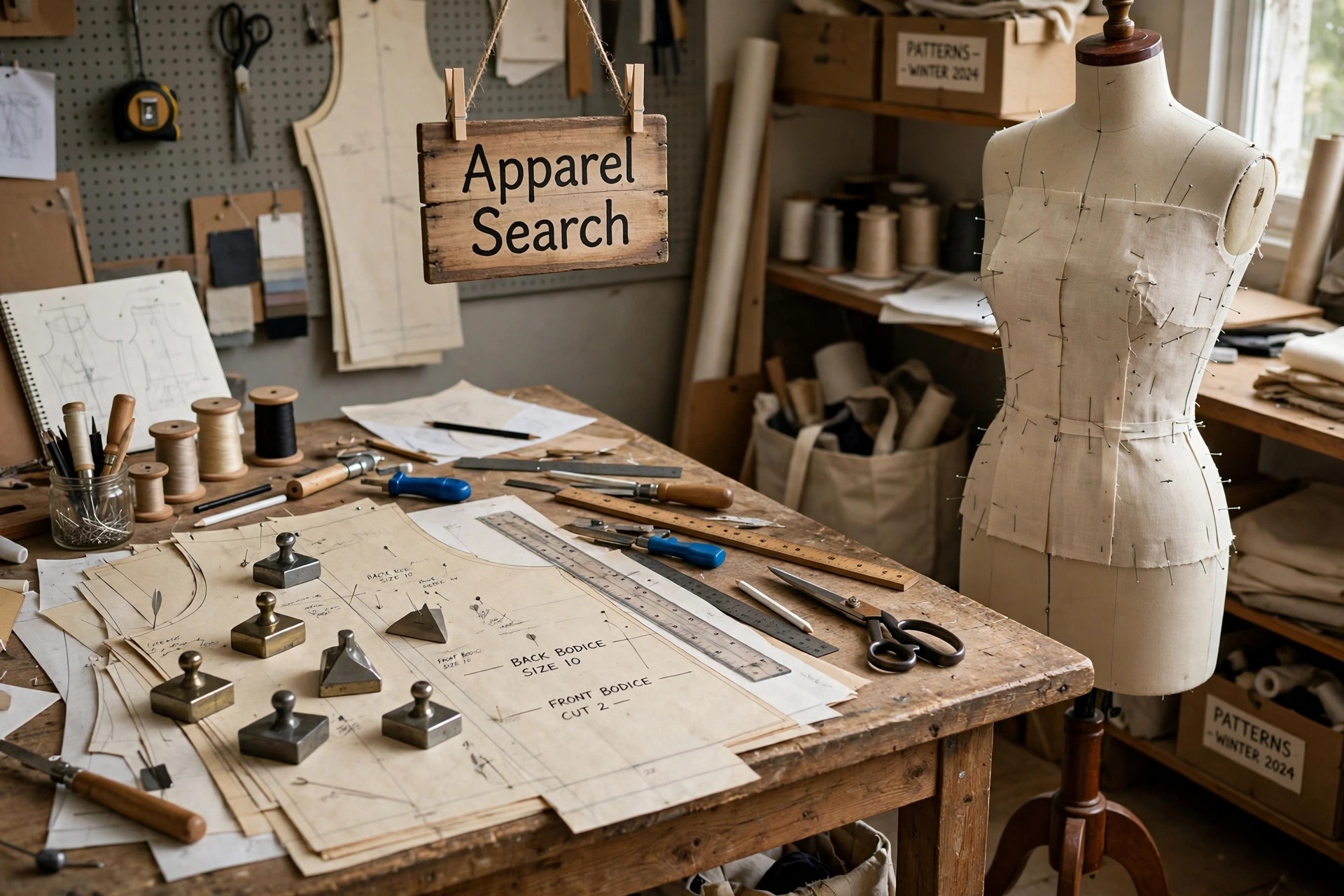
The pattern maker's core work is translating an idea into geometry. Some begin by drafting: plotting measurements, style lines and seam allowances onto pattern paper or card with rulers, curves and a sharp eye for proportion. Others drape, pinning muslin directly on a dress form so the garment's shape is sculpted on the body before it is flattened back into pieces. Most experienced makers move between the two methods, drafting a reliable block first and then draping or adjusting where a style's drape, volume or detail cannot be solved on paper alone.
A finished first pattern is far more than outlines. Each piece carries notches that tell the machinist where parts join, drill holes marking pocket and dart positions, grain lines that control how fabric hangs, and written information — style number, size, cut count, fabric — that follows the pattern through the factory. The maker also plans how pieces will nest for cutting and how seams will be constructed, because a pattern that sews beautifully once in the sample room must still sew efficiently hundreds of times on a production line.
Fittings, Corrections and the Sample Cycle
Patterns are proved on bodies, not on paper. The pattern maker attends fittings of the first sample, watching where the garment strains, twists, gapes or collapses, listening to the designer and fit model, and deciding which piece must change and by how much. Correcting a pattern is diagnostic work: a sleeve that pulls forward may need its pitch rotated, a bodice that rides up may need length redistributed rather than simply added, and every alteration must keep the style's intended look while making it wearable.
That cycle — sample, fitting, correction, new sample — repeats until the style is approved for production. The maker then prepares the pattern for grading, the process of scaling it into the full size range while preserving fit and proportion in every size, and checks graded nests before cutting begins. Makers who work closely with sample machinists and cutters catch construction problems early, saving the far greater cost of discovering them after bulk fabric has been cut.
Skills, Tools and Judgment the Trade Demands
Hand drafting skill remains the foundation: accurate measurement, fluent use of pattern rulers, French curves and notchers, and a deep practical knowledge of garment construction — how seams behave, where ease belongs, and how different fabrics, from crisp poplin to fluid jersey, change the fit of the same pattern. Increasingly the bench sits beside a screen, so many pattern makers also work in pattern CAD software, digitising paper patterns, plotting and amending pieces digitally while keeping the judgment that only handling cloth teaches.
The less visible skills matter as much. A pattern maker needs three-dimensional imagination, patience with iteration, and the diplomacy to explain, in a fitting, why a designer's line cannot sit exactly where it was drawn without a seam or dart to support it. Precision is non-negotiable: errors multiply across every size and every unit produced, so the maker checks, measures and re-checks as a matter of professional habit.
Training, Work Settings and Career Path
Pattern making is usually learned through fashion, garment technology or pattern cutting courses combined with long bench practice, or through apprenticeship-style routes starting as a pattern room assistant, sample cutter or machinist and graduating to drafting under a senior maker. Employers test the craft directly — drafting a block, correcting a faulty pattern, talking through a fitting problem — and a portfolio of patterns and finished garments carries real weight. Knowledge of grading, marker making and common CAD pattern systems widens the roles a maker can fill.
Pattern makers work in brand sample rooms, manufacturers' pattern departments, costume workshops and freelance studios serving several labels at once. The career path deepens toward senior or head pattern maker, technical leadership of fit and construction, or specialisation in demanding categories such as tailoring, lingerie, swimwear or performance clothing, where pattern expertise commands a premium. Others cross into the digital side of the same craft, a route described on the CAD Pattern Cutter page in this category.
Common Questions
What does an apparel pattern maker do?
Drafts or drapes the flat pattern pieces a garment is cut from, working from sketches and specifications, then corrects those pieces through sample fittings, prepares them for size grading and makes sure the style can be manufactured consistently.
What is the difference between drafting and draping?
Drafting plots a pattern flat on paper from measurements and style lines. Draping builds the shape by pinning fabric on a dress form and then flattening it into pieces. Pattern makers commonly use drafting for structure and draping where a style's volume or fall must be sculpted on the body.
How do you become an apparel pattern maker?
Through garment technology or pattern cutting study combined with bench practice, or by starting as a pattern room assistant or sample machinist and learning under a senior maker. Employers test practical drafting and fitting judgment, so a portfolio of patterns and sewn garments matters.
More to Explore
References & Further Reading
More Job Description Categories
- Buying Job Descriptions
- Design Job Descriptions
- Marketing & PR Job Descriptions
- Miscellaneous Job Descriptions
- Planning & Allocation Job Descriptions
- Production & Sourcing Job Descriptions (current)
- Sales & Selling Job Descriptions
- Transportation & Warehouse Job Descriptions