Fabric Cutter Job Description
The cutter occupation — measuring, marking and cutting cloth accurately in mills, warehouses, workrooms and factories
A fabric cutter is a specialist occupation in its own right: the person trusted to measure, mark and cut cloth exactly, wherever cloth is turned into something else. Garment factories employ cutters, but so do textile mills cutting sample lengths and production pieces, warehouses and distributors cutting orders for customers, upholstery and soft-furnishing workrooms, sail and canvas shops, and sample rooms where a single garment must be cut perfectly the first time. The settings differ; the occupation is one — an exact eye, a steady hand, respect for expensive material, and the discipline to cut the line that is marked, not the line that looks close enough.
More Production Job Descriptions by Letter:
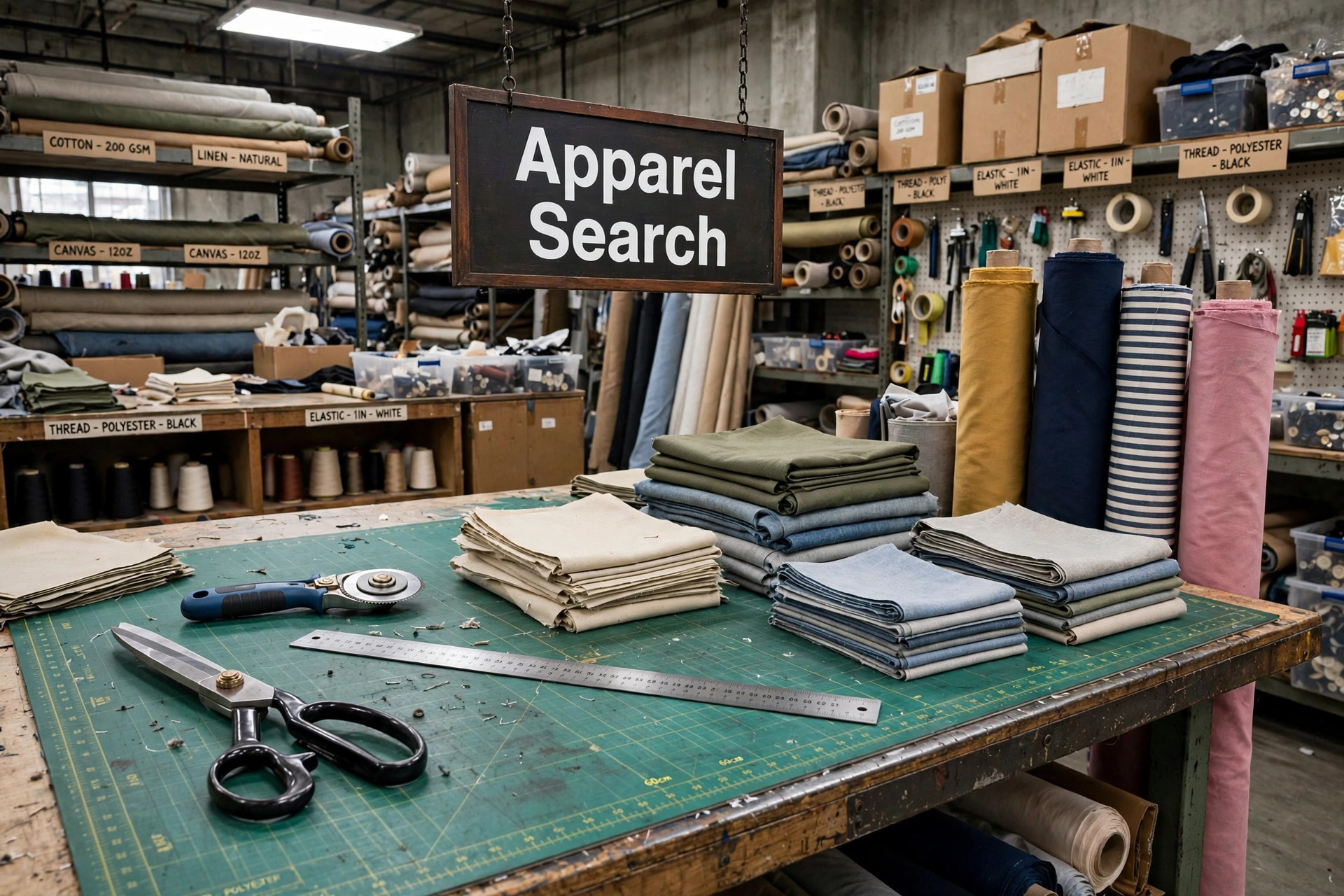
One Occupation, Many Workplaces
In a mill or fabric warehouse, the cutter’s day is driven by orders: pulling rolls, measuring lengths on the cutting table or inspection machine, and cutting clean, square ends so the customer receives the full measure ordered — a slanted or short cut is a complaint and a credit note. Sample cutters in the same buildings cut swatches and headers by the hundreds, where consistency of size and a straight edge are the entire product. Speed matters, but a reputation for true measure matters more, because fabric businesses trade on it.
In garment and furnishings workrooms, the cutter works from patterns and markers instead of a tape measure alone: pinning or weighting pattern pieces, following grain lines, matching checks and stripes across pieces that will be sewn together, and cutting single garments or small batches with the care that bespoke and sample work demands. Upholstery and canvas cutters handle heavier cloth, hides and technical fabrics, where the material fights back and a mistake costs far more per metre. Moving between these settings is common in a cutter’s career, and the core skills transfer with them.
Tools of the Trade: Shears, Knives and Machines
The hand cutter’s tools are shears — long-bladed, weighted, kept razor sharp and never borrowed for paper — chalk and marking pens, pattern weights, metal rulers and the cutting table itself, kept flat and clean so fabric lies true. Rotary cutters speed straight work on thinner cloth; straight-knife and band-knife machines take over when layers multiply; die cutters stamp identical small parts in one press; and computerised cutters, spreading their work from a digital file, now handle much high-volume cutting while still needing an operator who understands fabric behaviour.
Whatever the tool, the technique is constant: the fabric is settled and secured before the cut, the blade or shear follows the mark in long, confident strokes rather than nibbles, and pieces are checked against the pattern as they come off the table rather than in a hopeful batch at the end. The cutter also husbands the material — nesting pieces tightly, working around faults instead of through them, and keeping usable remnants sorted, because the difference between a careful cutter and a careless one shows up in the fabric bill every single week.
Accuracy, Safety and Working Habits
Accuracy in cutting is a chain of small habits: confirming the right fabric and the right side before the first cut, checking the grain and the measure twice on costly cloth, marking clearly enough that the cut can be audited, and labelling every piece as it is cut so nothing anonymous enters a bundle. The cutter keeps count as naturally as breathing — pieces per size, lengths per order — and reports shortages, faults and shade differences the moment they appear, while the roll can still be changed or the order re-planned.
Cutting is also physical, sharp work, and its safety habits are professional standards, not bureaucracy: cut-resistant gloves on the knife hand for machine work, guards in place, blades closed or sheathed the instant a cut ends, shears carried point-down, and full attention during a cut — most cutting injuries happen in the distracted second after the difficult part is done. Standing work, lifting rolls and repetitive motion are managed with table heights, trolleys and rotation through the day’s tasks, habits that keep experienced cutters working comfortably for decades.
Skills, Training and Career Path
Employers hiring a fabric cutter look first for proven accuracy: a trial cut, measured and checked, says more than any certificate. Numeracy for measures and conversions — metres and yards, widths and allowances — a trained eye for grain, pattern and shade, and knowledge of how different fabrics behave under a blade complete the technical base. Reliability is prized just as highly, because so much downstream work — sewing rooms, upholsterers, customers — waits on the cutter’s table being right and on time.
Training is usually served at the table: juniors start on measuring, sample cutting and straight work, and graduate to patterns, matched fabrics and machine cutting as their accuracy record earns trust; tailoring, upholstery and garment-technology courses can formalise the craft. Career paths lead to head cutter — the senior craftsperson who takes the most valuable cloth and the hardest patterns — cutting-room supervision, pattern and sample-room roles, or self-employment cutting for several small makers at once. It remains a trade where a good name travels by word of mouth.
Common Questions
What does a fabric cutter do?
Measures, marks and cuts fabric accurately for production or customer orders — with shears, rotary cutters, knife machines or die cutters — checking grain, pattern matching and counts, labelling the pieces and reporting faults or shortages as they appear.
Where do fabric cutters work?
In garment factories and sample rooms, textile mills and fabric warehouses cutting orders and samples, and in upholstery, furnishings and canvas workrooms — anywhere cloth is cut to pattern or measure as a specialist task.
How is a fabric cutter different from the cutting stage in a garment factory?
Cutting fabric as a factory stage is one step in a single garment order — marker, lay and bundles for the sewing line. The fabric cutter occupation is broader: the same cutting craft applied across mills, warehouses and workrooms, to orders, samples and one-off pieces as well as production lays.
More to Explore
References & Further Reading
More Job Description Categories
- Buying Job Descriptions
- Design Job Descriptions
- Marketing & PR Job Descriptions
- Miscellaneous Job Descriptions
- Planning & Allocation Job Descriptions
- Production & Sourcing Job Descriptions (current)
- Sales & Selling Job Descriptions
- Transportation & Warehouse Job Descriptions