Fabric Developer Job Description
Creating and specifying new fabrics with mills — turning a design idea into a cloth that performs, costs and repeats
A fabric developer is the person who brings a cloth into existence. Before a garment can be designed around a fabric, someone has to decide what that fabric should be — its fibre, yarn, weave or knit structure, weight, finish and colour — and then work with a mill until the cloth coming off the loom matches the idea closely enough to build a range on. The role sits between design and production: creative enough to chase a texture seen in a mood image, technical enough to write a specification a mill on another continent can reproduce, and commercial enough to know that a beautiful fabric at the wrong price is no fabric at all.
More Production Job Descriptions by Letter:
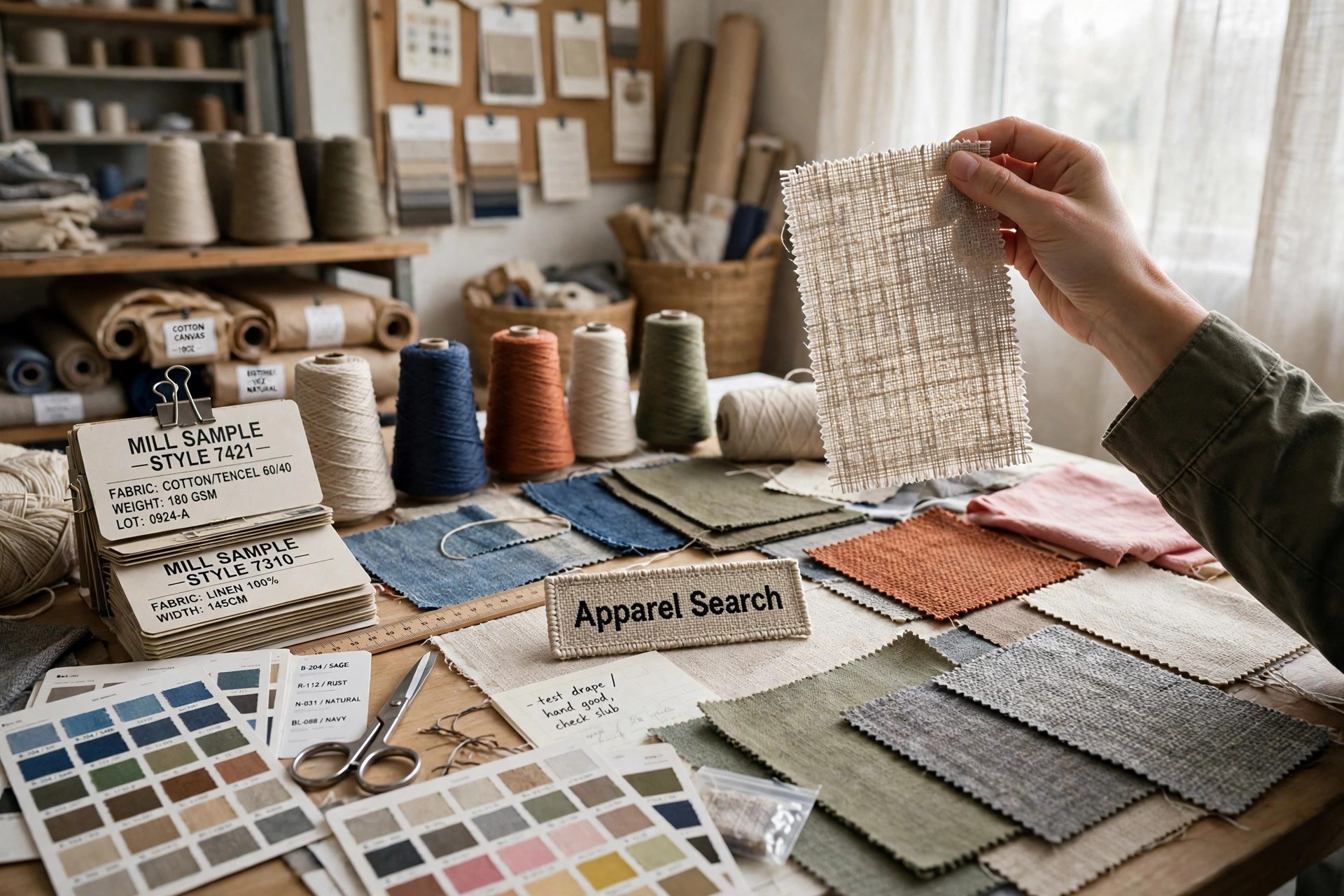
Creating and Specifying New Fabrics
Development starts from a brief: a season's direction, a price architecture, a performance need such as stretch, waterproofing or easy care. The developer translates that brief into fabric terms — fibre blend, yarn count, construction, grams per square metre, width and finish — and commissions trial yardage. Mills return headers and lab dips; the developer assesses hand feel, drape, opacity, colour accuracy under store lighting and how the cloth behaves when cut and sewn, then requests corrections round by round until the fabric is approved.
Once approved, the fabric is specified in writing so bulk production can repeat it exactly. The specification records composition, construction, weight tolerance, colour standards, shrinkage, pilling and colourfastness requirements, and the tests bulk cloth must pass. That document protects the whole chain: the garment factory sews against it, quality teams inspect against it, and if a delivery drifts, the specification is the evidence of what was agreed.
Working With Mills and Suppliers
Most fabric development is done at a distance, with mills and agents in the world's textile regions. The developer manages a development calendar that runs months ahead of garment production: greige cloth must be woven, dyed, finished and shipped before a single garment is cut, so a missed fabric deadline delays everything behind it. Developers track each development's status, chase late strike-offs, negotiate minimum order quantities and surcharges, and keep backup mills qualified for critical fabrics.
The role also owns the fabric library. Approved fabrics are filed with their headers, costs, lead times and test results so designers and buyers can build future ranges from cloth that is already proven. A well-run library stops a business redeveloping the same twill three seasons running, and it is often the developer who presents new fabric directions at range-planning meetings, arguing for the cloth a collection needs before anyone has drawn a garment.
Sustainability has moved from a side brief to a central development filter. Developers now source recycled, regenerative and lower-impact fibres, verify the certifications behind a mill's claims, and weigh whether a fabric's footprint story will survive a customer's audit. The skill is evidentiary as much as creative: a developer must know which certificate covers which claim, keep the paperwork filed with the specification, and resist approving a 'sustainable' fabric whose documentation is thinner than its marketing.
Skills and Knowledge the Role Requires
Textile knowledge is the core skill: how fibres differ, how a weave or knit structure changes drape and durability, what finishes can and cannot do, and why two fabrics with the same composition can behave completely differently. Colour judgment matters daily — developers approve lab dips by eye under controlled light and must spot a cast or a metamerism problem before bulk dyeing locks it in. Testing literacy matters too: reading shrinkage, tear strength and colourfastness reports and knowing which failures are fatal and which can be managed.
Around the technical core sit commercial and organisational skills. Developers cost fabrics per metre and per garment, understand how width and marker efficiency change the true cost of a cloth, and negotiate with mills without burning relationships the business will need next season. They keep dozens of developments moving at once, communicate clearly with designers who think in images and factories who think in tolerances, and record everything — a fabric approved verbally is a dispute waiting to happen.
Training, Qualifications and Career Path
Most fabric developers arrive through textiles or fashion education — a degree or diploma in textile technology, textile design or fashion with a strong fabric component — or up from fabric technician, fabric librarian or assistant developer roles where they learned constructions and testing on the job. Employers look for demonstrable fabric knowledge: candidates are often handed swatches at interview and asked to identify composition, construction and likely end use.
The career path runs toward senior fabric developer and fabric manager roles owning a whole category's cloth strategy, toward fabric sourcing and mill management, or sideways into product development and technical management, where fabric decisions meet garment engineering. Developers who build deep knowledge of a specialism — denim, performance synthetics, sustainable fibres — become the person a business calls before committing to a new fabric direction, and that expertise travels: mills, brands and retailers all employ developers, on every continent where cloth is made or bought.
Common Questions
What is the difference between a fabric developer and a fabric buyer?
A developer creates and specifies the cloth — construction, finish, quality and colour standards — usually before a range exists. A buyer (or fabric sourcing role) purchases approved fabric at the best price and terms. In large companies the roles are separate; in small ones, one person develops the fabric and then buys the bulk yardage.
Do fabric developers design the fabric patterns themselves?
Sometimes. Developers working on woven checks, jacquards or prints may originate patterns or adapt artwork, but the core of the role is specifying and engineering cloth with a mill — choosing the structure, yarns and finish — rather than surface design alone. Print design itself is usually a separate design role.
What does a fabric developer earn their reputation on?
Fabrics that arrive on time, match the approved standard in bulk, sew without surprises and sell through on the rail. A developer whose cloth repeatedly causes production problems or customer returns loses the trust of designers and factories quickly, however creative the ideas were.
More to Explore
Fabric Resources
References & Further Reading
More Job Description Categories
- Buying Job Descriptions
- Design Job Descriptions
- Marketing & PR Job Descriptions
- Miscellaneous Job Descriptions
- Planning & Allocation Job Descriptions
- Production & Sourcing Job Descriptions (current)
- Sales & Selling Job Descriptions
- Transportation & Warehouse Job Descriptions